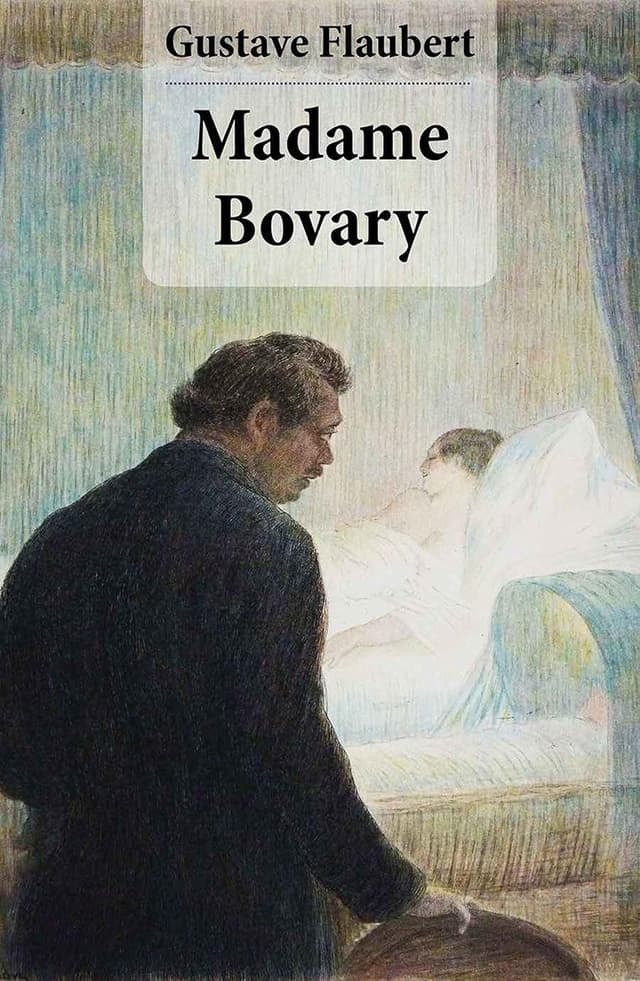
Gustave Flaubert wrote *Madame Bovary* between 1851 and 1856 at his family estate in Croisset, near Rouen, France. The novel emerged during the Second French Empire under Napoleon III, a period characterized by rapid industrialization, burgeoning capitalism, and the powerful ascent of the middle class. Flaubert held a deep disdain for this rising bourgeoisie, viewing their materialistic values, rigid conventionality, and intellectual shallowness as a profound threat to art. Against this backdrop, he crafted a scathing critique of provincial life, contrasting the mundane realities of middle-class existence with the impossible, sweeping romantic ideals popularized by the literature of the era.
Upon its serialization in late 1856, the novel immediately sparked outrage. In 1857, the French government brought Flaubert to trial on charges of obscenity and offending public morals. The controversy stemmed not merely from the depiction of Emma Bovary’s adulterous affairs, but from Flaubert’s revolutionary narrative technique. By utilizing a highly objective, detached tone—pioneering the use of free indirect discourse—Flaubert refused to explicitly condemn his protagonist’s moral transgressions. Instead, he presented her psychological landscape without authorial moralizing. Flaubert was ultimately acquitted, and the highly publicized trial secured the book's immediate commercial success.
*Madame Bovary* left an indelible mark on both literature and society, effectively inaugurating the movement of literary realism. Flaubert’s obsessive dedication to stylistic perfection and his agonizing pursuit of *le mot juste* (the exact word) elevated the novel to a high art form. By shifting the literary focus from grand, romantic heroics to the meticulous, psychological examination of ordinary, flawed individuals, Flaubert fundamentally transformed the trajectory of modern fiction. His groundbreaking approach paved the way for the psychological depth of the modern novel, profoundly influencing subsequent literary giants such as Émile Zola, James Joyce, and Marcel Proust.