If You're Curious About These Questions...
You should listen to this audiobook
- Did you know that the secret alliance between industry and politics that built Germany’s economic miracle is now the very thing tearing it apart?
- Have you ever wondered why the world’s most stable economy knowingly gambled its future on energy and trade from authoritarian regimes?
- Are you curious about what really happens to the global supply chain when the 'invincible' engine of Europe finally runs out of steam?
Listen to Kaput — Free Audiobook
Loading player...
Key Takeaways from Kaput
- Discover why Germany's post-war economic miracle is currently unraveling due to a neo-mercantilist obsession with export dominance and suppressed domestic wages.
- Understand how politically driven state-owned banks funneled massive profits back into aging legacy industries, ultimately stifling innovation and leaving the economy vulnerable to global shifts.
- Learn how Germany's economic elite deliberately rejected digital transformation, such as shelving early fiber-optic networks, to protect their existing analog manufacturing capacities.
- Find out how leading German automakers abandoned early electric vehicle projects in the 1990s, inadvertently handing vital technological advancements to future rivals like Tesla.
- Uncover the origins of Germany's impending industrial crisis, which was fueled by a stubborn reliance on outdated hardware and a dangerous dependence on Russian energy.
Learning Tools
Reinforce what you learned from Kaput
Mind Map
Kaput
Neo-Mercantilism's Collapse+
Rejection of the Digital Age+
The Russia Energy Trap+
The China Manufacturing Trap+
Domestic Decay+
Path to Survival+
Quiz — Test Your Understanding
Question 1 of 7
What was the main flaw of Germany's neo-mercantilist approach according to the text?
Question 2 of 7
What role did the regional state-owned banks, known as 'Landesbanken', play in Germany's economic model?
Question 3 of 7
How did Germany's political and corporate leadership generally respond to the digital revolution?
Question 4 of 7
What was the original strategic rationale behind Chancellor Willy Brandt’s 'Ostpolitik' and the 1970 natural gas deal with the USSR?
Question 5 of 7
How has the economic power dynamic between Germany and China shifted in recent years?
Question 6 of 7
What is cited as a direct political consequence of Germany neglecting its critical infrastructure and the inertia of its mainstream political parties?
Question 7 of 7
According to the author, what is a necessary policy step for Germany to reverse its current economic decline?
Kaput — Full Chapter Overview
- 1Recommendation
- 2The fatal flaw of neo-mercantilism
- 3Alienation from the digital age
- 4The trap of Russian energy
- 5The Berlin–Beijing connection
- 6The end of an era
- 7Final summary
Kaput Summary & Overview
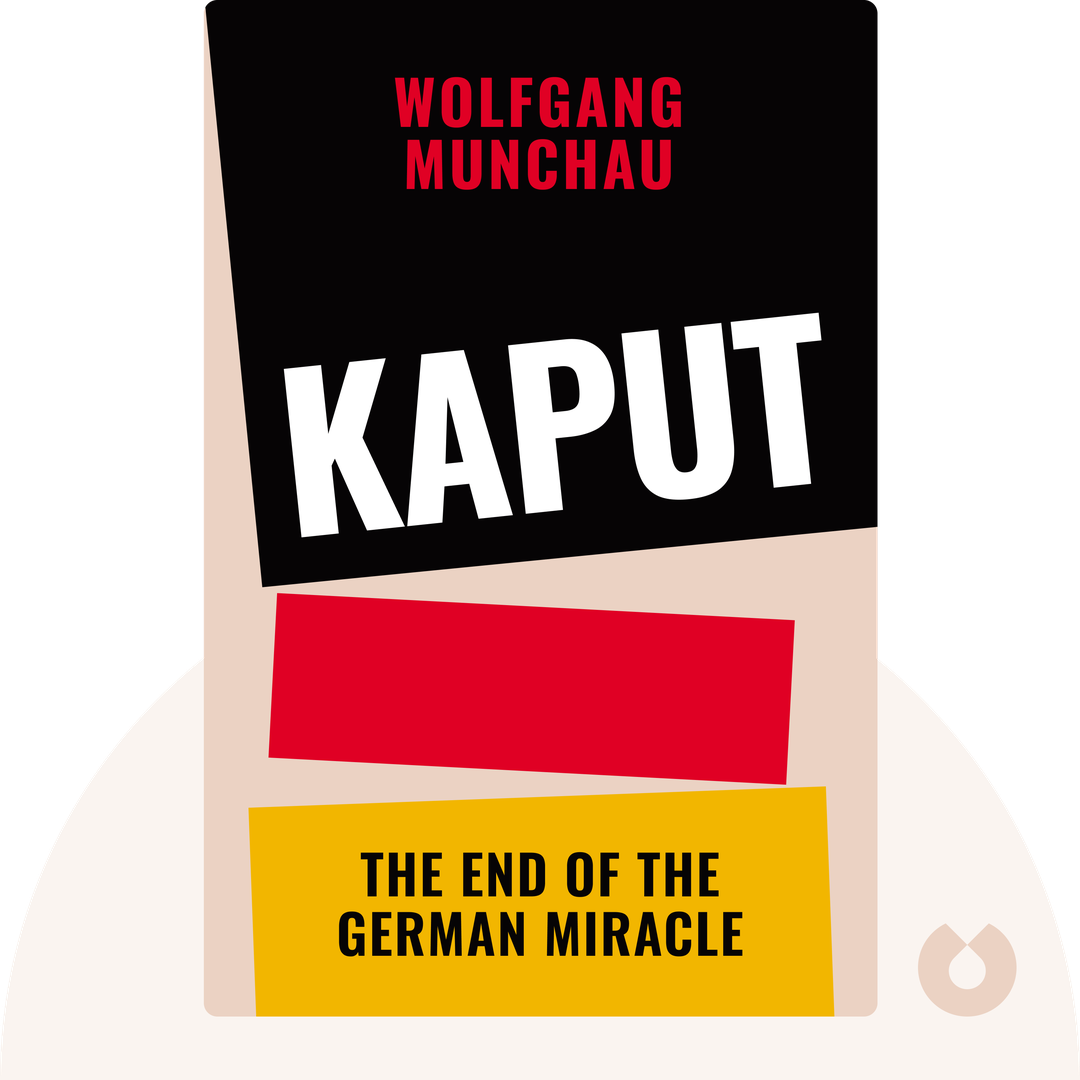
Kaput (2024) dismantles the myth of invincibility surrounding Europe’s economic powerhouse. You’ll discover how decades of collusion between industry and politics left the nation vulnerable to energy shocks, digital stagnation, and dependence on authoritarian regimes. This is a sharp wake-up call for anyone invested in where Germany – and by extension, Europe – is headed next.
Who Should Listen to Kaput?
- Economics students looking into European economic decline
- Business leaders reliant on German supply chains
- German citizens wondering what’s going on with their economy
Books Similar to Kaput
Readers who enjoyed this also liked these titles.