If You're Curious About These Questions...
You should listen to this audiobook
- How will the automation of specific, repetitive tasks shift the demand for fundamentally human skills like emotional intelligence in the future job market?
- Why did traditional companies like Disney thrive through early technological adoption while industry giants like Kodak failed, and what does this reveal about corporate innovation?
- How can tech developers balance the immediate cost-saving benefits of AI, such as robotic healthcare assistants, with the potential long-term social costs like human isolation?
Listen to Human/Machine — Free Audiobook
Loading player...
Key Takeaways from Human/Machine
- Discover how machines act as natural partners that boost efficiency, allowing you to focus on fulfilling your innate human drive for creativity and problem-solving.
- Understand why modern artificial intelligence is highly narrow and designed to automate specific, repetitive tasks rather than completely replacing entire jobs.
- Learn how to stay ahead in your career by cultivating innately human abilities like emotional intelligence, complex problem-solving, and critical thinking.
- Find out why the 'human touch' and emotional sensitivity will increasingly become a premium selling point for businesses in an algorithm-dominated world.
- Recognize that while automation will eliminate millions of repetitive roles, historical trends prove it will simultaneously create new industries reliant on human ingenuity.
Learning Tools
Reinforce what you learned from Human/Machine
Mind Map
Human/Machine
Evolution of Tools+
Automation's Real Impact+
Future-Proofing Careers+
Business Survival & Strategy+
Ethics & Societal Consequences+
The Necessity of Trust+
Quiz — Test Your Understanding
Question 1 of 8
According to the text, how does real-world artificial intelligence currently differ from the AI depicted in movies?
Question 2 of 8
As artificial intelligence increasingly automates repetitive tasks, which human skills are projected to be in the highest demand by employers?
Question 3 of 8
What historical event does the text use to illustrate that technological disruption will ultimately create new jobs and human-machine partnerships?
Question 4 of 8
For individuals without a background in STEM (Science, Technology, Engineering, or Mathematics), what does the text suggest is the best strategy for surviving the future job market?
Question 5 of 8
According to the text, what key mistake led to the downfall of corporate giants like Kodak?
Question 6 of 8
When evaluating new technological innovations, what does the text argue companies must consider alongside classic cost-benefit calculations?
Question 7 of 8
Why did Google employees protest the company's decisions regarding its image recognition AI?
Question 8 of 8
What is the crucial factor that will determine whether consumers actually adopt new automated technologies like self-driving cars?
Human/Machine — Full Chapter Overview
- 1Recommendation
- 2Machines will keep improving our efficiency and helping us fulfill our human potential.
- 3Automation will usually take over specific tasks, rather than entire jobs.
- 4Even when AI replaces jobs, it will also create new ones.
- 5The broader your skill set, the stronger your position in the future job market.
- 6Technological disruption is a huge business opportunity, but only if you’re ready for it.
- 7Companies should weigh technology’s long-term consequences, not just its costs and benefits.
- 8Tech giants should create technology that benefits society over the long term.
- 9Without consumer trust, tech giants are likely to fail.
- 10Final summary
Human/Machine Summary & Overview
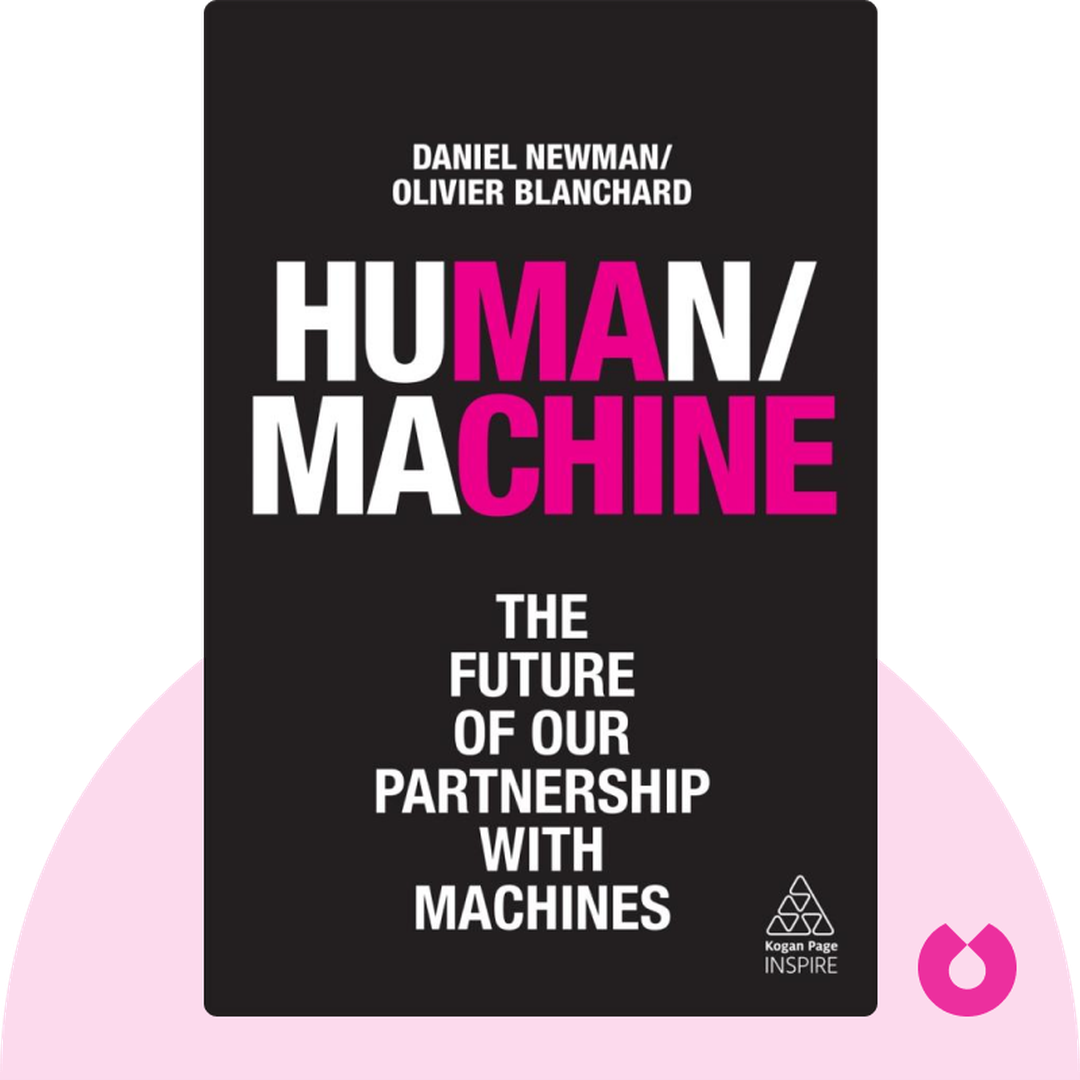
Human/Machine (2019) argues that machines will continue to empower us, instead of stealing our jobs. At the workplace and at home, automation will free up time that we can use to do the things that fulfill us as human beings. However, tech giants will need to ensure that their technology benefits society – otherwise, the delicate balance between humans and machines might tip.
Who Should Listen to Human/Machine?
- Employees who fear that a robot might take their jobs
- Managers steering big and small companies through innovation processes
- Parents who wonder whether AI will soon teach their children
Books Similar to Human/Machine
Readers who enjoyed this also liked these titles.