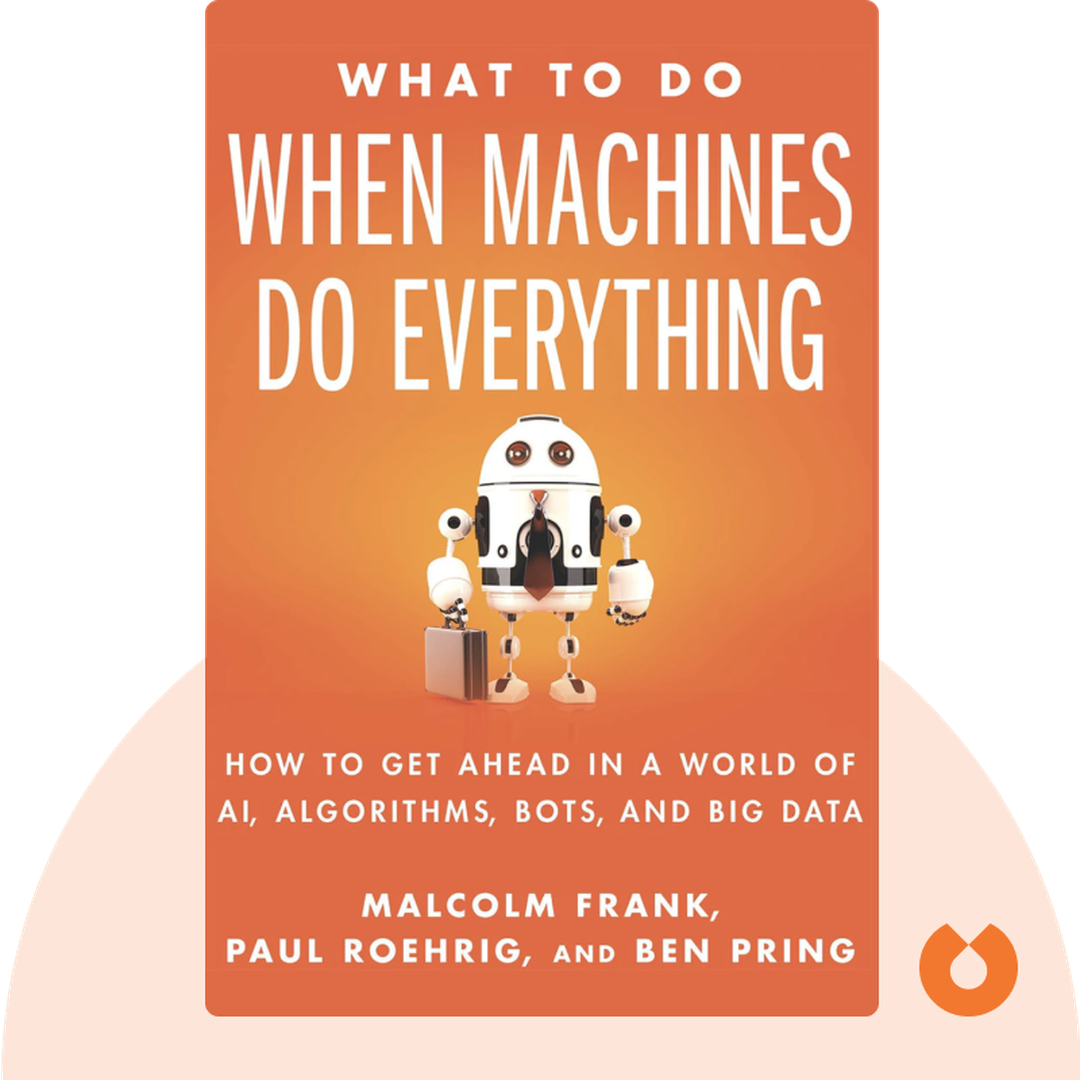
What To Do When Machines Do Everything
Start ListeningDownload Try free on iPhoneScan to start in 5 seconds
Categories:
If You're Curious About These Questions...
You should listen to this audiobook
- Why does historical precedent suggest we shouldn't fear robots taking all our jobs, and what exactly will they replace instead?
- What is the process of 'instrumenting,' and why might everyday objects like desks and doors soon become vital data-gathering tools for your business?
- Why should leaders actively encourage their employees to design new products or services that would intentionally put their own company out of business?
Listen to What To Do When Machines Do Everything — Free Audiobook
Loading player...
Key Takeaways from What To Do When Machines Do Everything
- Rather than eliminating entire professions, automation will primarily remove dull, repetitive tasks, freeing workers to focus on higher-quality, engaging work.
- Data is the raw material of the new industrial revolution, requiring skilled business analysts to mine and refine it into actionable, profitable insights.
- To stay competitive, companies must 'instrument' their operations by embedding miniature data collectors into everyday products and services to harvest valuable information.
- Traditional businesses must adopt a digital hybrid model, combining physical operations with digitized experiences, to meet the immediate, app-driven demands of modern consumers.
- The best place to begin integrating automation is in the back office, such as human resources and finance, where massive amounts of data are already being collected and processed.
Learning Tools
Reinforce what you learned from What To Do When Machines Do Everything
Mind Map
What To Do When Machines Do Everything
Historical Context of Automation+
The Future of Jobs+
Systems of Intelligence+
Data as the New Raw Material+
Digital Hybrid Business Models+
Implementation & Action+
Quiz — Test Your Understanding
Question 1 of 7
According to the book, what is the historical reality regarding the fear that new machines will destroy jobs?
Question 2 of 7
How will automation primarily affect professions like teaching, according to Forrester Research studies cited in the text?
Question 3 of 7
What is the defining characteristic of a 'system of intelligence' used by companies like Uber and Facebook?
Question 4 of 7
In the context of business analytics, what does the book mean by the term 'instrumenting'?
Question 5 of 7
How does the book suggest traditional businesses, like airlines, defend themselves against disruptive start-ups and satisfy millennial customers?
Question 6 of 7
Where does the book suggest a company should begin when starting to automate tasks?
Question 7 of 7
What actionable advice do the authors give to prevent a company from falling behind technological progress?
What To Do When Machines Do Everything — Full Chapter Overview
- 1Recommendation
- 2New technologies have always inspired worry, not hope.
- 3New technologies will generate new jobs and transform existing ones.
- 4Today’s latest machines are made of software that learns from vast amounts of data.
- 5“Instrument” every part of your organization so analysts can use data to improve your business.
- 6Win millennial customers by evolving your traditional model into a digital hybrid.
- 7Begin automating work by focusing first on your back office.
What To Do When Machines Do Everything Summary & Overview
What To Do When Machines Do Everything (2017) takes a realistic look at what lies ahead for traditional jobs when industries adopt the next wave of automation: How can automation be incorporated into current business models? What should workers and managers expect? And what will happen to the economy as a whole?
Who Should Listen to What To Do When Machines Do Everything?
- Readers interested in artificial intelligence or new digital technologies
- Entrepreneurs interested in automating their workforce
- Students of business strategy
Books Similar to What To Do When Machines Do Everything
Readers who enjoyed this also liked these titles.