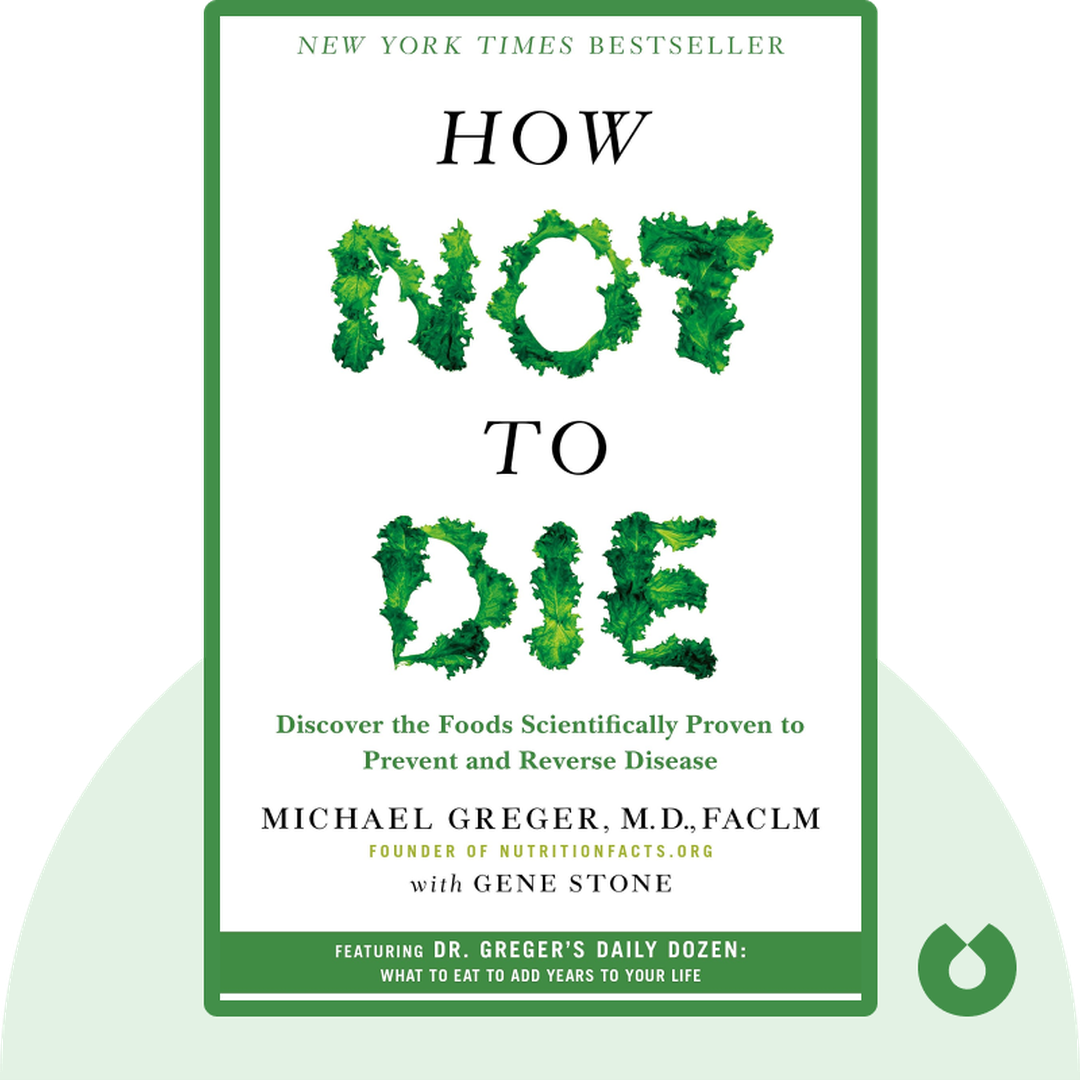
If You're Curious About These Questions...
You should listen to this audiobook
- Did you know that the world’s leading cause of death can actually be reversed through specific dietary choices that most doctors never mention?
- What if you could significantly lower your risk of chronic disease and even 'turn off' bad genes just by changing what’s on your plate?
- Are you curious about the secret 'Daily Dozen' foods that have the power to boost your immune system and add years to your life?
Listen to How Not to Die — Free Audiobook
Loading player...
Key Takeaways from How Not to Die
- Understand why chronic diseases are not simply genetic destiny, but are heavily shaped by your everyday diet and lifestyle choices.
- Discover how a single fast-food meal causes immediate arterial inflammation, and learn why adopting a plant-based diet can actually help reverse heart disease.
- Learn how eating cruciferous vegetables like broccoli and cabbage can significantly lower DNA mutations and potentially stunt cancer growth.
- Find out why frying meat and bacon releases toxic fumes that cause DNA mutations, posing a serious lung cancer risk even to non-smokers.
- Recognize the critical gap in modern medical training regarding nutrition, empowering you to focus on disease prevention and root causes instead of just managing symptoms.
Learning Tools
Reinforce what you learned from How Not to Die
Mind Map
How Not to Die
Diet vs. Medicine+
Plant-Based Power+
Fruits & Berries+
Vegetables+
Beans & Grains+
Nuts & Seeds+
Herbs & Spices+
Beverages+
Exercise+
Quiz — Test Your Understanding
Question 1 of 9
Why does the American medical profession heavily rely on prescribing drugs rather than dietary changes, according to the text?
Question 2 of 9
What was the outcome for long-term vegetarians who began eating meat just one day per week?
Question 3 of 9
How does the natural sugar found in whole fruits differ from added sugars in terms of health impact?
Question 4 of 9
How should cruciferous vegetables like broccoli and cabbage ideally be prepared to maximize their cancer-fighting molecule, sulforaphane?
Question 5 of 9
When shopping for whole grains, what nutritional label ratio should consumers look for to ensure the product is actually healthy?
Question 6 of 9
Despite being high in calories, why do clinical studies show that adding nuts and seeds to a diet does not typically cause weight gain?
Question 7 of 9
Why is it recommended to consume black pepper alongside turmeric?
Question 8 of 9
According to the Beverage Guidance Panel mentioned in the text, how is cow's milk categorized?
Question 9 of 9
Why do the US Office of Disease Prevention and Health Promotion guidelines recommend only 20 minutes of daily exercise, contradicting the scientifically backed 90-minute recommendation?
How Not to Die — Full Chapter Overview
- 1Recommendation
- 2Poor diet is the leading cause of premature death, yet the medical industry often overlooks it.
- 3A plant-based diet can be more effective than pharmaceuticals.
- 4Fruits, especially berries, can help fight cancer and strengthen the immune system.
- 5Vegetables are essential to a healthy diet.
- 6Beans and whole grains are excellent for your health.
- 7Nuts and seeds are packed with nutrition.
- 8Herbs and spices make healthy foods even healthier.
- 9When it comes to drinks, water is the best choice.
- 10Exercise combined with a healthy diet is the formula for a long life.
- 11Final summary
How Not to Die Summary & Overview
How Not to Die (2015) explains how a plant-based diet can extend your life while transforming your quality of living. These blinks offer a wealth of health-boosting nutritional information and hands-on dietary advice that you won’t get from your doctor.
Who Should Listen to How Not to Die?
- Patients diagnosed with life-threatening conditions such as heart disease and diabetes
- Those with a family history of such conditions
- Anyone who is overweight, tired or generally feels unwell
Books Similar to How Not to Die
Readers who enjoyed this also liked these titles.