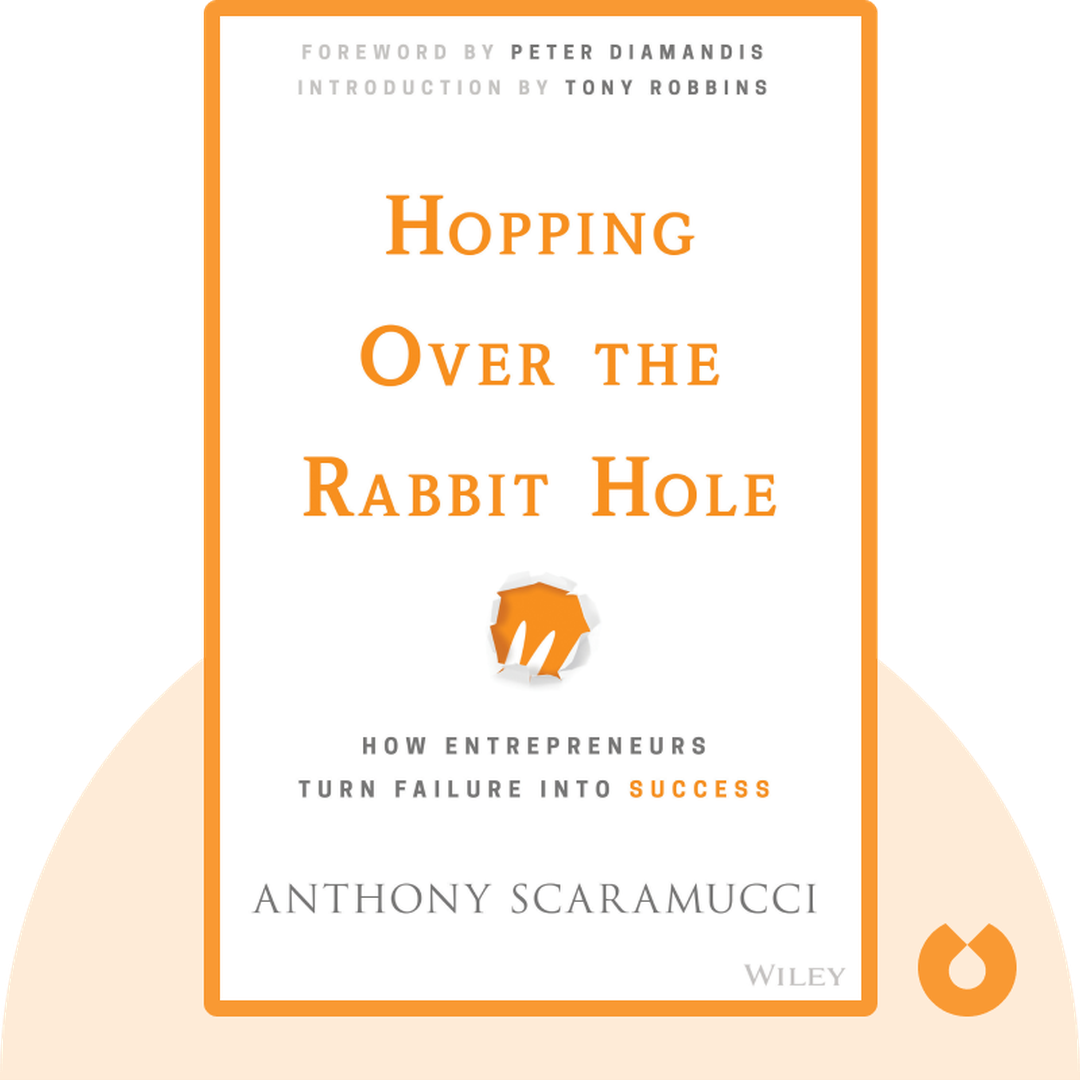
Hopping over the Rabbit Hole
Start ListeningDownload Try free on iPhoneScan to start in 5 seconds
Categories:
If You're Curious About These Questions...
You should listen to this audiobook
- Did you know that most entrepreneurs are sabotaged by their own 'rose-tinted' perspective long before their business actually hits a crisis?
- Have you ever wondered why some business owners manage to thrive after a major failure while others never recover?
- What’s the secret to surviving the 'rabbit hole' of entrepreneurship and turning your most brutal mistakes into your greatest competitive advantage?
Listen to Hopping over the Rabbit Hole — Free Audiobook
Loading player...
Key Takeaways from Hopping over the Rabbit Hole
- Embrace the brutal reality of entrepreneurship, where only four percent of businesses survive a decade, and learn to accept the hard times required for success.
- Discover how making bold, unprecedented moves during times of crisis—like hosting a major event during a recession—can rescue your company and yield massive dividends.
- Learn to adapt quickly when facing failure by taking honest ownership of your mistakes and pivoting immediately to a strategic alternative plan.
- Master the habit of focusing on the rigorous process of your business rather than becoming distracted by glamorous end goals or superficial rewards.
- Find out why neglecting crucial details and failing to create backup plans can sink your ventures, no matter how foolproof they initially seem.
Learning Tools
Reinforce what you learned from Hopping over the Rabbit Hole
Mind Map
Hopping over the Rabbit Hole
Overcoming Failure & Adversity+
Leadership & Team Building+
Sales, PR & Negotiation+
Mindset & Personal Growth+
Quiz — Test Your Understanding
Question 1 of 9
Why did Anthony Scaramucci decide to host the SALT conference in Las Vegas during the 2009 economic recession?
Question 2 of 9
How did SkyBridge handle the scheduling conflict between their 2014 SALT Asia Conference and the holiday of Deepavali?
Question 3 of 9
What lesson did the author learn from his failed attempt to sell ice cream at the Boston Marathon?
Question 4 of 9
Why does the author advise against building a team exclusively made up of 'geniuses'?
Question 5 of 9
What does the 'DEA' management style stand for in the context of the book?
Question 6 of 9
What does the author's story about offering to set up a sumo mud wrestling ring with his former boss illustrate?
Question 7 of 9
According to the book, what is the best way to improve the 'uncontrolled' part of a company's PR strategy?
Question 8 of 9
What is the 'Li Ka-shing approach' to negotiation?
Question 9 of 9
What key lesson did the author draw from his daughter Amelia's experience singing at Shea Stadium?
Hopping over the Rabbit Hole — Full Chapter Overview
- 1Recommendation
- 2Bold moves can bring big rewards.
- 3When failure hits, you have to adapt.
- 4As an entrepreneur, make sure you stay focused on the right things.
- 5Make the most of your team by delegating, empowering, and building accountability.
- 6Don’t go through life carrying a chip on your shoulder.
- 7Turn media exposure to your advantage.
- 8Good salesmanship depends on relationship-building skills.
- 9Don’t be afraid to put yourself out there in public.
- 10Final summary
Hopping over the Rabbit Hole Summary & Overview
Hopping over the Rabbit Hole (2020) is an honest, straight-talking look at what it takes to be a successful entrepreneur. The brutal truth is that the vast majority of businesses fail – yet many budding entrepreneurs still operate with their rose-tinted glasses firmly in place. But by following a few crucial tips – drawn from a successful business career with its fair share of mistakes – you’ll be more likely to survive, rather than succumb to failure.
Who Should Listen to Hopping over the Rabbit Hole?
- Young entrepreneurs and salespeople
- Prospective business owners searching for a realistic take on running a company
- Mid-career entrepreneurs who’ve experienced failure and want to avoid doing so again
Books Similar to Hopping over the Rabbit Hole
Readers who enjoyed this also liked these titles.