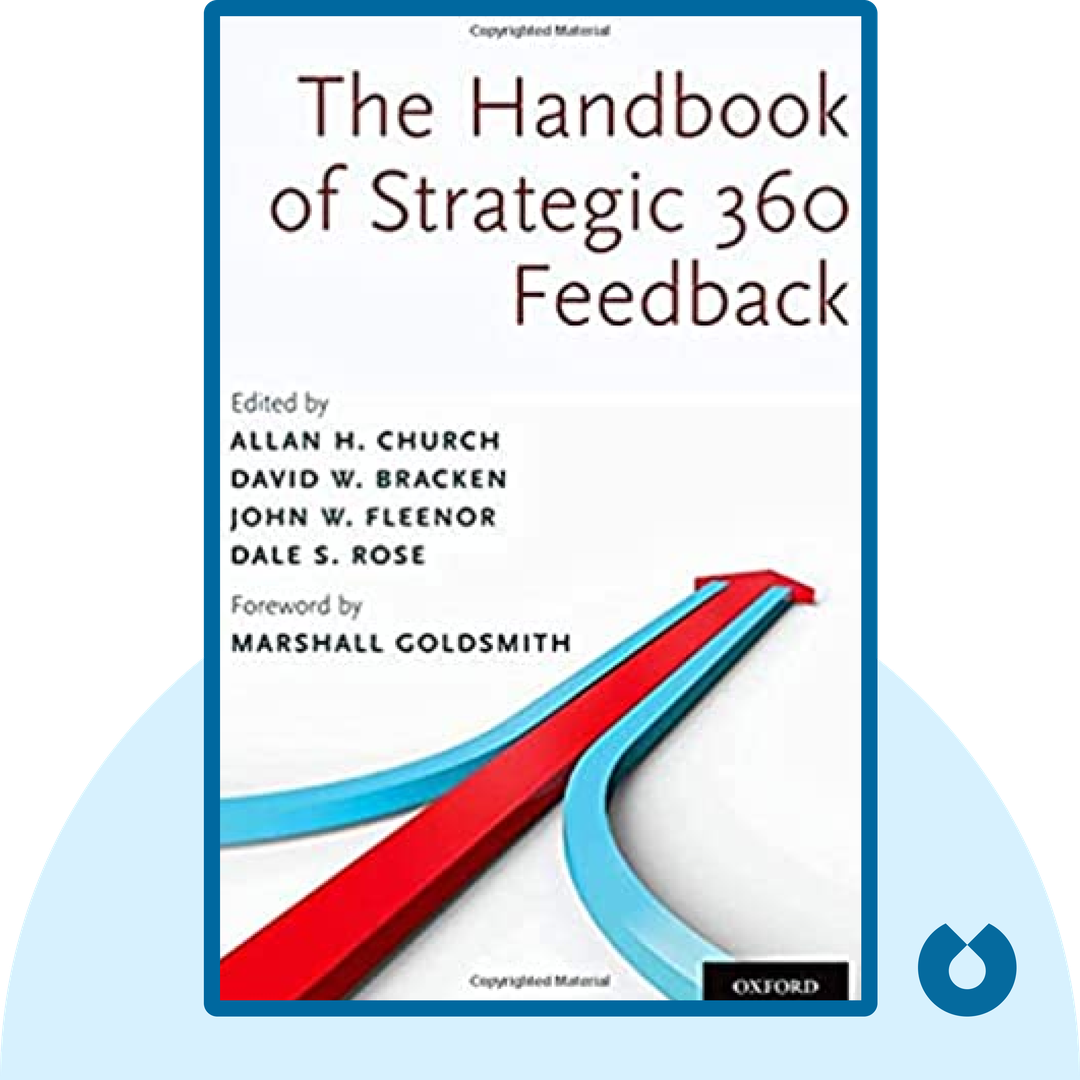
Handbook of Strategic 360 Feedback
Start ListeningDownload Try free on iPhoneScan to start in 5 seconds
Categories:
If You're Curious About These Questions...
You should listen to this audiobook
- Did you know that even the most robust 360 feedback systems are vulnerable to being 'gamed,' and do you know how to spot the red flags before they skew your results?
- Have you ever wondered why some 360 feedback initiatives fail to drive growth while others transform company culture, and what the critical differentiator is?
- What if you could eliminate the hidden impact of unconscious bias from your leadership evaluations to create a truly objective and high-performing workplace?
Listen to Handbook of Strategic 360 Feedback — Free Audiobook
Loading player...
Key Takeaways from Handbook of Strategic 360 Feedback
- Understand why successful 360 feedback requires a specific organizational culture of trust and low ego, alongside strict anonymity to ensure pure, unrigged data.
- Discover how 360 feedback uncovers a complete picture of an employee's true leadership potential by revealing their dynamics with peers and subordinates, rather than just how well they manage up.
- Learn the three crucial situations where feedback prevents rater fatigue and maximizes leadership development: executive onboarding, early intervention, and navigating new management responsibilities.
- Find out how to transform disconnected individuals into a high-performing united team by measuring individual behaviors, overall group effectiveness, and conflict management.
- Master the strategy of driving broad organizational change by using integrated 360 feedback to shape individual behaviors, which ultimately transforms your overarching company culture.
Learning Tools
Reinforce what you learned from Handbook of Strategic 360 Feedback
Mind Map
Handbook of Strategic 360 Feedback
Foundations & Conditions+
Strategic Applications+
Mitigating Risks+
Advanced Analytics+
Quiz — Test Your Understanding
Question 1 of 8
How does 360 Feedback typically differ from standard top-down performance appraisals according to the text?
Question 2 of 8
Which of the following organizational environments is best suited for successfully implementing 360 Feedback?
Question 3 of 8
In the context of talent management, what critical blind spot of top-down appraisals does 360 Feedback help uncover?
Question 4 of 8
According to the text, what is one of the three specific situations where 360 Feedback is most useful for leadership development?
Question 5 of 8
How should an organization view the implementation of 360 Feedback for organizational development?
Question 6 of 8
What is a recommended best practice for designing a 360 Feedback rating scale to reduce rater ambiguity?
Question 7 of 8
Why can words like 'ambition' or 'sensitivity' be problematic when included in a 360 Feedback survey?
Question 8 of 8
How does 'linkage analytics' enhance the value of 360 Feedback data?
Handbook of Strategic 360 Feedback — Full Chapter Overview
- 1Recommendation
- 2How Feedback Works
- 3Managing Talent
- 4Developing Leadership
- 5Improving Team Performance
- 6Developing the Organization
- 7Ambiguity Among Raters
- 8Bias and Confidentiality
- 9New Analytical Tools
- 10Final Summary
Handbook of Strategic 360 Feedback Summary & Overview
The Handbook of Strategic 360 Feedback is a guide to the pros and cons of 360 Feedback, including detailed guidance on how to implement the process as well as how to avoid pitfalls such as unconscious bias or people who try to game the system.
Who Should Listen to Handbook of Strategic 360 Feedback?
- Company leaders
- HR managers
- Team leaders
Books Similar to Handbook of Strategic 360 Feedback
Readers who enjoyed this also liked these titles.