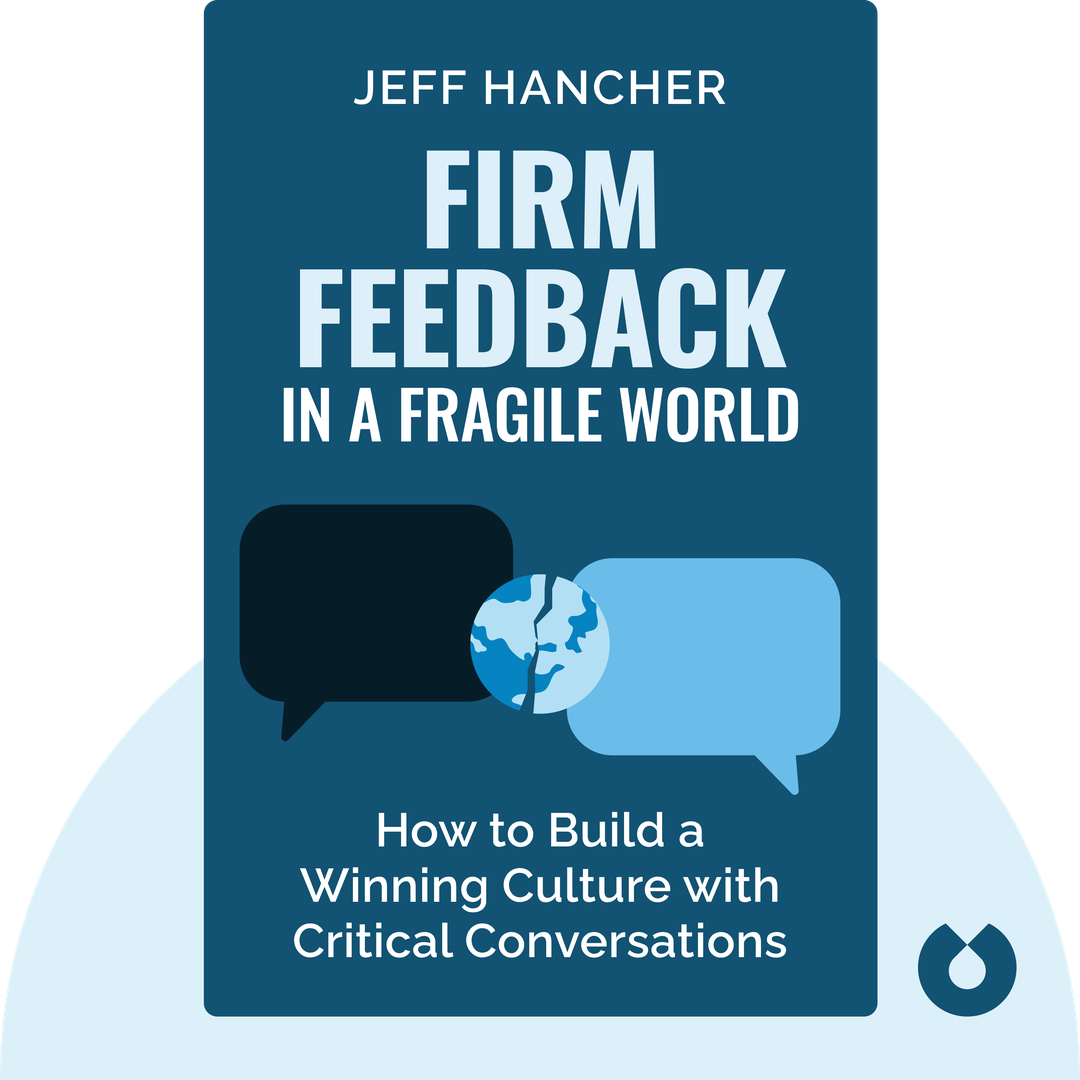
Firm Feedback in a Fragile World
Start ListeningDownload Try free on iPhoneScan to start in 5 seconds
Categories:
If You're Curious About These Questions...
You should listen to this audiobook
- Have you ever wondered why 'walking on eggshells' actually undermines your team’s trust more than being direct?
- What if you could deliver high-stakes feedback that doesn't just improve performance, but actually strengthens your professional credibility?
- Are you curious about the secret to balancing radical accountability with a supportive culture in today’s increasingly sensitive workplace?
Listen to Firm Feedback in a Fragile World — Cinematic Audio Edition
Loading player...
Key Takeaways from Firm Feedback in a Fragile World
- Learn how to navigate the workplace feedback paradox, where managers are terrified of giving critiques even though the majority of employees actively crave more guidance.
- Discover why the true purpose of feedback isn't about hitting company metrics, but rather serving as a supportive tool to help individuals reach their own personal and professional goals.
- Master the assertive feedback approach by blending clear expectations with genuine care, avoiding the destructive pitfalls of passive, aggressive, and passive-aggressive leadership styles.
- Understand the 'feedback bank account' concept and learn how making consistent personal and professional deposits builds the trust required before you can make a constructive feedback withdrawal.
- Find out why delivering feedback as neutral data prevents the use of extreme, emotionally charged language that triggers defensiveness and shuts down communication.
Learning Tools
Reinforce what you learned from Firm Feedback in a Fragile World
Mind Map
Firm Feedback in a Fragile World
Purpose and Paradox+
The Feedback Bank Account+
Pitfalls of Poor Feedback+
Three Modes of Feedback+
Accountability and Engagement+
Quiz — Test Your Understanding
Question 1 of 8
According to the book, what is the 'feedback paradox' that exists in most workplaces?
Question 2 of 8
At its core, what does the author identify as the true purpose of effective feedback?
Question 3 of 8
What does making a 'deposit' in the 'feedback bank account' refer to?
Question 4 of 8
How should leaders fundamentally view feedback to avoid messy emotional fallout?
Question 5 of 8
Why does the author advise against using the 'feedback sandwich' (putting negative feedback between two compliments)?
Question 6 of 8
In which situation would a leader most likely rely on 'directive feedback'?
Question 7 of 8
Which type of feedback is most appropriate for high-performing, experienced employees who already know their jobs well?
Question 8 of 8
What is the primary goal of the 'Five Questions Technique' used during accountability conversations?
Firm Feedback in a Fragile World — Full Chapter Overview
- 1Recommendation
- 2The true purpose of feedback
- 3The feedback bank account
- 4The traps of poor feedback
- 5Three approaches to effective feedback
- 6Keeping people accountable and engaged
- 7Final summary
Firm Feedback in a Fragile World Summary & Overview
Firm Feedback in a Fragile World (2025) is for anyone who’s tired of walking on eggshells while trying to lead their team. It will show you how to give clear, direct feedback without crushing your people’s spirit – or your credibility. If you want to build a culture of accountability while keeping trust strong, this is the guide you’ve been waiting for.
Who Should Listen to Firm Feedback in a Fragile World?
- Leaders seeking feedback advice
- Anyone interested in being a better communicator
- Managers looking for tips on improving office culture
Books Similar to Firm Feedback in a Fragile World
Readers who enjoyed this also liked these titles.