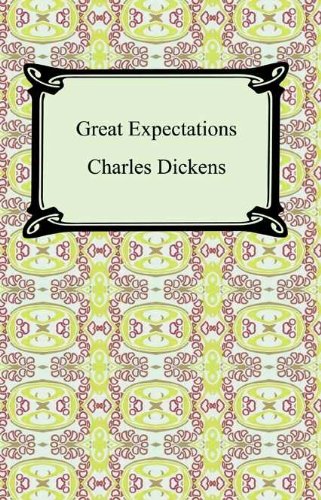
Great Expectations (Full Version) audiobook cover - From a lonely churchyard on the Kent marshes, young Pip is pulled into a chain of fear, secrecy, and sudden possibility—an awakening that will test whether “great expectations” can buy belonging, love, or a true self.

Great Expectations (Full Version)

From a lonely churchyard on the Kent marshes, young Pip is pulled into a chain of fear, secrecy, and sudden possibility—an awakening that will test whether “great expectations” can buy belonging, love, or a true self.

Charles Dickens

4.7 / 5(2568 ratings)
Categories:

Listen to Great Expectations (Full Version) — Free Audiobook

Loading player...

Historical Background

Charles Dickens wrote *Great Expectations* between 1860 and 1861, publishing it as a weekly serial in his literary magazine *All the Year Round*. The novel emerged during the height of the Victorian era, a period marked by rapid industrialization, urban expansion, and stark class divisions in British society. Dickens drew upon his own childhood experiences of poverty and his father's imprisonment for debt to create Pip's journey from humble origins to gentlemanly aspirations.

The novel reflects mid-Victorian anxieties about social mobility, the morality of inherited wealth, and the corrupting influence of class ambition. Written after Dickens's separation from his wife and during his relationship with actress Ellen Ternan, *Great Expectations* displays a more mature, psychologically complex approach than his earlier works. The story's exploration of guilt, shame, and the pursuit of respectability resonated deeply with Victorian readers grappling with questions of self-improvement and moral worth.

Notably, Dickens famously revised the novel's ending at the suggestion of his friend Edward Bulwer-Lytton, changing the original bleak conclusion to a more ambiguously hopeful one. This decision has sparked enduring critical debate about which ending better serves the novel's themes. *Great Expectations* remains one of Dickens's most beloved and frequently adapted works, its examination of identity, class, and redemption continuing to captivate readers across generations.
Study Questions

  1. How does Dickens use Pip's transformation from a blacksmith's apprentice to a 'gentleman' to critique Victorian notions of social class and moral worth? In what ways does the novel suggest that true gentility has little to do with wealth or social position?

  2. Analyze the role of Miss Havisham and Satis House as symbols within the novel. How does Dickens use Miss Havisham's frozen world to explore themes of arrested development, revenge, and the destructive nature of dwelling in the past?

  3. Consider the two endings Dickens wrote for the novel—the original darker conclusion and the revised, more hopeful version. Which ending do you believe better serves the novel's themes, and what does Dickens's decision to revise it reveal about Victorian literary expectations?

What Critics and Readers Say

Great Expectations is widely regarded by both scholars and general readers as one of Charles Dickens's greatest novels, distinguished for its vivid characters, moral depth, and examination of Victorian society. First published serially in 1860–1861, the novel has been praised across generations for its exploration of personal growth, class, guilt, and redemption.

Critics at the time of publication generally praised the novel's intricate plotting and imaginative power, though not all reviews were uniformly positive. Some early reviewers found the story's tone uneven, yet many acknowledged Dickens's ability to combine humor, pathos, and social commentary. Over time, literary scholars have celebrated Great Expectations for its structural sophistication and its enduring status as a classic of English literature.

The novel's reputation among readers remains strong: community reviews often highlight Pip's emotional journey from innocence to maturity and how Dickens's unforgettable characters — such as the eccentric Miss Havisham and the beautiful but cold Estella — enrich the narrative with symbolic complexity. Readers also note the novel's incisive critique of social class distinctions and the personal cost of ambition.

Critical polls and academic surveys regularly include Great Expectations among the most significant British novels, and its influence is evident in later literary analysis and adaptation.

Sources:

• Wikipedia – Great Expectations reception and themes: https://en.wikipedia.org/wiki/Great_Expectations

• Goodreads – Great Expectations community reviews: https://www.goodreads.com/book/show/2623.Great_Expectations

• German Wikipedia – assessment by international critics: https://de.wikipedia.org/wiki/Gro%C3%9Fe_Erwartungen_%28Roman%29

Great Expectations (Full Version) — Full Chapter Overview

Great Expectations (Full Version) Summary & Overview

First published in 1860–61, Great Expectations is Charles Dickens’s masterful coming-of-age novel, narrated with unforgettable wit and moral clarity by Pip, an orphan raised in hardship on the marshes. A chance encounter with an escaped convict, and later a mysterious benefactor, propel Pip from village obscurity toward the glittering promises of London—along with the shame, ambition, and self-deception that often accompany social ascent.

Dickens weaves a richly atmospheric story of class and conscience, tracing how money and status can distort gratitude, loyalty, and love. With indelible characters—tender-hearted Joe Gargery, the chilling Miss Havisham, and the proud, elusive Estella—the novel explores fate versus choice, the cost of reinvention, and the hard-won recognition of what it means to become “a gentleman.” Both suspenseful and deeply humane, it remains one of the great moral and emotional journeys in English fiction.

Who Should Listen to Great Expectations (Full Version)?

  • Listeners who love classic bildungsromans about ambition, identity, and growing into moral adulthood.
  • Fans of richly voiced Victorian storytelling—darkly funny, suspenseful, and packed with unforgettable characters.
  • Readers interested in class, social mobility, and how money and pride reshape relationships.

About the Author: Charles Dickens

Charles Dickens (1812–1870) was the defining English novelist of the Victorian era, celebrated for his vivid characters, social criticism, and unmatched narrative energy. Shaped by an unhappy childhood and early work in factories and offices, Dickens wrote with fierce sympathy for the poor and a sharp eye for institutional cruelty. His major novels include Oliver Twist, David Copperfield, Bleak House, A Tale of Two Cities, and Great Expectations. A popular public reader of his own work, he helped elevate the novel’s cultural power, blending entertainment with moral urgency in stories that still feel immediate and alive.

🎧
Listen in the AppOffline playback & background play
Get App