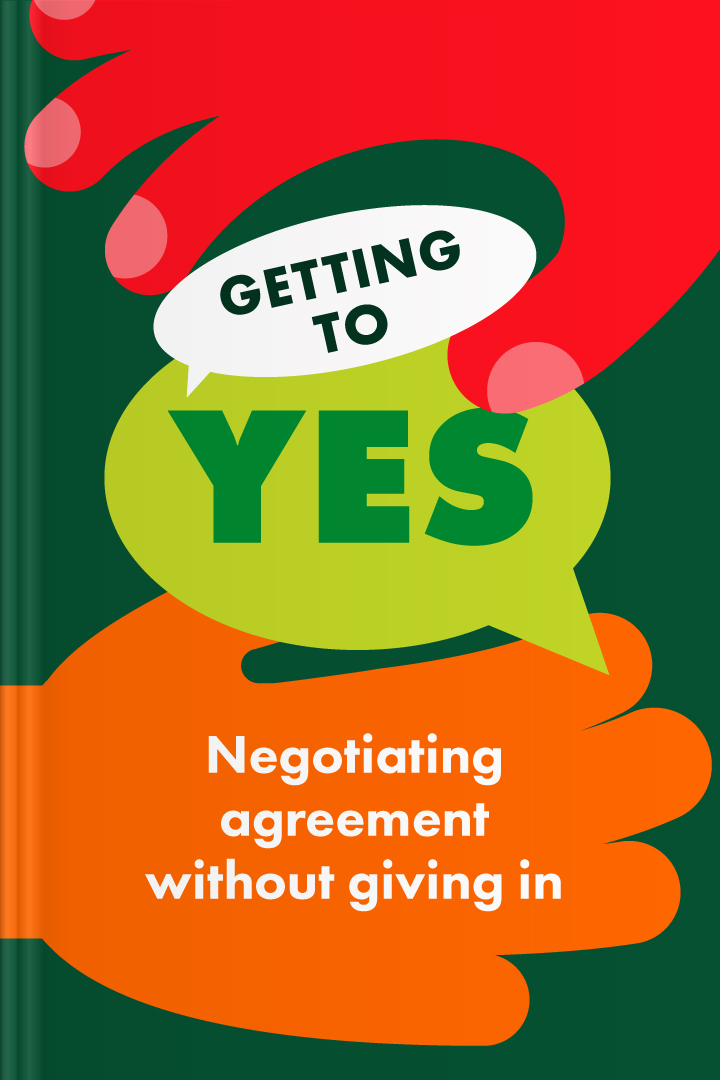
If You're Curious About These Questions...
You should listen to this audiobook
- Have you ever wondered why both 'playing nice' and 'playing tough' often backfire in a negotiation, and what you should be doing instead?
- What’s the secret to holding your ground and getting what you need, even when the other person seems to have all the power?
- What if you could navigate high-stakes conversations and neutralize manipulation tactics without ever losing your cool or sacrificing your self-respect?
Listen to Getting to Yes — Free Audiobook
Key Takeaways from Getting to Yes
- Discover how to shift your focus from winning arguments to crafting 'wise agreements' that respect both sides and preserve long-term relationships.
- Understand why aggressive pushing and stalling tactics ultimately damage trust, and learn to study the true constraints and needs of the other party instead.
- Recognize the hidden dangers of positional bargaining, where stubbornly defending a single viewpoint creates tunnel vision and prevents mutually beneficial solutions.
- Master the framework of principled negotiation to successfully avoid the harsh tension of hard bargaining and the self-sacrificing compromises of soft bargaining.
- Learn how to separate the person from the problem to keep emotions in check, and uncover why building simple human connections can naturally improve your negotiation outcomes.
Getting to Yes — Full Chapter Overview
Chapter 1: Recommendation
Chapter 2: Negotiation Isn’t a Battle, It’s a Shared Skill
Chapter 3: Moving Beyond Hard and Soft Bargaining
Chapter 4: Separate People from Problems: Perception, Emotion, Communication
Chapter 5: Uncover Interests and Create Options Together
Chapter 6: When Power Is Uneven: BATNA and Calm Resilience
Chapter 7: Spot the Trick, Protect the Process
Chapter 8: Wise Agreements and Healthier Relationships
Getting to Yes Summary & Overview
Negotiation shows up everywhere: at work, at home, in friendships, and inside everyday decisions. This audiobook-style summary gently reframes negotiation as a skill for solving shared problems—not a contest of willpower.
Across seven chapters, the script explores why “hard vs. soft” bargaining often fails, and how principled negotiation helps people separate the people from the problem, uncover real interests, invent options, and rely on objective standards. It also covers how to respond when the other person has more power, and how to recognize and neutralize common manipulation tactics—while staying calm, clear, and self-respecting.
Who Should Listen to Getting to Yes?
- People who want more confident, less stressful conversations about pay, boundaries, timelines, or shared decisions at work and at home
- Managers, team leads, and collaborators who need practical ways to handle conflict while preserving trust
- Anyone who tends to avoid negotiation—or tends to push too hard—and wants a balanced, respectful approach
Books Similar to Getting to Yes
Readers who enjoyed this also liked these titles.
The Art of Better Negotiation
A Practical Guide for Making Strategic Decisions, Finding Solutions, and Delivering the Best Deal
The Negotiating Tools That the Pros Don't Want You to Know
How You Can Negotiate to Succeed in Work and Life