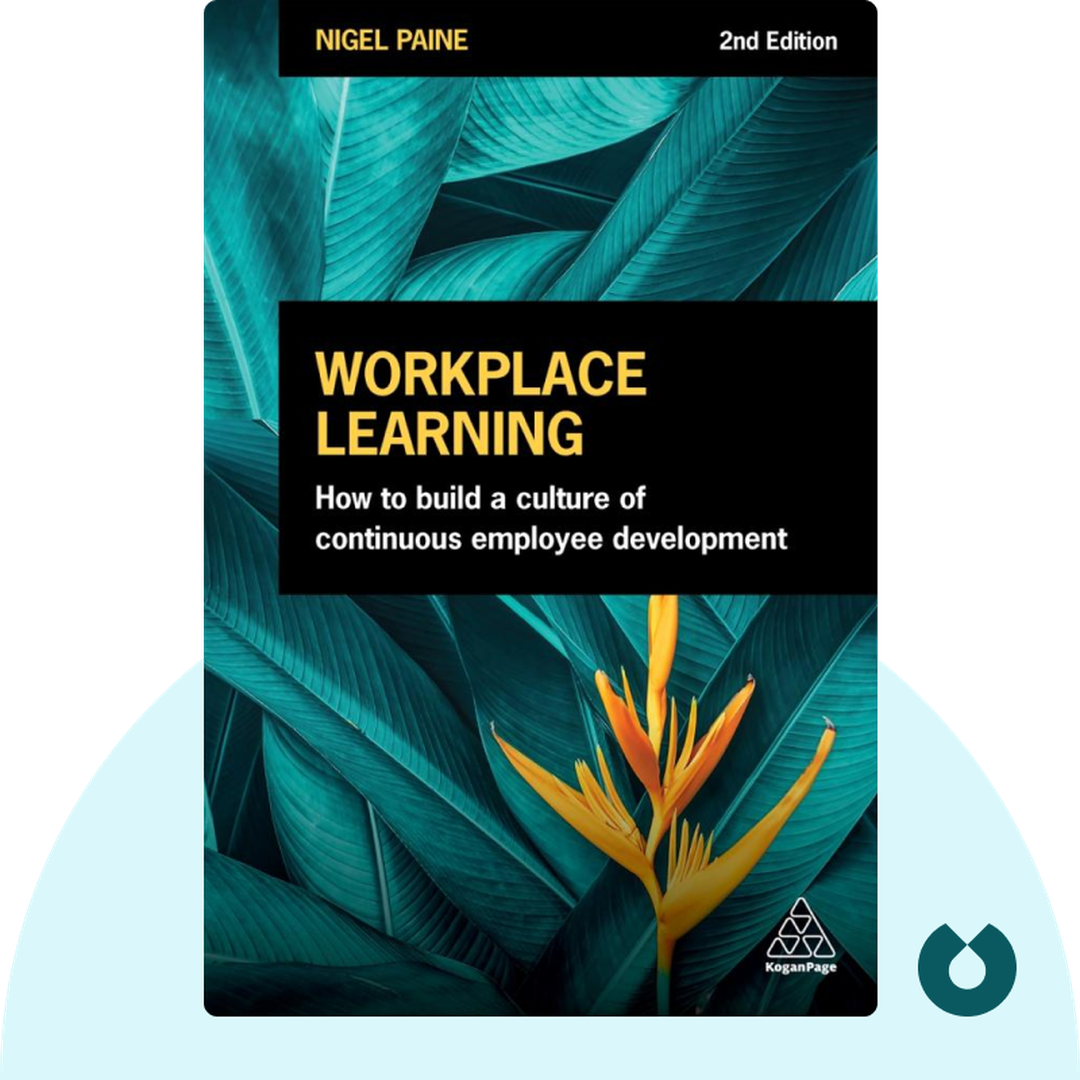
If You're Curious About These Questions...
You should listen to this audiobook
- What’s the secret to moving beyond standard training seminars to create a workforce that learns and adapts every single day?
- What if you could transform your company’s competitive edge simply by changing the way your team communicates and shares knowledge?
- Are you curious about the two foundational pillars that turn a standard office into a high-performance learning culture?
Listen to Workplace Learning — Free Audiobook
Loading player...
Key Takeaways from Workplace Learning
- Understand why modern organizations must transition from basic need-to-know training to a dynamic learning culture to survive rapid social and technological change.
- Discover how collective intelligence mirrors the human brain, where true organizational brilliance emerges from the connections and shared knowledge between employees.
- Learn how effective leaders break down knowledge silos to ensure their teams collaborate, proving that a connected workforce is always greater than the sum of its parts.
- Find out why ignoring awkward truths and punishing the bearers of bad news creates a toxic culture where costly mistakes are hidden and normalized.
- Recognize the systemic roots of widespread employee disengagement and realize how micromanagement stifles individual initiative while sapping workplace motivation.
Learning Tools
Reinforce what you learned from Workplace Learning
Mind Map
Workplace Learning
The Need for Learning Cultures+
Learning is Collective+
Toxic Cultures Stifle Growth+
Success Case: WD-40+
Success Case: Microsoft+
The Leader's Role+
Quiz — Test Your Understanding
Question 1 of 7
According to the author's analogy of the human brain, how does organizational learning primarily occur?
Question 2 of 7
In a dysfunctional company culture, why do failing initiatives like 'Product X' often persist for years?
Question 3 of 7
Why is the traditional 'command-and-control' model of management no longer effective for modern organizations?
Question 4 of 7
How does WD-40 handle employee mistakes under CEO Garry Ridge's leadership?
Question 5 of 7
What is the purpose of WD-40's 'Blue Vault' and its associated employee pledge?
Question 6 of 7
What key cultural shift did Satya Nadella initiate at Microsoft to help the company regain its competitive edge?
Question 7 of 7
According to the book's final summary, what is the primary role of a leader in facilitating workplace learning?
Workplace Learning — Full Chapter Overview
- 1Recommendation
- 2Learning cultures forge bonds among individuals.
- 3You can’t solve problems without truthful communication.
- 4Micromanagers smother initiative and drain motivation.
- 5Successful companies don’t penalize mistakes – they learn from them.
- 6Successful leaders don’t fixate on answers – they ask the right questions.
Workplace Learning Summary & Overview
Workplace Learning (2019) argues that learning and development professionals have to offer more than the usual array of courses and seminars. If you want to help your company compete in today’s fast-moving world, Nigel Paine believes, you have to start building the right kind of organizational culture. That culture rests on two pillars: open communication and knowledge sharing. For Paine, these are the foundation for the kind of constant, day-to-day learning organizations need.
Who Should Listen to Workplace Learning?
- Team leaders and managers
- HR professionals
- Anyone who wants to improve their workplace
Books Similar to Workplace Learning
Readers who enjoyed this also liked these titles.