Theme Song
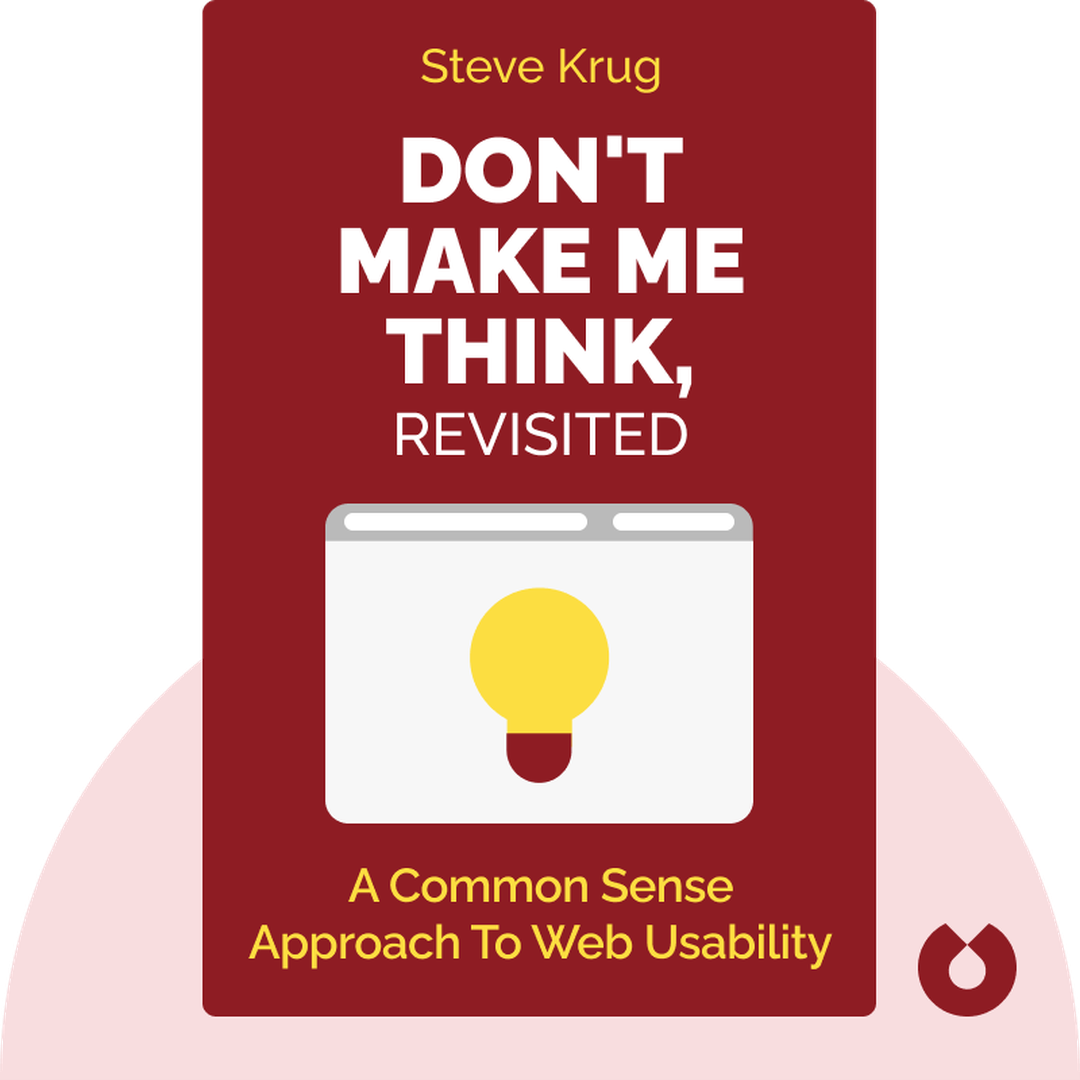
Don't Make Me Think, Revisited
Start ListeningDownload Try free on iPhoneScan to start in 5 seconds
Categories:
If You're Curious About These Questions...
You should listen to this audiobook
- Have you ever wondered why the most successful websites are those that require the absolute least amount of thinking from their users?
- Did you know that almost no one actually 'reads' your website, and what is the hidden behavior they use to navigate instead?
- What's the secret to uncovering your website’s biggest usability flaws using only a few hours and almost zero budget?
Listen to Don't Make Me Think, Revisited — Cinematic Audio Edition
Loading player...
Key Takeaways from Don't Make Me Think, Revisited
- Discover why users prefer 'satisficing' over rationally analyzing websites, choosing to quickly click the first appealing option instead of reading directions.
- Learn how to design your website like a highway billboard by using visual hierarchies, short paragraphs, and highlighted keywords to help visitors scan for information.
- Understand that website visitors don't mind making multiple clicks as long as each choice is completely mindless and clearly leads them closer to their goal.
- Master site navigation by consistently including four essential elements: a search bar, a 'You are here' indicator, a clickable home logo, and a utilities section.
- Find out why embracing established web conventions, rather than trying to creatively reinvent the wheel, is the secret to allowing users to navigate your site effortlessly.
Learning Tools
Reinforce what you learned from Don't Make Me Think, Revisited
Mind Map
Don't Make Me Think, Revisited
User Behavior+
Visual Design & Layout+
Navigation & Conventions+
The Home Page+
Usability Testing+
Mobile Design+
Quiz — Test Your Understanding
Question 1 of 10
How do most web users make decisions when navigating a website, according to the concept of 'satisficing'?
Question 2 of 10
The text compares building a website to creating which of the following?
Question 3 of 10
How do most website visitors feel about having to click multiple times to find information?
Question 4 of 10
Which of the following is NOT listed as one of the four essential navigation items every web page should include?
Question 5 of 10
Why should web designers generally embrace established conventions rather than trying to invent new navigation methods?
Question 6 of 10
What is recommended as the most effective way to communicate a site's overall goal on the home page?
Question 7 of 10
Why is it a bad idea to rely solely on friends or coworkers to evaluate your website's usability?
Question 8 of 10
When conducting usability testing, how many users are typically needed to generate useful insights?
Question 9 of 10
What is a key responsibility of the facilitator during a usability test?
Question 10 of 10
What is a common misconception about mobile web users that designers should avoid?
Don't Make Me Think, Revisited — Full Chapter Overview
- 1Recommendation
- 2Rather than learning how a system works, we prefer to explore and figure it out ourselves.
- 3Make it simple for users to scan your website for key messages and important information.
- 4Because navigation is central to every website, it must be clear, simple, and consistent.
- 5Conventions use what visitors already know to help them navigate your site with ease.
- 6Your home page should make a strong first impression and clearly show what your site is about.
- 7Don’t depend on friends or coworkers to assess your website. Test, test, and test again.
- 8Observe people using your site to see where and how they struggle to understand features.
- 9Testing doesn’t need to be resource-heavy or time-consuming to deliver useful insights.
- 10Ensure your mobile site loads quickly and prioritizes the features users need most.
- 11Final summary
Don't Make Me Think, Revisited Summary & Overview
Don’t Make Me Think, Revisited (2014) describes the basic principles governing behavior online and explains how you can build a website that delivers a great user experience. Also included is a simple guide to help you test a website at each stage of its development.
Who Should Listen to Don't Make Me Think, Revisited?
- Anyone working at a small company with a web presence
- Web designers, developers and web project managers
- Anyone who wants to persuade their boss to take usability seriously
Books Similar to Don't Make Me Think, Revisited
Readers who enjoyed this also liked these titles.