If You're Curious About These Questions...
You should listen to this audiobook
- What's the secret common thread that connects the success of global giants like Apple, Hyundai, and Whole Foods?
- Have you ever wondered why complexity is often the silent killer of great businesses, and how the world’s top leaders fight back against it?
- What if you could transform your organization's culture by mastering the one principle Steve Jobs used to revolutionize the tech industry?
Listen to Think Simple — Free Audiobook
Loading player...
Key Takeaways from Think Simple
- Discover why achieving business simplicity isn't about being simple, but rather mastering internal complexity to give customers an effortlessly intuitive experience.
- Learn how to cultivate a state of 'flow' for your customers by designing products and services that feel remarkably easy to use, regardless of the complex technology behind them.
- Understand the power of crafting a singular, clear company mission to cut through bureaucratic clutter and guide every strategic decision your business makes.
- Find out how to translate your high-level corporate vision into an actionable frontline mantra, just as the Apple Store did with its directive to 'Enrich Lives'.
- Master the use of a strong company culture to naturally unify a disparate workforce, instill a shared purpose, and quickly filter out hires who don't align with your core ethos.
Learning Tools
Reinforce what you learned from Think Simple
Mind Map
Think Simple
The Illusion of Simplicity+
Central Mission+
Company Culture+
Leadership & The CEO+
Hiring for Simplicity+
Brand Coherence+
Customer Love & Loyalty+
The Power of Intuition+
Quiz — Test Your Understanding
Question 1 of 8
What is the core truth about achieving simplicity in business, according to the text?
Question 2 of 8
How did Ron Johnson translate Apple's central mission into a specific mantra for the Apple Store?
Question 3 of 8
Why was John Browett quickly let go from his position as Apple's senior vice president of retail?
Question 4 of 8
How did Steve Jobs's hands-on leadership style contribute to Apple's culture of simplicity?
Question 5 of 8
When hiring for The Container Store, what two non-traditional attributes does Kip Tindell value more than intelligence and technical ability?
Question 6 of 8
Why did Steve Jobs refuse to create a low-cost Apple phone despite critics' suggestions?
Question 7 of 8
According to the text, how can unglamorous businesses like banks or cable providers build a deep connection or "love" with their customers?
Question 8 of 8
How does Jeff Fluhr of StubHub utilize intuition in his web-based business?
Think Simple — Full Chapter Overview
- 1Recommendation
- 2Simplicity isn’t just being simple — it’s about conveying the impression of simplicity to others.
- 3Every great company has a core mission that clearly defines it.
- 4A robust company culture helps unite and simplify.
- 5A company’s CEO is vital to achieving simplicity.
- 6Hiring the right team is the key to a strong and streamlined company.
- 7A strong, coherent brand is key for simplicity.
- 8Simplicity can inspire deep, genuine love and admiration for a company.
- 9Many great business leaders trust intuition.
Think Simple Summary & Overview
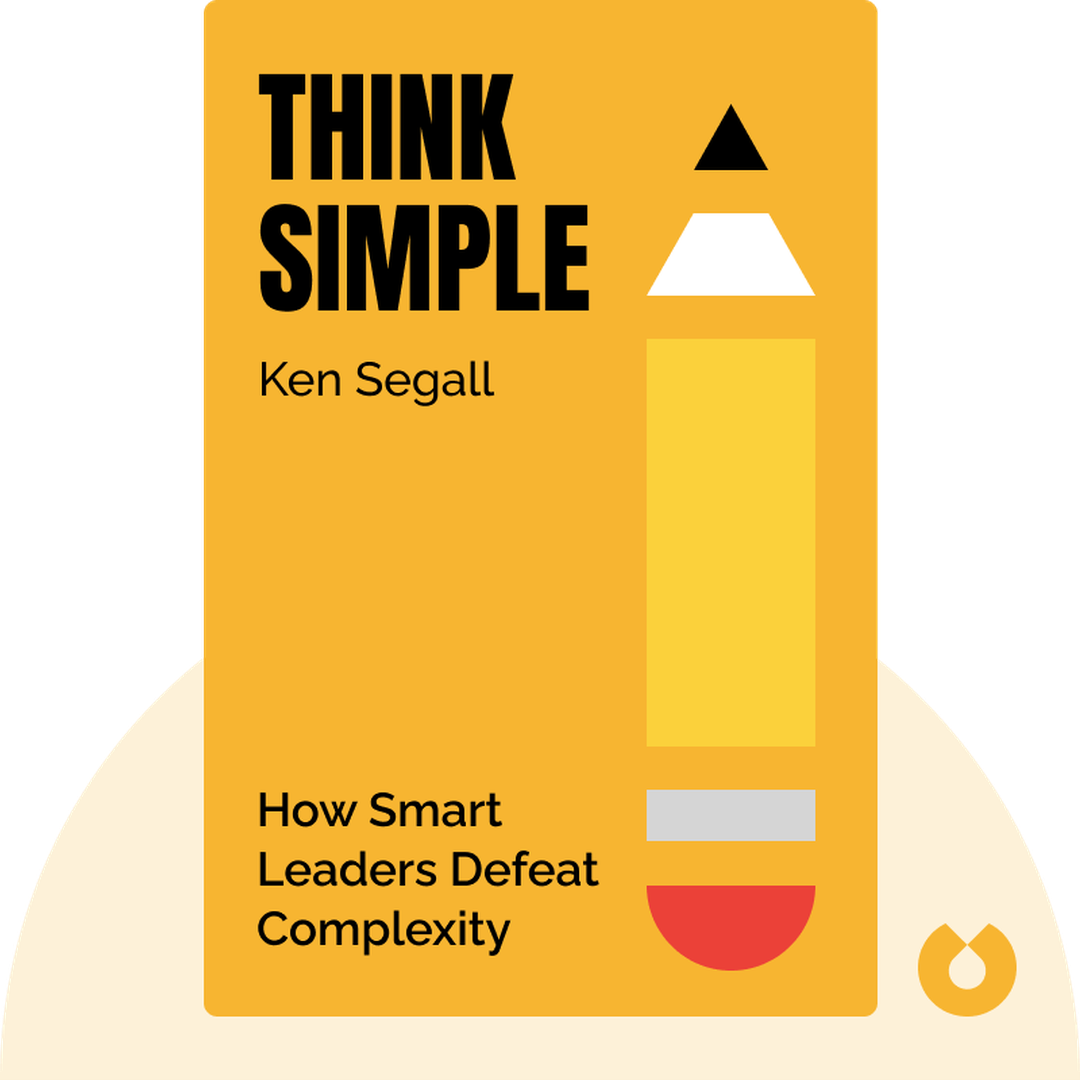
Think Simple (2020) shows us how simplicity is the key to successful businesses, from Hyundai to Whole Foods. Here, Apple insider Ken Segall teaches us how to combat complexity and focus on what really matters in a winning organization.
Who Should Listen to Think Simple?
- Business leaders looking to simplify their complex organizations
- Start-up entrepreneurs who want to preserve their initial simplicity
- Anyone interested in Apple’s business philosophy
Books Similar to Think Simple
Readers who enjoyed this also liked these titles.