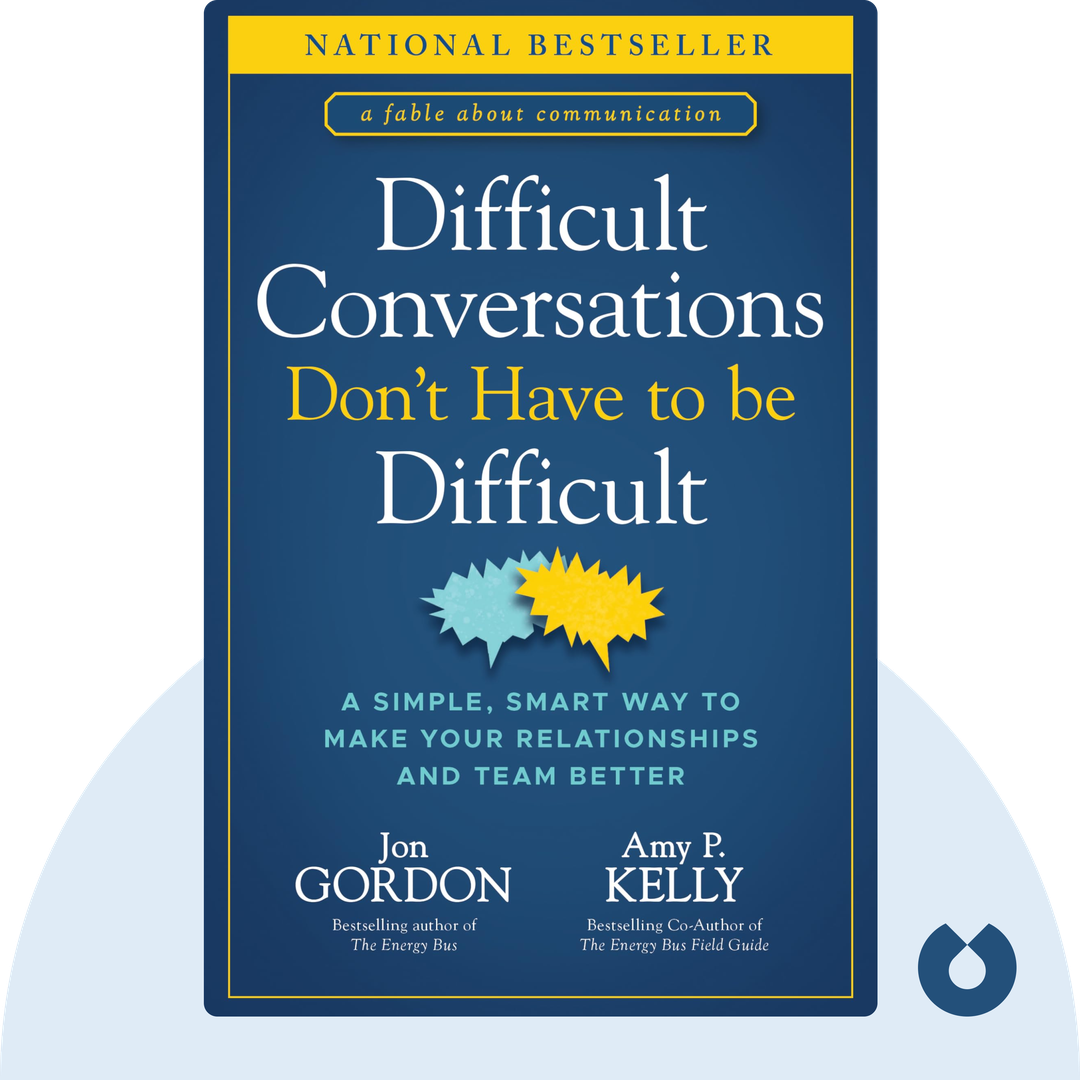
Difficult Conversations
Start ListeningDownload Try free on iPhoneScan to start in 5 seconds
Categories:
If You're Curious About These Questions...
You should listen to this audiobook
- Did you know that every difficult conversation is actually three separate, hidden dialogues happening at the same time?
- Have you ever wondered why even your best intentions can trigger a defensive reaction, and how you can flip the script to build trust instead?
- What if you could navigate high-stakes conflicts without feeling like your identity or competence is being put on trial?
Listen to Difficult Conversations — Cinematic Audio Edition
Loading player...
Key Takeaways from Difficult Conversations
- Learn how to manage the 'hand grenade' of difficult talks by avoiding the extremes of silent suppression and destructive emotional explosions.
- Discover the three hidden layers inside every conflict—the 'what happened,' feelings, and identity conversations—to navigate chaos with clarity.
- Understand why assuming you already know the whole truth turns you into a 'prosecutor,' and how staying curious keeps arguments productive.
- Recognize that both sides in a disagreement can genuinely feel 'right' because human attention is selective and shaped by unique past experiences.
- Master the art of perspective-taking by genuinely listening to how the other person reached their conclusions, without having to surrender your own viewpoint.
Learning Tools
Reinforce what you learned from Difficult Conversations
Mind Map
Difficult Conversations
The Core Challenge+
The Three Conversations+
The Learning Conversation+
Initiating the Talk+
Actionable Advice+
Quiz — Test Your Understanding
Question 1 of 8
Why do people typically avoid difficult conversations according to the text?
Question 2 of 8
What are the three underlying components that make up any difficult conversation?
Question 3 of 8
How should you handle the issue of 'blame' in a Learning Conversation?
Question 4 of 8
What does the text mean by exploring your 'emotional footprint'?
Question 5 of 8
What is a common mistake people make regarding their own identity during a difficult conversation?
Question 6 of 8
To maintain balance during the Identity Conversation, what notion must you give up?
Question 7 of 8
What is a 'Third Story' in the context of starting a difficult conversation?
Question 8 of 8
What actionable advice does the text give regarding your 'inner voice'?
Difficult Conversations — Full Chapter Overview
- 1Recommendation
- 2Don’t avoid difficult conversations out of fear of the consequences.
- 3Difficult conversations involve blame, feelings, and identity.
- 4Turn the “What Happened?” Conversation into a Learning Conversation by focusing on curiosity, impact, and contribution.
- 5Improve the Feelings Conversation by exploring, negotiating, and sharing your emotions.
- 6Pay attention to the complexities of the Identity Conversation, and avoid trying to control others’ reactions.
- 7Tell a neutral Third Story.
- 8Final summary
Difficult Conversations Summary & Overview
Difficult Conversations (1999) takes a look at what makes a conversation difficult and why we often try to avoid them. It outlines how to correctly approach and maneuver through tough topics to build positive and meaningful relationships.
Who Should Listen to Difficult Conversations?
- Politicians and business leaders
- Teachers
- Parents
Books Similar to Difficult Conversations
Readers who enjoyed this also liked these titles.