Theme Song
If You're Curious About These Questions...
You should listen to this audiobook
- Have you ever wondered why even the most rational discussions can suddenly spiral into heated shouting matches the moment the stakes get high?
- What’s the secret to bringing up sensitive or controversial topics without making the other person feel attacked or defensive?
- What if you could master a specific set of psychological techniques to turn your most difficult confrontations into productive, solution-oriented breakthroughs?
Listen to Crucial Conversations — Cinematic Audio Edition
Loading player...
Key Takeaways from Crucial Conversations
- Understand why crucial conversations often trigger a biological fight-or-flight response, flooding your body with adrenaline and making rational thought nearly impossible.
- Discover how freely sharing information and ideas leads to smarter decisions and ensures that people fully commit to a solution, even if they initially disagreed.
- Learn how to keep your emotions in check when criticized by simply pausing to identify what you truly want to achieve and what outcomes you want to avoid.
- Recognize that people resort to silent or violent behaviors like sarcasm when they feel unsafe, making a secure atmosphere essential for resolving controversial issues.
- Master the art of navigating high-tension discussions to become an opinion leader in your workplace and reduce your chances of a relationship breakup by up to 50 percent.
Learning Tools
Reinforce what you learned from Crucial Conversations
Mind Map
Crucial Conversations
Nature of Crucial Conversations+
Power of Shared Information+
Managing Yourself+
Spotting Unsafe Conditions+
Building a Safe Atmosphere+
Managing Interpretations+
Helping Others Open Up+
Decision-Making and Action+
Quiz — Test Your Understanding
Question 1 of 10
Why do crucial conversations often provoke an over-emotional and irrational response?
Question 2 of 10
What is the primary benefit of freely sharing information during a crucial conversation?
Question 3 of 10
According to the text, what should you do first when your ideas are attacked to prevent yourself from becoming irate?
Question 4 of 10
How do people typically react when they feel 'unsafe' in a conversation?
Question 5 of 10
What technique does the book suggest for maintaining a feeling of mutual respect when addressing a problem with someone?
Question 6 of 10
What should you do if it becomes clear that you and your conversation partner do not have a common purpose?
Question 7 of 10
How can you best manage your emotions when someone's actions make you angry?
Question 8 of 10
When a conversation partner expresses a negative belief about themselves, such as 'No one likes me!', how should you respond?
Question 9 of 10
How should decisions be made once a crucial conversation reaches a resolution?
Question 10 of 10
To ensure a decision is actually put into practice successfully, what must be clearly established?
Crucial Conversations — Full Chapter Overview
- 1Recommendation
- 2Crucial conversations can trigger overly emotional and irrational reactions.
- 3The best solutions emerge when people share information freely in crucial conversations.
- 4Stay focused on your goals during a crucial conversation to avoid becoming overly emotional.
- 5People are more likely to act aggressively in conversations where they don’t feel safe.
- 6Create safe conversations by making people feel respected and understood.
- 7Manage your emotions by getting the facts straight before interpreting them.
- 8Help others feel safe by creating an atmosphere where their opinions are valued.
- 9Choose the right decision-making approach and clarify responsibilities to turn conversation into action.
- 10Final summary
Crucial Conversations Summary & Overview
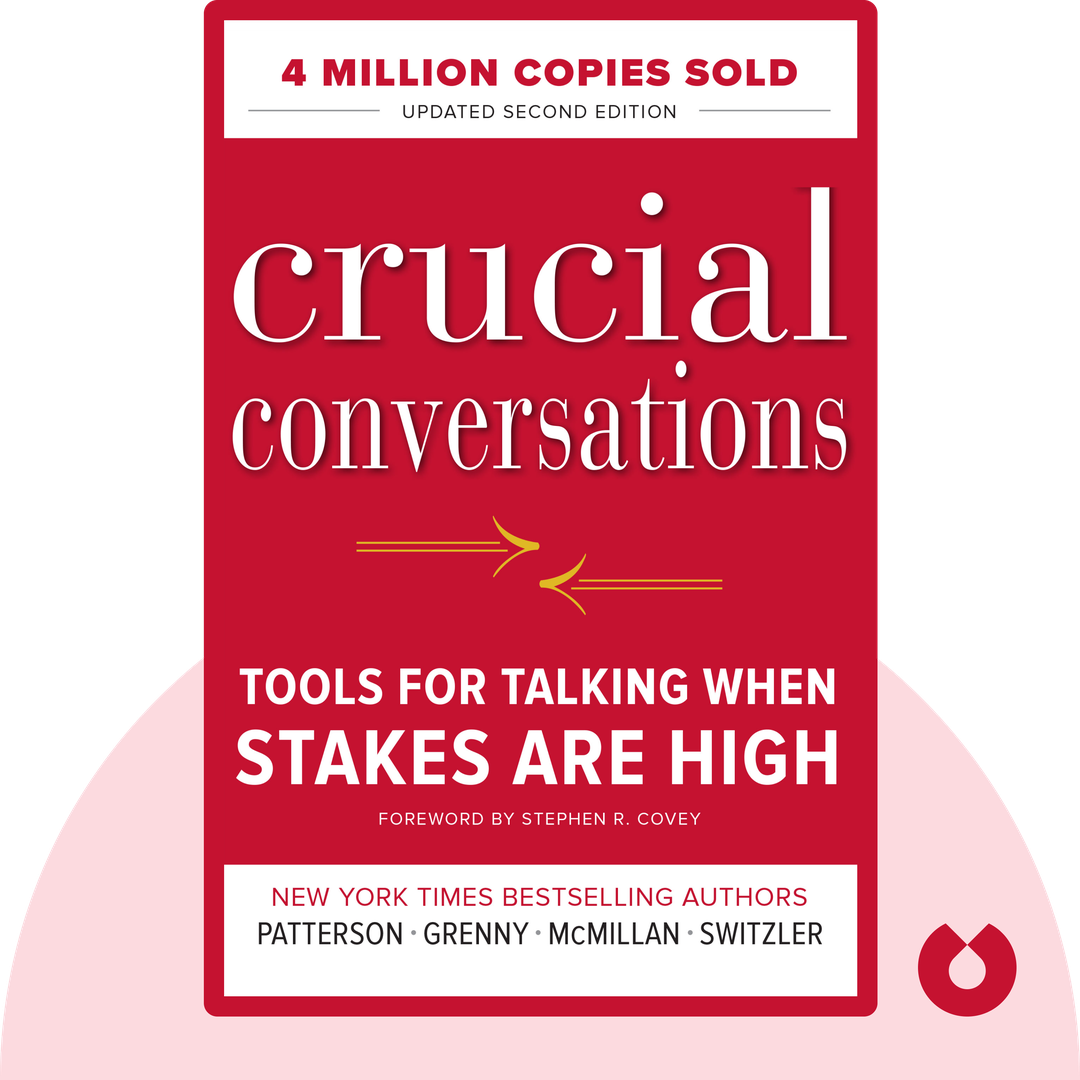
We’ve all been in situations where rational discussions get quickly out of hand, and Crucial Conversations investigates the root causes of this problem. You’ll learn techniques to handle such situations and shape them into becoming positive and solutions-oriented, while preventing your high-stakes conversations from turning into shouting matches.
Who Should Listen to Crucial Conversations?
- Anyone whose job requires dealing with other people often
- Anyone who wants to improve conversations in their personal relationships
- Anyone who offers professional communications training
Books Similar to Crucial Conversations
Readers who enjoyed this also liked these titles.