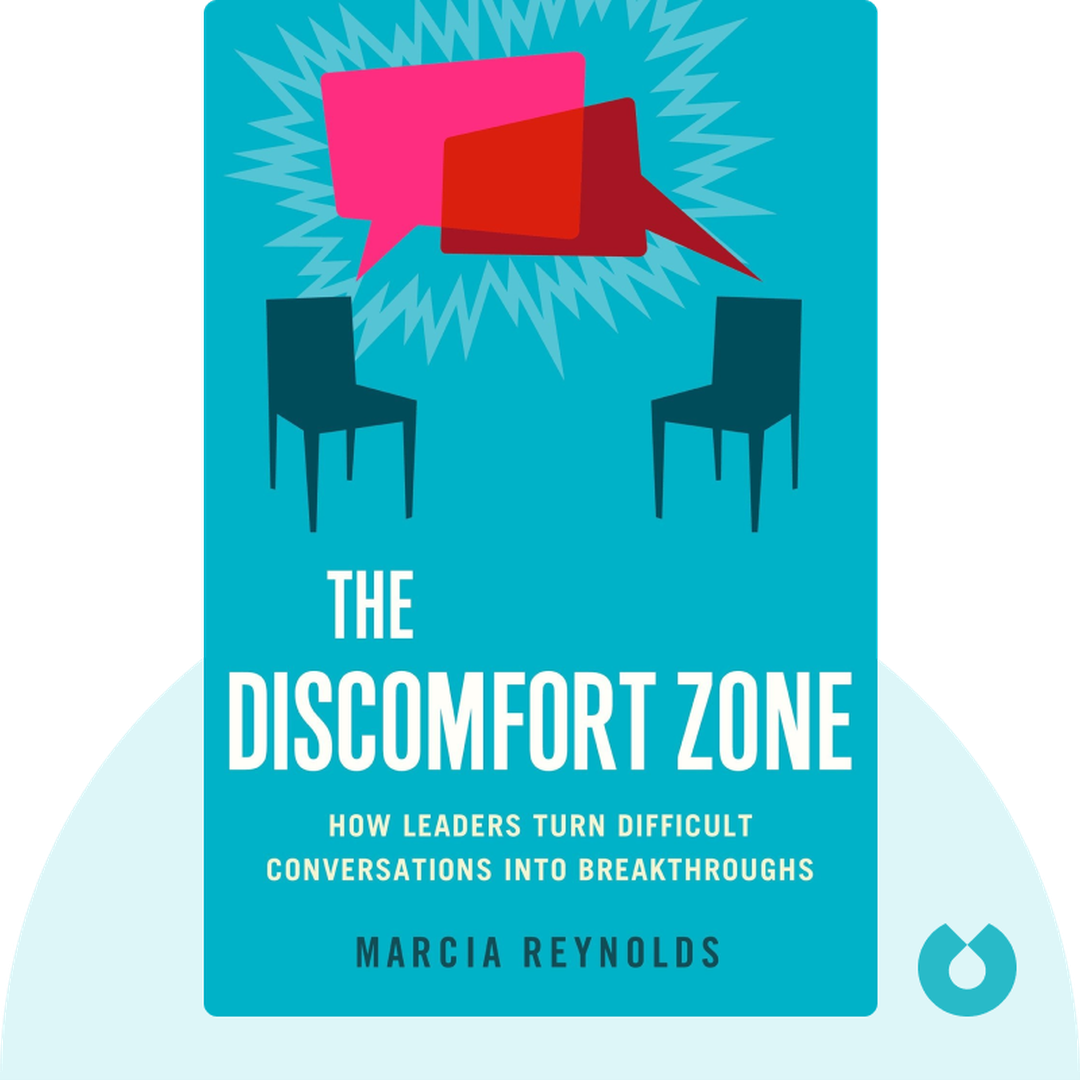
If You're Curious About These Questions...
You should listen to this audiobook
- What if the most uncomfortable moments in a conversation are actually the secret to triggering a massive breakthrough in someone else's thinking?
- Have you ever wondered why the best leaders stop giving advice and start using 'the discomfort zone' to spark lasting change?
- What's the secret to listening so deeply that you can uncover the hidden beliefs holding your team back?
Listen to The Discomfort Zone — Free Audiobook
Loading player...
Key Takeaways from The Discomfort Zone
- Discover why triggering negative emotions can actually produce positive results by disrupting entrenched thinking patterns and forcing people to confront reality.
- Master the art of true listening by engaging your head to analyze logic, your heart to read between the lines, and your gut to uncover hidden emotional motivations.
- Learn how to create a 'safety bubble' of trust by removing distractions and focusing entirely on the present moment, ensuring your partner is receptive rather than defensive.
- Utilize the DREAM framework to structure difficult conversations, starting by determining a clear goal and reflecting on past events to understand why it hasn't been met.
- Find out how the technique of summarizing can prove you are listening closely, prompting the other person to self-reflect and explore blind spots in their own thinking.
Learning Tools
Reinforce what you learned from The Discomfort Zone
Mind Map
The Discomfort Zone
Core Philosophy+
Holistic Listening+
The Safety Bubble+
DREAM Framework+
Quiz — Test Your Understanding
Question 1 of 7
Why does the 'discomfort zone' technique deliberately trigger negative emotions?
Question 2 of 7
According to the text, what is the specific role of the 'gut brain' when listening to someone?
Question 3 of 7
What is the primary purpose of creating a 'safety bubble' before entering the discomfort zone?
Question 4 of 7
In the DREAM framework, why is it important to reflect on the past (the 'R' step)?
Question 5 of 7
When exploring a conversational partner's 'blind spots' (the 'E' in DREAM), what should you do when you discover their hidden conflict?
Question 6 of 7
How should you ensure that your partner has truly acknowledged what they've learned at the end of the conversation (the 'A' in DREAM)?
Question 7 of 7
What is the final step ('M') in the DREAM framework?
The Discomfort Zone — Full Chapter Overview
- 1Recommendation
- 2If you hope to change the conversation, you must disrupt your partner’s thinking patterns first.
- 3To truly hear another person, you must engage your head, your heart, and your gut as well.
- 4To conduct a difficult conversation successfully, you must first create an atmosphere of trust.
- 5To begin a difficult conversation, define the goal and reflect on why it remains unmet today.
- 6To help someone shift their perspective, explore the blind spots within their thinking deeply.
- 7Conclude the conversation by acknowledging insights and establishing a concrete follow-up plan together.
The Discomfort Zone Summary & Overview
The Discomfort Zone outlines a method for dealing with the tough, unpleasant conversations that all of us encounter from time to time. The key to successfully navigating them is truly listening to what other person has to say.
Who Should Listen to The Discomfort Zone?
- Anyone who holds a leadership role
- Anyone interested in improving their communication skills
- Anyone who wants to become a better listener
Books Similar to The Discomfort Zone
Readers who enjoyed this also liked these titles.