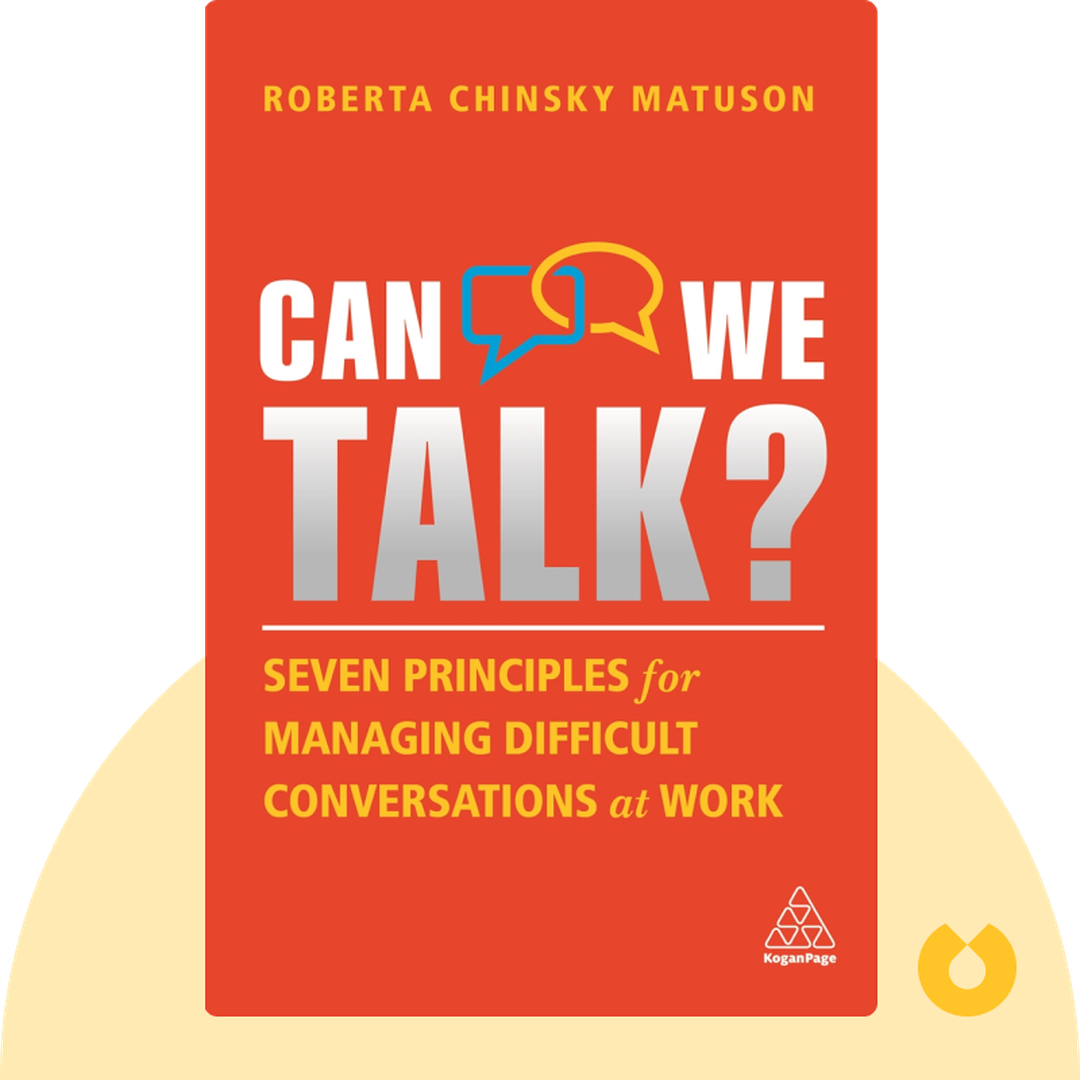
If You're Curious About These Questions...
You should listen to this audiobook
- What if you could walk into your next high-stakes performance review or salary negotiation feeling completely in control of the conversation?
- What’s the secret to mastering the seven communication principles that turn awkward workplace confrontations into productive breakthroughs?
- Have you ever wondered why avoiding a difficult conversation with your boss might actually be the biggest thing holding your career back?
Listen to Can We Talk? — Free Audiobook
Loading player...
Key Takeaways from Can We Talk?
- Discover why silence isn't golden and how avoiding difficult workplace conversations inevitably leads to toxic environments, lost productivity, and costly financial setbacks.
- Build the confidence to initiate tricky discussions by treating it like a muscle, using positive affirmations and practicing on smaller issues first.
- Stop having one-sided conversations in your head that anticipate negative reactions, and instead use your confidence to initiate actual, productive dialogues.
- Master the art of clarity by setting concrete goals before you speak, defining exactly what action you want the other person to take, and knowing what you are willing to risk.
- Learn how to navigate conversation deflectors by kindly but firmly steering back to the facts, and understand why you should immediately establish next steps once your objective is met.
Learning Tools
Reinforce what you learned from Can We Talk?
Mind Map
Can We Talk?
The Cost of Silence+
1. Confidence+
2. Clarity+
3. Compassion+
4. Curiosity+
5. Compromise+
6. Credibility+
7. Courage+
Actionable Advice+
Quiz — Test Your Understanding
Question 1 of 9
What is the primary consequence of avoiding difficult workplace conversations, according to the text?
Question 2 of 9
What common trap did Rishi fall into when he lacked the confidence to ask his boss for a raise?
Question 3 of 9
According to the principle of clarity, how should you respond if a colleague tries to deflect from their poor performance review by pointing out someone else's worse numbers?
Question 4 of 9
Why does the author argue that compassion actually 'trumps clarity' in professional communication?
Question 5 of 9
How does the text suggest you can effectively reignite a dialogue if the other person is trying to shut down the conversation?
Question 6 of 9
When attempting to reach a compromise, what is a key strategy for ensuring the conversation remains constructive?
Question 7 of 9
Which of the following is highlighted as a guaranteed way to instantly evaporate the professional credibility you have built up?
Question 8 of 9
What practical advice does the author give for developing the courage to initiate high-stakes, difficult conversations?
Question 9 of 9
According to the final summary, which of the following is a surefire sign that your boss might be preparing to have a difficult discussion with you?
Can We Talk? — Full Chapter Overview
- 1Recommendation
- 2Confidence is essential for productive communication.
- 3Prioritize clarity.
- 4Compassion belongs in professional communication.
- 5Curiosity is a virtue.
- 6Compromise can help you win.
- 7Build credibility for better communication outcomes.
- 8Find the courage to start tough conversations—it’s worth it.
- 9Final summary
Can We Talk? Summary & Overview
Can We Talk? (2021) outlines the seven communication principles essential for successfully navigating difficult conversations in the workplace, be it asking for a promotion, delivering negative feedback, or resolving a professional conflict.
Who Should Listen to Can We Talk??
- People who struggle to assert themselves at work
- Employees who avoid having difficult conversations with their managers
- Managers who wish they could communicate better with their teams
Books Similar to Can We Talk?
Readers who enjoyed this also liked these titles.