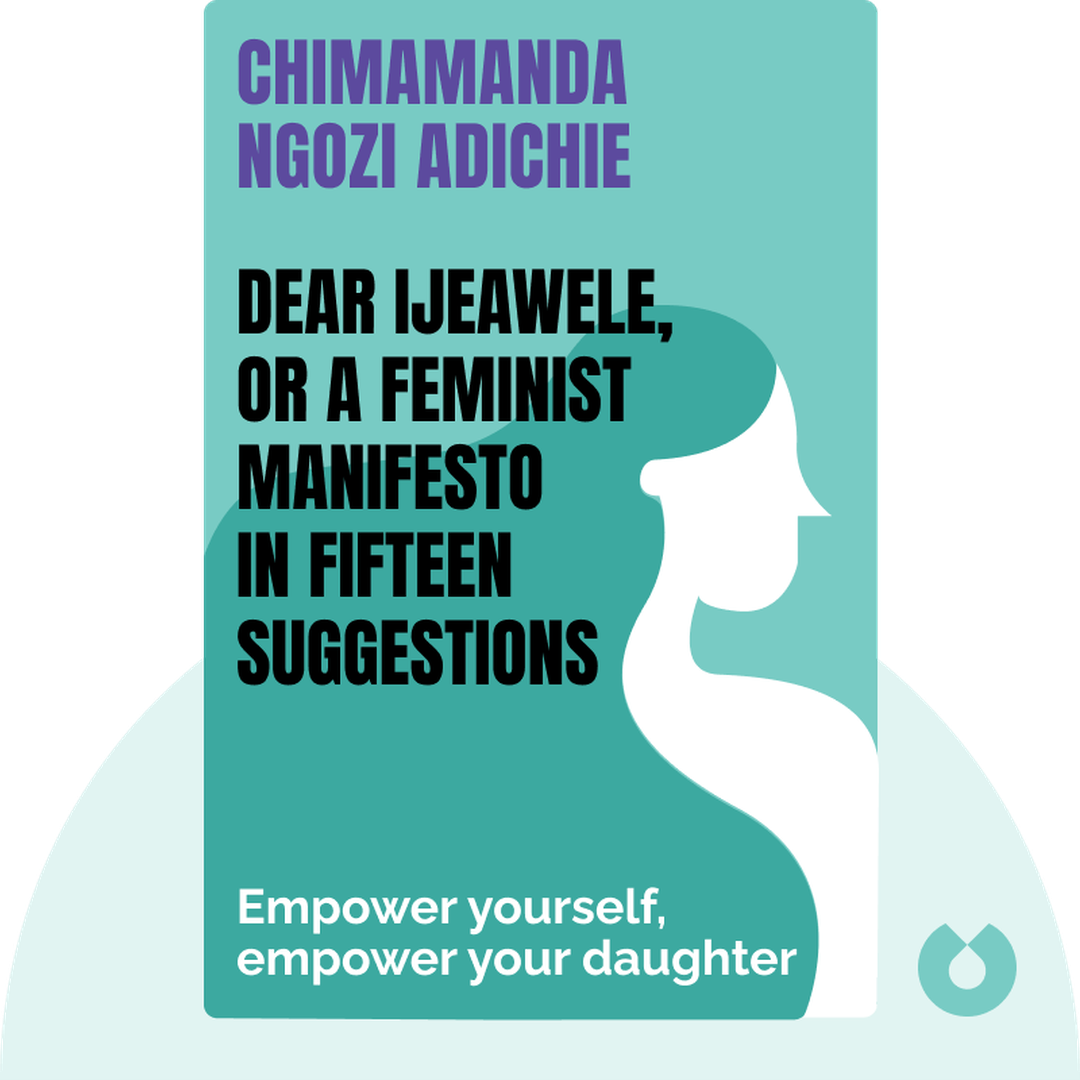
Dear Ijeawele, or A Feminist Manifesto in Fifteen Suggestions
Start ListeningDownload Try free on iPhoneScan to start in 5 seconds
Categories:
If You're Curious About These Questions...
You should listen to this audiobook
- Have you ever wondered how the subtle language we use to praise girls might actually be limiting their future independence?
- What's the secret to raising a daughter who rejects the pressure to be 'likable' and instead embraces her own authentic power?
- Are you curious about the specific trap of 'Feminism Lite' and how you can avoid it to raise a truly empowered child?
Listen to Dear Ijeawele, or A Feminist Manifesto in Fifteen Suggestions — Free Audiobook
Loading player...
Key Takeaways from Dear Ijeawele, or A Feminist Manifesto in Fifteen Suggestions
- Understand the unshakable foundation of feminism: the belief that girls and women matter fully and equally, without their worth being tied to conditions or pleasing behavior.
- Discover why motherhood should not erase a woman's individual identity, and how pursuing personal ambitions without guilt provides an empowering example for children.
- Learn to eliminate the language of fathers 'helping' or 'babysitting' at home, and instead establish childcare as a fully shared, fundamental responsibility of both parents.
- Realize that 'because you are a girl' is never a valid reason for anything, and see how freeing children from rigid gender roles allows them to reach their full potential.
- Examine how the concept of 'tradition' is often just a repeated habit used to justify harmful imbalances, and learn to confidently question these expectations in your daily family life.
Learning Tools
Reinforce what you learned from Dear Ijeawele, or A Feminist Manifesto in Fifteen Suggestions
Mind Map
Dear Ijeawele, or A Feminist Manifesto in Fifteen Suggestions
Motherhood & Personal Identity+
Co-Parenting & Equality+
Dismantling Gender Roles+
Rejecting 'Feminism Lite'+
The Power of Language+
Re-evaluating Love & Marriage+
Likability, Consent & Identity+
Appearance & Femininity+
Sex, Biology & Shame+
Navigating Difference & Oppression+
Quiz — Test Your Understanding
Question 1 of 10
What does the author suggest about the idea of a woman 'doing it all' (balancing work and parenting)?
Question 2 of 10
Why does Adichie object to saying a father is 'helping' when he takes care of his child?
Question 3 of 10
How does the text define 'Feminism Lite'?
Question 4 of 10
Why does Adichie advise against calling a young girl 'princess'?
Question 5 of 10
According to the text, what is the primary danger of society teaching girls, but not boys, to aspire to love and marriage?
Question 6 of 10
The author argues that teaching girls to prioritize being 'likable' and pleasing others is downright dangerous. Why?
Question 7 of 10
What is the author's stance on the relationship between feminism and femininity (such as fashion and makeup)?
Question 8 of 10
How does Adichie suggest parents should talk to their daughters about virginity?
Question 9 of 10
When teaching a daughter about oppressed groups, what trap does the author warn parents to avoid?
Question 10 of 10
What actionable advice does the text give regarding money and gender in relationships?
Dear Ijeawele, or A Feminist Manifesto in Fifteen Suggestions — Full Chapter Overview
- 1Recommendation
- 2Be a complete person, not defined only by motherhood.
- 3Committed parents raising a daughter together should reject gendered social norms.
- 4Gender roles are absurd, limiting, and should be rejected.
- 5Feminism Lite is a subtler form of misogyny.
- 6Question language, and teach your daughter to do the same.
- 7Teach daughters not to overvalue love and marriage.
- 8Your daughter needs encouragement to build a sense of self and her own identity.
- 9Be deliberate and careful when engaging with a girl’s appearance.
- 10Girls need tools early on for understanding and discussing sex and love.
- 11Your daughter should see difference as normal, without idealizing the oppressed.
- 12Final summary
Dear Ijeawele, or A Feminist Manifesto in Fifteen Suggestions Summary & Overview
Dear Ijeawele (2017) is a series of suggestions for raising young girls to be strong, independent women. A few years ago, a childhood friend of author Chimamanda Ngozi Adichie asked her advice on a very important topic – how to raise her daughter to be a feminist. Her friend was called Ijeawele, and this book is the author’s response.
Who Should Listen to Dear Ijeawele, or A Feminist Manifesto in Fifteen Suggestions?
- Feminists
- Parents of daughters
- Men looking for insight into what it’s like to grow up as a girl
Books Similar to Dear Ijeawele, or A Feminist Manifesto in Fifteen Suggestions
Readers who enjoyed this also liked these titles.