Theme Song
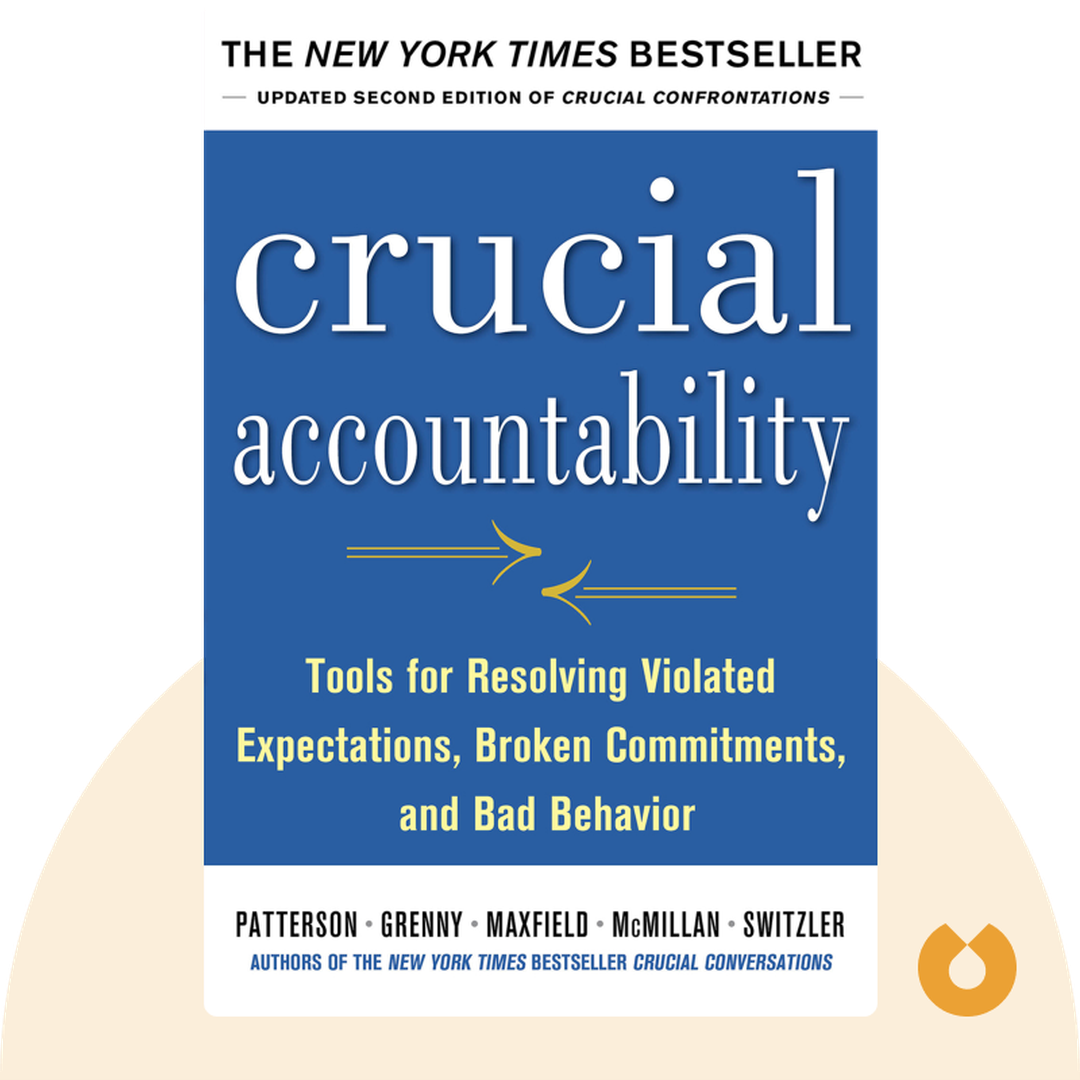
Crucial Accountability
Start ListeningDownload Try free on iPhoneScan to start in 5 seconds
Categories:
If You're Curious About These Questions...
You should listen to this audiobook
- Have you ever wondered why some people repeatedly break promises despite your best efforts to address the issue?
- What if you could hold anyone accountable for their actions without causing defensiveness or damaging the relationship?
- Are you curious about the hidden reason why most accountability conversations fail before they even begin?
Listen to Crucial Accountability — Cinematic Audio Edition
Loading player...
Key Takeaways from Crucial Accountability
- Learn how to untangle complicated accountability problems by using the CPR method—Content, Pattern, and Relationship—to identify the most important issue to address.
- Discover why feelings of hostility, a nagging conscience, or a fear of making things worse are clear indicators that you need to speak up instead of suffering in silence.
- Understand the 'fundamental attribution error' to stop assuming that a broken promise is simply the result of someone's flawed character.
- Master the art of setting a productive climate for tough conversations by replacing negative assumptions with curiosity about the personal, social, and structural factors driving someone's behavior.
- Find out how to make others feel safe during a confrontation by establishing a shared purpose and using 'contrasting' to prevent misunderstandings and clarify your true intentions.
Learning Tools
Reinforce what you learned from Crucial Accountability
Mind Map
Crucial Accountability
1. Choosing the Issue+
2. Creating the Right Climate+
3. Ensuring Psychological Safety+
4. Motivating Behavior Change+
5. Removing Barriers+
6. Handling Unexpected Challenges+
7. Creating an Action Plan+
Quiz — Test Your Understanding
Question 1 of 7
When deciding which accountability issue to address, the book recommends using the 'CPR' framework. What does CPR stand for?
Question 2 of 7
What is the 'fundamental attribution error' in the context of accountability discussions?
Question 3 of 7
To maintain respect and make others feel safe during a conversation, the book suggests using a tactic called 'contrasting.' How does this tactic work?
Question 4 of 7
According to the book, what is the most effective way to motivate a change in behavior during an accountability discussion?
Question 5 of 7
When you discover that a barrier is preventing someone from meeting expectations, what should be your first step in finding a solution?
Question 6 of 7
How should you handle a situation where a more critical issue (such as catching the person in a lie) arises during an accountability conversation?
Question 7 of 7
To ensure a problem doesn't happen again, an accountability discussion must end with a detailed plan of action. What are the essential components of this plan?
Crucial Accountability — Full Chapter Overview
- 1Recommendation
- 2Choose the issue that matters most, and decide whether to address it.
- 3Set the right tone for an accountability discussion by avoiding assumptions.
- 4Help others feel safe by showing respect and creating a shared purpose.
- 5Motivate behavior change by explaining the natural consequences.
- 6Build accountability by working together to remove obstacles.
- 7Stay flexible enough to handle unexpected challenges.
- 8Close accountability discussions by agreeing on a clear plan of action.
- 9Final summary
Crucial Accountability Summary & Overview
Crucial Accountability (2004) tackles the often tricky issue of addressing broken promises and unmet expectations. The book shares tools and steps for holding friends, family, and colleagues accountable for their actions, and enabling them to fulfill commitments and meet future expectations.
Who Should Listen to Crucial Accountability?
- Managers fed up with missed deadlines
- Friends and partners frustrated by broken commitments
- Parents who want to teach their children accountability
Books Similar to Crucial Accountability
Readers who enjoyed this also liked these titles.