If You're Curious About These Questions...
You should listen to this audiobook
- Have you ever wondered why some ideas instantly go viral while other, better ones are completely ignored by the public?
- Did you know that there are specific psychological triggers you can use to bypass distractions and capture anyone's attention?
- What if you could master the science of 'captivation' to ensure your next project or message is impossible to look away from?
Listen to Captivology — Free Audiobook
Loading player...
Key Takeaways from Captivology
- Understand why attention is the ultimate scarce resource in a world where we process the daily equivalent of 174 newspapers, and why simply having a good idea is no longer enough.
- Master the three stages of capturing lasting attention—immediate, short, and long-term—by building audience focus gradually, just like tending a fire from kindling to a roaring blaze.
- Learn how the neurotransmitter dopamine fuels short-term attention through novelty, and how to transition that brief spark into long-term loyalty by consistently aligning with your audience's values.
- Discover how to activate the 'Automaticity Trigger' to seize immediate attention by utilizing powerful sensory cues, sharp visual contrast, and deep mental associations.
- Find out how to maintain short attention by using the 'Framing Trigger,' which involves tailoring your exact wording and message to fit smoothly into your audience's existing frame of reference.
Learning Tools
Reinforce what you learned from Captivology
Mind Map
Captivology
The Attention Economy+
Three Stages of Attention+
The Automaticity Trigger+
The Framing Trigger+
The Reward Trigger+
The Reputation Trigger+
The Acknowledgment Trigger+
Quiz — Test Your Understanding
Question 1 of 8
According to the book, what is the biological mechanism that sparks our 'short attention' when we encounter something novel?
Question 2 of 8
How did the security company Codenomicon successfully use the Automaticity Trigger to raise awareness about a 2014 software bug?
Question 3 of 8
Which strategy does the 'Framing Trigger' recommend for engaging an audience's short-term attention?
Question 4 of 8
Why are intrinsic rewards considered more effective than extrinsic rewards for maintaining long-term attention?
Question 5 of 8
What is one of the primary reasons we tend to trust the judgments of crowds, according to the Reputation Trigger?
Question 6 of 8
The Acknowledgment Trigger is based on the idea that 'attention is reciprocal.' What does this mean in the context of capturing an audience?
Question 7 of 8
How does the book explain the massive success of Beyoncé's surprise album release despite the lack of a mammoth marketing campaign?
Question 8 of 8
What actionable advice does the book give to start-ups or new ideas that lack an established reputation?
Captivology — Full Chapter Overview
- 1Recommendation
- 2In a world of nearly unlimited information, attention is the scarce resource everyone wants.
- 3Like a fire, lasting attention has to be built gradually through three stages.
- 4The Automaticity Trigger: capture instant attention with sensory cues that spark automatic reactions.
- 5The Framing Trigger: shape your message around your audience’s frame of reference to hold brief attention.
- 6The Reward Trigger: sustain attention by understanding people’s motivations and helping them reach their goals.
- 7The Reputation Trigger: build credibility by tapping into people’s trust in experts, authority, and the crowd.
- 8The Acknowledgment Trigger: use your audience’s basic need for recognition and acceptance.
- 9Final summary
Captivology Summary & Overview
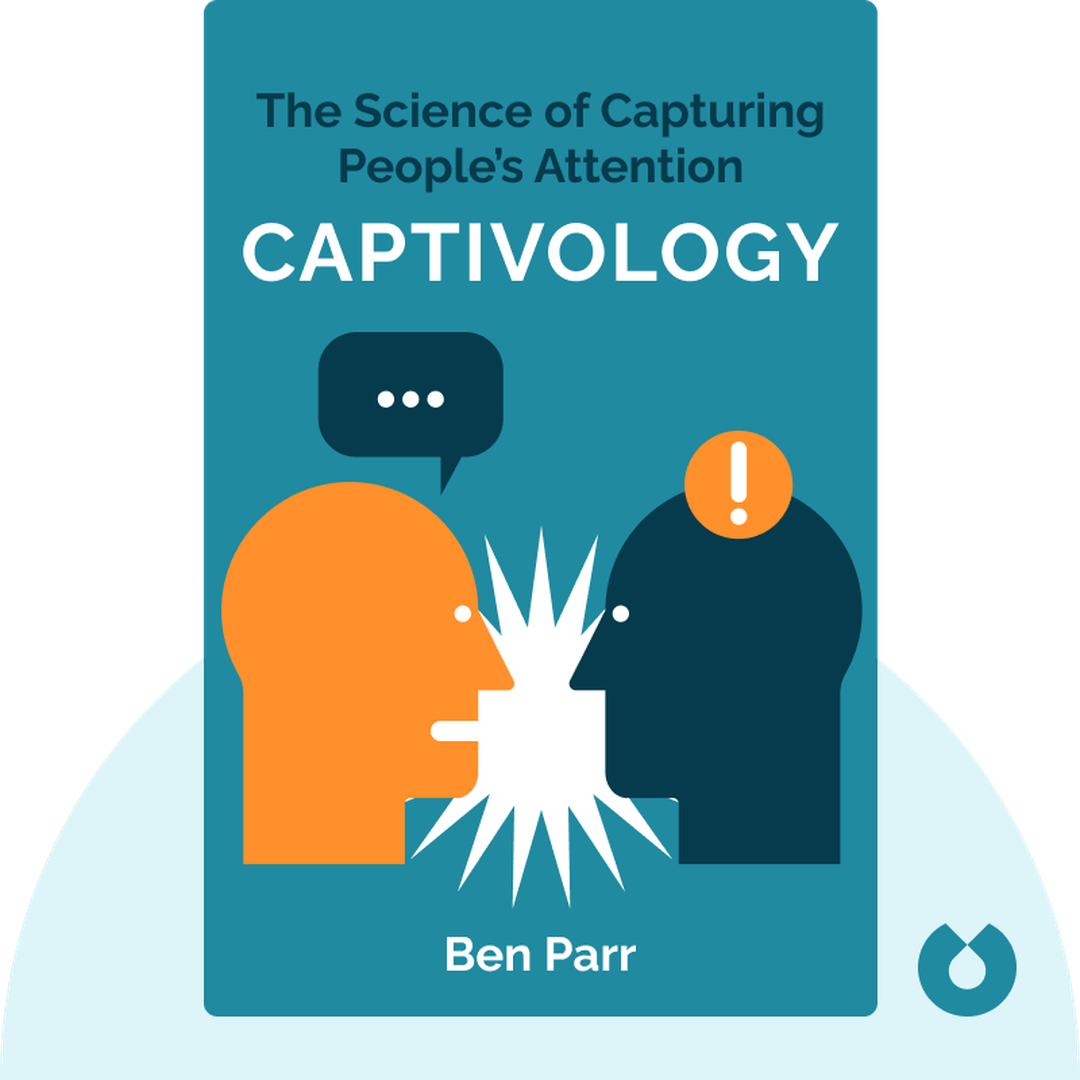
Captivology (2015) shows that, in our modern world of rapidly proliferating information, attention is a scarcer and therefore more valuable resource. Knowing what drives our attention, however, and being aware of how we direct it, can help us reclaim this resource. Based on scientific research, the author reveals techniques for drawing people’s attention to any project, idea or message.
Who Should Listen to Captivology?
- Anyone working at a start-up
- People seeking recognition for their work, research or art
Books Similar to Captivology
Readers who enjoyed this also liked these titles.