If You're Curious About These Questions...
You should listen to this audiobook
- Did you know that the secret to a perfect first impression has less to do with your words and more to do with what you do with your hands?
- Have you ever wondered why some people effortlessly command a room while others fade into the background—and how you can flip that switch yourself?
- What if you could decode the hidden 'micro-expressions' on people’s faces to understand exactly what they’re thinking but not saying?
Listen to Captivate — Free Audiobook
Loading player...
Key Takeaways from Captivate
- Discover how to win the social game by remaining authentic and strategically navigating event 'sweet spots,' like the social area, instead of faking extroversion.
- Understand the power of snap judgments and learn to project confidence and trust before you even speak through non-verbal cues like strong posture and meaningful eye contact.
- Find out why first impressions act as a biological survival mechanism, and how a proper handshake releases oxytocin to instantly establish you as a friend rather than a foe.
- Learn how to transform mundane small talk into memorable conversations by sparking dopamine with novel questions and identifying the hot-button topics that light people up.
- Master the art of interpersonal intelligence by listening more than you speak, giving others the attention they crave to build deep trust and rapport.
Learning Tools
Reinforce what you learned from Captivate
Mind Map
Captivate
Social Game Plan+
First Impressions (Triple Threat)+
Microexpressions+
Personality Traits (OCEAN)+
Storytelling+
Vulnerability & Connection+
Quiz — Test Your Understanding
Question 1 of 8
According to the author, what is the primary purpose of developing a 'social game plan'?
Question 2 of 8
The 'triple threat' is a tool used to build trust and make a great first impression. Which of the following correctly identifies its three nonverbal components?
Question 3 of 8
Which microexpression is characterized by a raised mouth skewed to one side, and is often mistakenly interpreted as a smile of happiness?
Question 4 of 8
How can you distinguish the microexpression of fear from that of surprise?
Question 5 of 8
In the OCEAN personality framework, which trait is most strongly associated with a love for strict schedules, to-do lists, and getting things done?
Question 6 of 8
When building a 'story stack' to connect with others, what is the specific function of a 'boomerang'?
Question 7 of 8
What is the 'Franklin effect' in the context of social interactions?
Question 8 of 8
What actionable advice does the author give for dealing with sweaty palms at a networking event?
Captivate — Full Chapter Overview
- 1Recommendation
- 2Manage social situations by focusing on your strengths and the people who matter.
- 3Make a strong first impression with your hands, posture, and eye contact.
- 4Read people’s feelings by noticing subtle facial expressions.
- 5Recognizing more complex microexpressions can reveal even more.
- 6Understand others better by watching for five key personality traits.
- 7Connect with others through specific kinds of stories.
- 8Sharing vulnerability builds connection, and asking for advice makes you more personable.
- 9Final summary
Captivate Summary & Overview
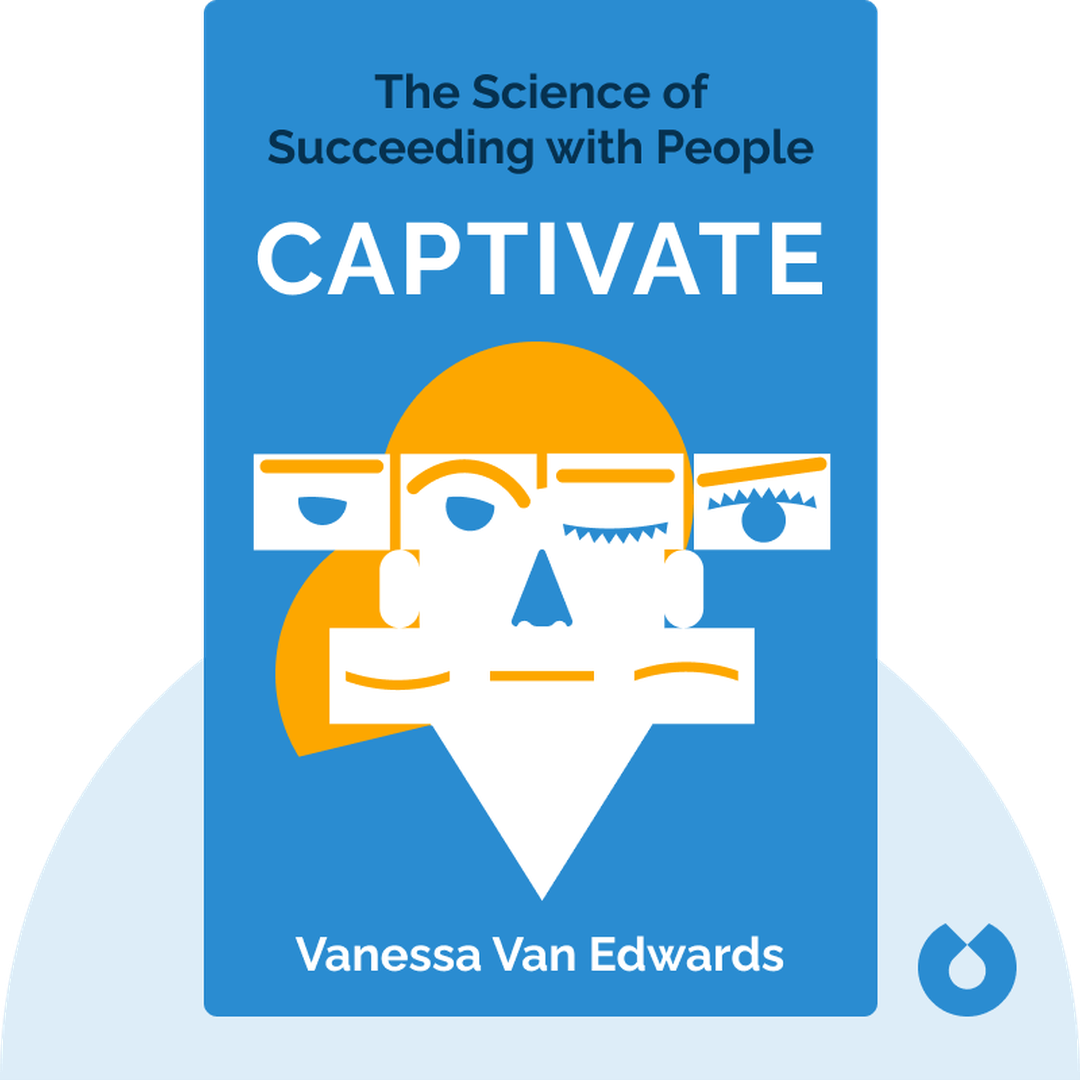
Captivate (2017) is your guide to human behavior and social success. Whether you’re trying to connect with others at home, at work or out in the world, Van Edwards set about breaking down the mechanics of how to capture people’s attention and engage in meaningful interaction.
Who Should Listen to Captivate?
- Young people who want to improve their social skills
- Singles looking to become dating pros
- Managers and entrepreneurs who want their employees to do their best
Books Similar to Captivate
Readers who enjoyed this also liked these titles.