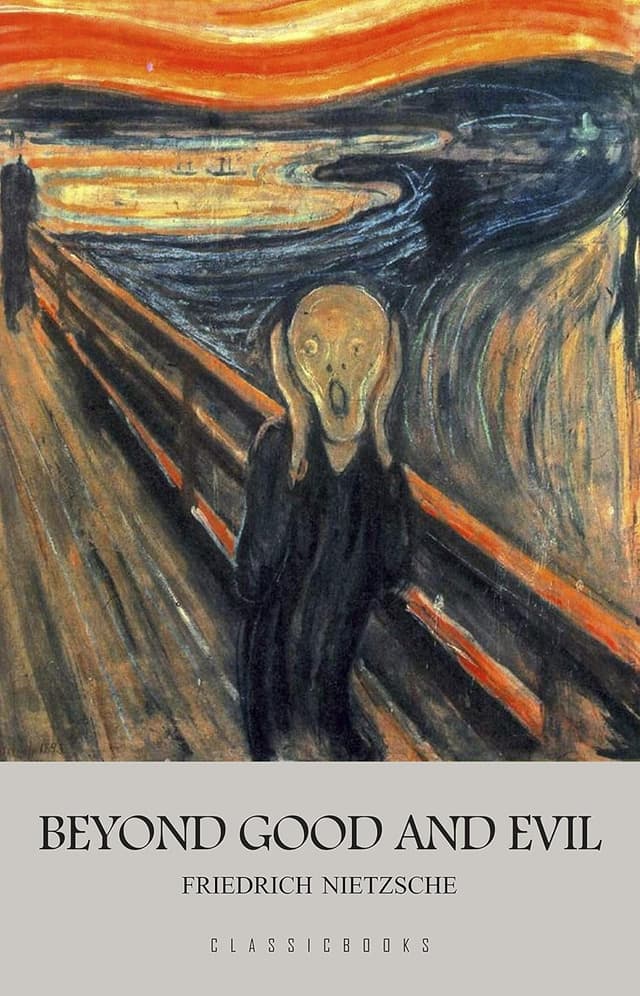
Friedrich Nietzsche wrote *Beyond Good and Evil* between 1885 and 1886, primarily during his nomadic travels across Switzerland—particularly the alpine village of Sils Maria—and various parts of Italy. Published in 1886 at the author’s own expense after facing multiple rejections from publishers, the work emerged during a period of intense ideological friction in late nineteenth-century Europe. The era was characterized by the rigid entrenchment of Victorian and Christian moral dogmas, the expansion of mass democratic movements, and a surging tide of German nationalism and anti-Semitism. Nietzsche viewed these societal shifts with profound skepticism, interpreting them as symptoms of a declining European culture bound by a complacent "herd mentality." In response, the text was crafted to dismantle the lingering Enlightenment faith in absolute, universal truths.
Upon its release, the book was largely ignored by the general public and deeply controversial among the few scholars who read it. It scandalized contemporary sensibilities by fiercely attacking the foundational pillars of Judeo-Christian morality, democratic egalitarianism, and the philosophical establishment. By introducing the concept of the "will to power" and famously dissecting "master and slave morality," Nietzsche challenged readers to transcend traditional binary notions of right and wrong. Despite its initially obscure reception, the text's lasting impact on literature and society has been monumental. It laid the vital groundwork for twentieth-century existentialism, postmodernism, and psychoanalysis. Literary giants and thinkers ranging from Jean-Paul Sartre and Albert Camus to Sigmund Freud drew heavily upon its radical individualism and psychological depth. Today, *Beyond Good and Evil* remains a cornerstone of Western intellectual history, continuously compelling modern society to critically examine the origins, biases, and hidden functions of its most cherished moral values.