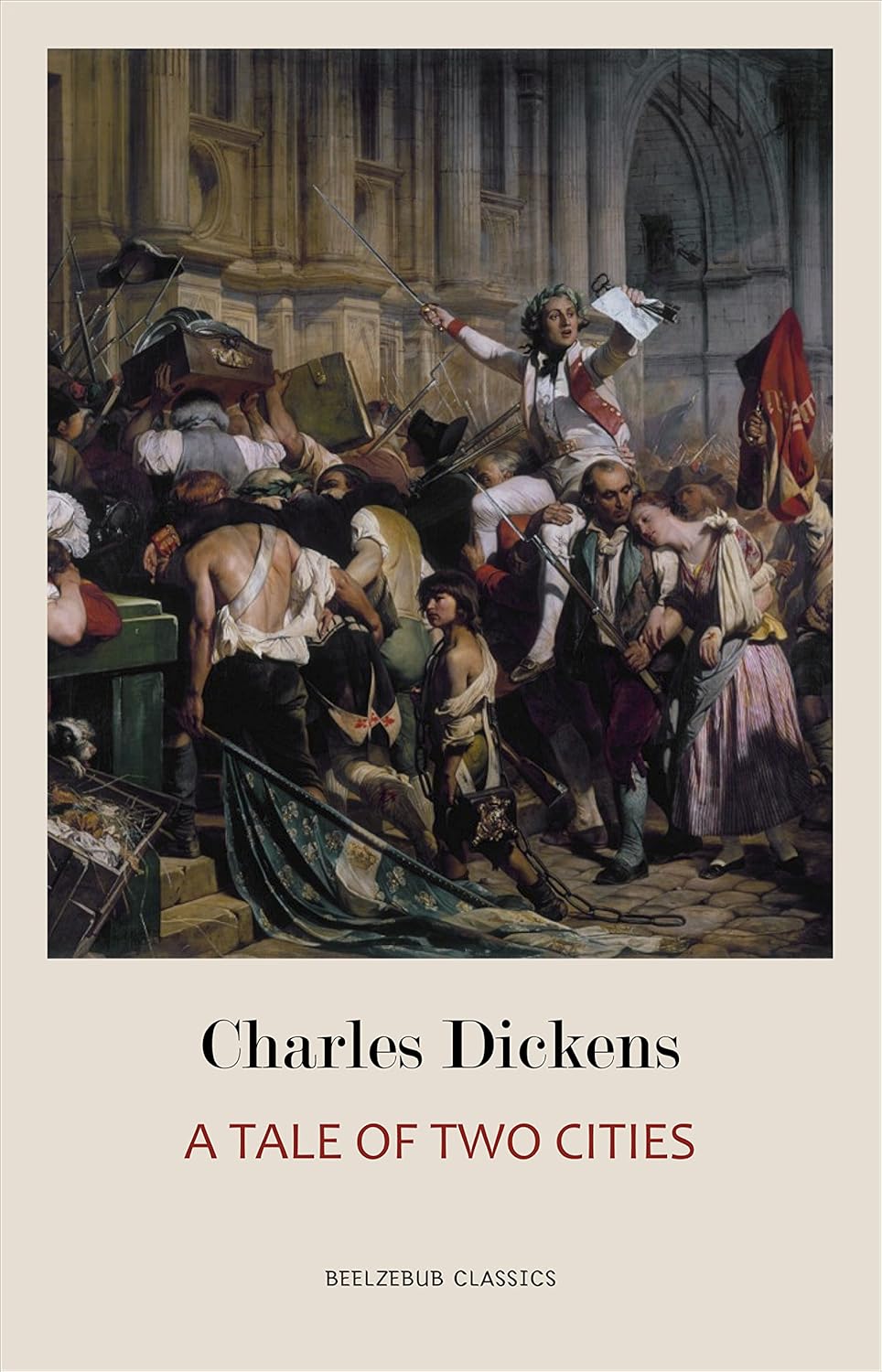
Charles Dickens wrote *A Tale of Two Cities* in London in 1859, first publishing it as a weekly serial in his newly founded literary journal, *All the Year Round*. Set against the turbulent backdrop of the French Revolution, the novel was profoundly shaped by the social and political anxieties of Victorian England. During the mid-nineteenth century, Britain was grappling with the harsh realities of rapid industrialization, staggering wealth inequality, and severe urban poverty. Deeply influenced by Thomas Carlyle's definitive historical text, *The French Revolution: A History*, Dickens used the late eighteenth-century upheaval in Paris as a cautionary mirror for his own era. He feared that the British aristocracy's apathy toward the suffering working classes might eventually ignite a similarly bloody rebellion in London.
Upon its publication, the novel was significant—and somewhat controversial—because it marked a dramatic departure from Dickens's traditional literary style. Stripped of his trademark comic relief, sprawling character studies, and eccentric dialogue, the book was a dark, tightly plotted historical thriller. Some contemporary critics felt this shift sacrificed character depth for narrative momentum, while others were unsettled by its visceral, unforgiving depiction of mob violence and aristocratic cruelty, which challenged romanticized views of both the elite and the revolutionary masses.
Despite initial critical division, *A Tale of Two Cities* has achieved an indelible impact on literature and society. It remains one of the best-selling novels in history and has fundamentally shaped the public's cultural imagination regarding the French Revolution, cementing enduring images of the guillotine, the Madame Defarge figure, and the Reign of Terror. Through its masterful exploration of resurrection, personal sacrifice, and the cyclical nature of violence, the novel established a powerful template for historical fiction and left a profound legacy in the global literary canon.