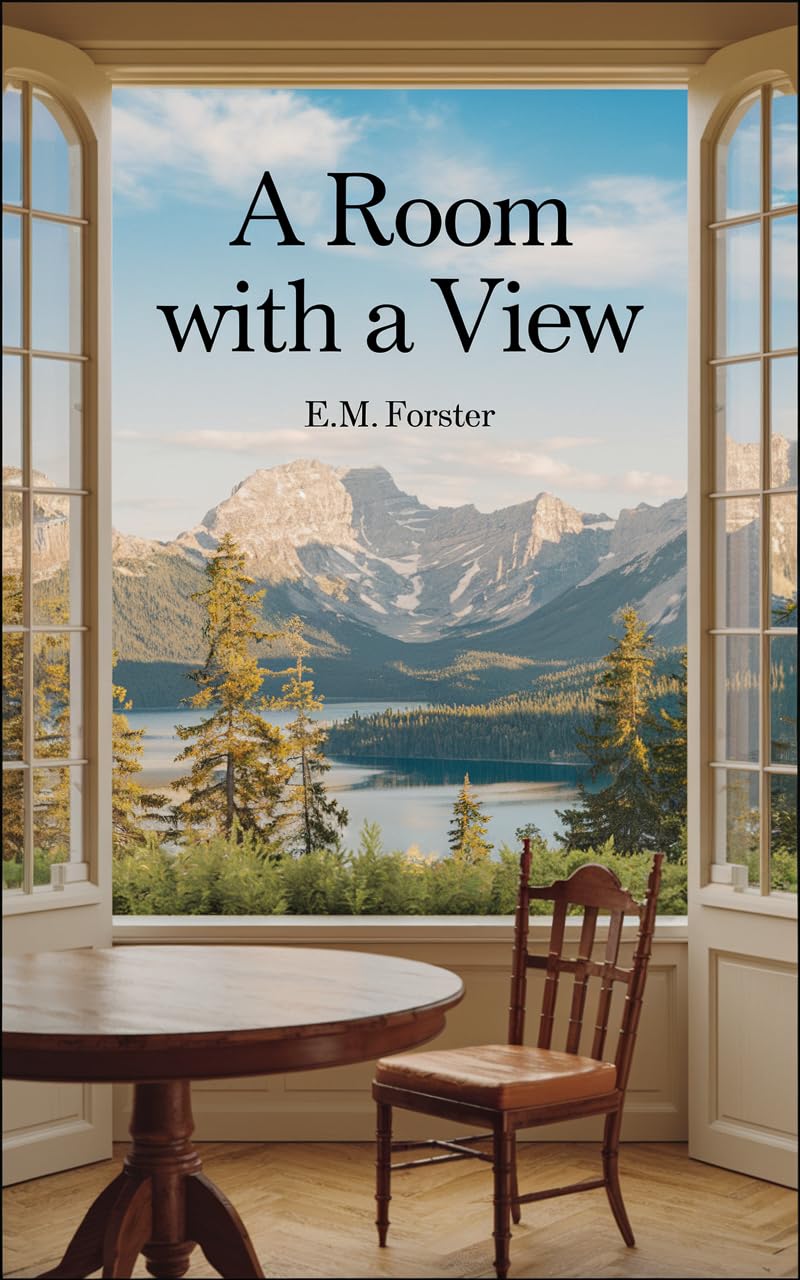
A Room with a View (Full Version) audiobook cover - In sunlit Florence and buttoned-up England, young Lucy Honeychurch discovers that a “room with a view” is more than a hotel preference—it is a challenge to inherited propriety, awakening desire, and the risk of living truthfully.

A Room with a View (Full Version)

In sunlit Florence and buttoned-up England, young Lucy Honeychurch discovers that a “room with a view” is more than a hotel preference—it is a challenge to inherited propriety, awakening desire, and the risk of living truthfully.

E. M. Forster

4.9 / 5(2779 ratings)
Categories:

Listen to A Room with a View (Full Version)

Loading audio... Please wait for the audio to load before using controls.
0:00458:16
100%

Historical Background

E. M. Forster conceived the early drafts of *A Room with a View* during an extended tour of Italy with his mother in 1901, ultimately completing the novel in England before its publication in 1908. The narrative emerged during the Edwardian era, a transitional period in British history characterized by lingering Victorian morality clashing with the dawn of modernism. Society remained deeply stratified by class, and the English middle and upper classes adhered to rigid, often hypocritical codes of propriety. However, this era also witnessed the burgeoning women’s suffrage movement and the emergence of the "New Woman," which actively challenged traditional gender roles and the expectation that a woman's sole pursuit should be a respectable, socially advantageous marriage.

Upon its release, the novel was significant for its sharp, satirical critique of English snobbery and emotional repression. While not overtly scandalous, it was quietly subversive; Forster championed passion, authenticity, and individual freedom over the stifling conventions of the era. By having his protagonist, Lucy Honeychurch, ultimately reject the aristocratic, pretentious Cecil Vyse in favor of the socially inferior but deeply passionate George Emerson, Forster challenged the conservative establishment of his time and advocated for female emancipation. Today, *A Room with a View* is celebrated as a masterpiece of social comedy and a defining text of early twentieth-century literature. Its lasting impact lies in its profound exploration of the conflict between societal expectations and self-actualization. The novel has profoundly influenced the modern coming-of-age genre, leaving an enduring legacy on how literature examines the pursuit of personal truth against the backdrop of cultural conformity.
Study Questions

  1. How does Forster use the concept of a 'view' both literally and metaphorically throughout the novel, particularly in how characters like Cecil Vyse and George Emerson are associated with either confined rooms or open vistas?

  2. Consider the character of Charlotte Bartlett, who initially appears as a rigid enforcer of Edwardian social norms. In light of Mr. Emerson's final revelation that she subconsciously orchestrated Lucy and George's union, how does this reshape our understanding of Charlotte's motivations and the sacrifices demanded of unmarried women in her era?

  3. Lucy Honeychurch's passionate piano playing contrasts sharply with her proper, repressed social behavior. How does Forster use art and music as a motif to represent the conflict between Edwardian societal expectations (the 'muddle') and the pursuit of authentic human emotion?

What Critics and Readers Say

A Room with a View is regarded as one of E. M. Forster's most accessible and enduring classics of early 20th-century English literature, blending romance, social critique, and personal growth. The novel follows young Lucy Honeychurch as she travels from the structured moral world of Edwardian England to the more open and liberating culture of Italy, where she begins to question societal conventions and confront her own desires. Its contrast between conservative English norms and the vibrant emotional life symbolised by Italy has been central to literary analysis.

Critics often highlight the book's themes of personal freedom, social convention, and self-discovery. Lucy's gradual rejection of rigid social expectations — particularly in her choice between the prudent but conventional Cecil and the sincere, free-spirited George — illustrates Forster's critique of classism, propriety, and emotional repression in early 1900s British society. Literary guides emphasise that Forster uses this contrast to explore growing female independence and critique entrenched social norms.

Reader communities commonly enjoy A Room with a View for its romantic storyline and character development, noting that Forster's elegant, humane prose makes even social critique feel witty and compassionate. Many praise the novel as a "coming-of-age romance" that remains resonant because its themes of love, constraint, and liberation still feel relevant today.

Sources:

• Wikipedia – general overview and historical significance: https://en.wikipedia.org/wiki/A_Room_with_a_View

• StudySmarter – themes and literary analysis: https://www.studysmarter.co.uk/explanations/english-literature/novelists/a-room-with-a-view/

• LitCharts – key themes such as social norms and independence: https://www.litcharts.com/lit/a-room-with-a-view/themes

• Goodreads – reader impressions and community reactions: https://www.goodreads.com/book/show/3087.A_Room_with_a_View

A Room with a View (Full Version) Chapter Overview

About A Room with a View (Full Version)

E. M. Forster’s A Room with a View follows Lucy Honeychurch, a well-brought-up young Englishwoman abroad in Italy, where art, landscape, and unexpected companionship begin to loosen the careful restraints of Edwardian respectability. What starts as a small social inconvenience—rooms without the promised view—opens into a larger comedy of manners in which class assumptions, “good taste,” and moral caution are quietly tested.

Forster blends romance with satiric brilliance, setting the immediacy of Italy against the decorous pressures of home. As Lucy is pulled between convention and a more candid, passionate way of seeing, the novel probes sincerity versus performance, the courage required for self-knowledge, and the cost of choosing comfort over truth. Celebrated for its wit, tenderness, and psychological insight, it remains a classic portrait of a young woman learning to claim her own life.

Who Should Listen to A Room with a View (Full Version)

  • Listeners who love classic romances that balance comedy, social observation, and genuine emotional stakes
  • Fans of Austen-like manners and satire, with Edwardian class tensions and sharp dialogue
  • Anyone drawn to travel fiction where Italy’s art and light become catalysts for self-discovery

About E. M. Forster

E. M. Forster (1879–1970) was an English novelist and essayist famed for his humane wit, social critique, and belief in personal honesty over convention. Associated with the Bloomsbury milieu, he wrote enduring novels including Howards End, A Passage to India, and Where Angels Fear to Tread, often exploring class, hypocrisy, and the struggle to “connect” across social boundaries. Forster’s lucid style and moral intelligence helped shape modern English fiction, and his work remains central to discussions of Edwardian society, liberal humanism, and the politics of intimacy.