If You're Curious About These Questions...
You should listen to this audiobook
- What if a simple two-word rule used by comedy legends like Tina Fey and Amy Poehler could completely transform your team's ability to innovate?
- Did you know that the same techniques used to survive a failing comedy sketch are actually the secret to building a resilient and adaptable corporate culture?
- Are you curious about how the high-stakes world of improvisational theater can help you unlock your team's most creative ideas and master the art of effective communication?
Listen to Yes, And — Free Audiobook
Loading player...
Key Takeaways from Yes, And
- Discover how the foundational improv strategy of 'yes, and' generates innovative business ideas by encouraging collaborators to continuously build upon each other's thoughts.
- Learn why you should cultivate non-hierarchical ensembles rather than traditional teams to eliminate internal competition and nurture unlimited group creativity.
- Understand the importance of prioritizing diversity and group fit over individual star power to strengthen your organization's weakest links and avoid creative stagnation.
- Master the art of co-creation by establishing a fear-free work environment where employees willingly surrender ownership of individual ideas to build the best collective idea.
- Find out how to strategically use comedy in the workplace to defuse tension and unlock creative thinking by combining familiar situations with a shared sense of pain.
Learning Tools
Reinforce what you learned from Yes, And
Mind Map
Yes, And
The 'Yes, And' Mindset+
Ensembles Over Teams+
Safe Environment for Co-creation+
Comedy and Idea Management+
Fail Fast and Together+
Adaptive Leadership+
Mastering Listening+
Quiz — Test Your Understanding
Question 1 of 8
What is the core mechanism of the 'yes, and' strategy?
Question 2 of 8
Why do the authors recommend building an 'ensemble' rather than a 'team'?
Question 3 of 8
How did The Second City resolve the stagnation of its creativity in the 1970s and 1980s?
Question 4 of 8
According to the book, what is the danger of holding 'reverence' for an idea or product, as illustrated by Kodak?
Question 5 of 8
What is the primary purpose of events like Basecamp's 'product roasts' or Ogilvy & Mather's mock awards?
Question 6 of 8
What does Viola Spolin’s concept of 'following the follower' entail in a business environment?
Question 7 of 8
Why does The Second City strictly prohibit uninvited guests, including producers, from attending early rehearsals?
Question 8 of 8
What specific exercise does the book recommend to help hone listening and partnership skills?
Yes, And — Full Chapter Overview
- 1Recommendation
- 2A tactic that keeps comedians talkative onstage can also spark bold, innovative business ideas, too.
- 3To boost collaboration and nurture creativity, build an ensemble rather than a hierarchical team.
- 4Create a safe environment where people share ideas and build upon those of others freely.
- 5Use comedy to defuse tension and spark creativity by respecting — not revering — ideas.
- 6Fail quickly! And fail together. Only then can your ensemble learn, improve, and thrive together.
- 7Inspire creativity by rotating leadership and giving your creatives space throughout the creation process.
- 8Master the essential art of listening by focusing on the speaker’s words and nonverbal gestures too.
Yes, And Summary & Overview
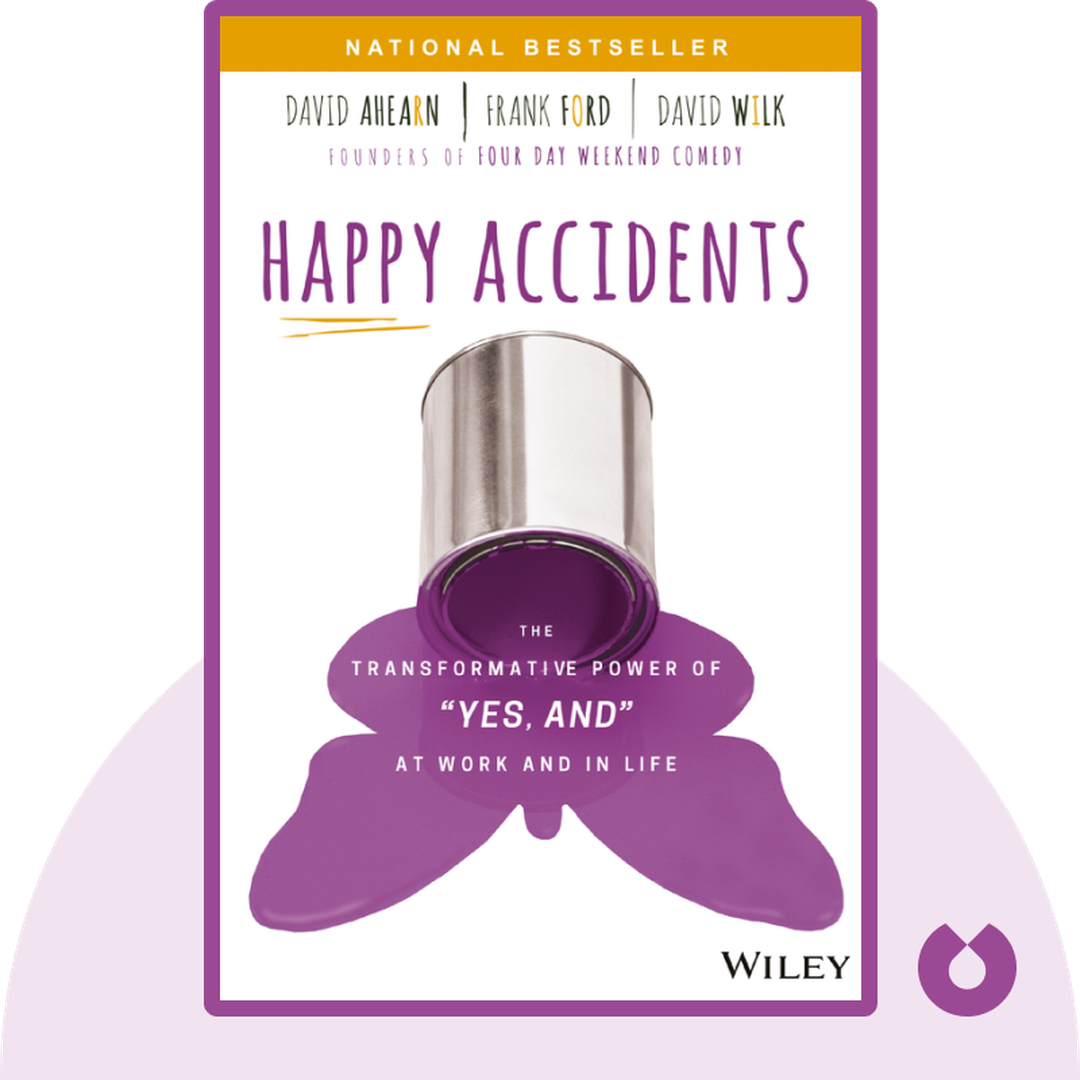
Yes, And (2015) shows you how by incorporating the techniques of improvisational comedy to the business world, you can generate better ideas and foster more effective communication, with the ultimate goal of building a team ready to meet any challenge. The authors draw on personal experience from working with leading talents such as Tina Fey, Stephen Colbert and Amy Poehler.
Who Should Listen to Yes, And?
- Entrepreneurs looking to expand their creative skills
- Business leaders in search of tools to optimize creativity and collaboration
- Fans of improvisational theatre
Books Similar to Yes, And
Readers who enjoyed this also liked these titles.