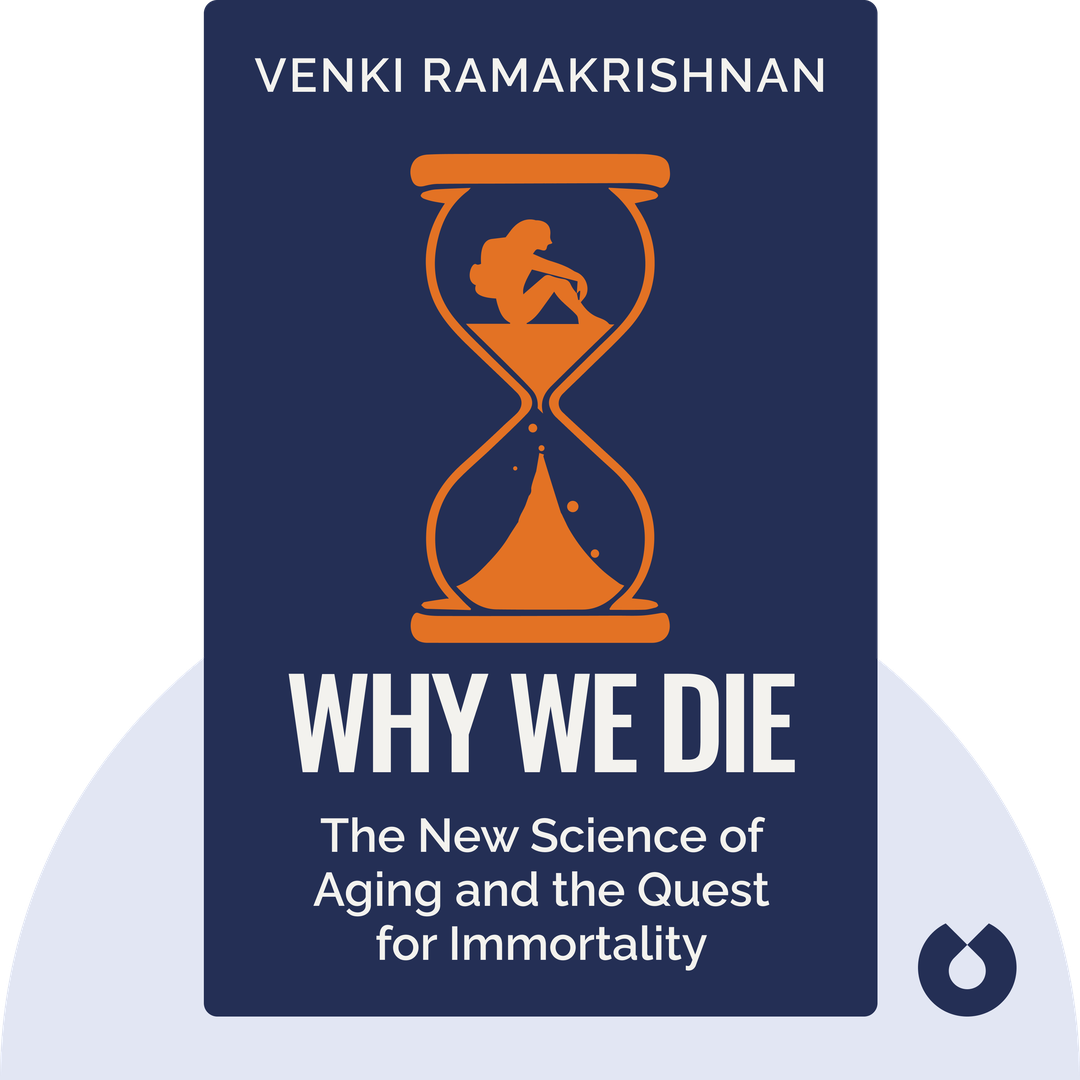
If You're Curious About These Questions...
You should listen to this audiobook
- Have you ever wondered why our bodies are biologically programmed to eventually fail, and if death is actually a necessary part of our evolution?
- What if the multi-billion dollar anti-aging industry is selling us a dream that contradicts the fundamental science of our DNA?
- Are you curious about whether we could truly extend the human lifespan indefinitely—and if society could even survive the consequences of immortality?
Listen to Why We Die — Free Audiobook
Loading player...
Key Takeaways from Why We Die
- Understand how our genes essentially cheat death by using germ-line cells to reset the biological aging clock during reproduction.
- Discover the biological paradox of aging, where the body's natural response to everyday DNA damage often accelerates the aging process more than the initial damage itself.
- Learn why surpassing the maximum recorded human lifespan of 122 years remains highly unlikely without unprecedented and complex biomedical breakthroughs.
- Realize the fatal flaw in cryonics, as preserving a frozen body cannot preserve or restore the incredibly complex neuronal connections required to revive the human brain.
- Uncover the truth behind the booming longevity industry, where billions are invested based on unfounded claims of immortality rather than concrete biological science.
Learning Tools
Reinforce what you learned from Why We Die
Mind Map
Why We Die
Defining Death & Aging+
Limits of Life Span+
Anti-Aging Industry+
Societal Consequences+
Acceptance & Action+
Quiz — Test Your Understanding
Question 1 of 6
What is the biological definition of aging according to the text?
Question 2 of 6
According to the book, how do our genes manage to 'cheat death' and outlive us?
Question 3 of 6
What paradox does the author highlight regarding DNA damage and aging?
Question 4 of 6
Why is the author skeptical about the effectiveness of cryonics?
Question 5 of 6
If science successfully extends the human life span to 120 years or beyond, what is one major societal consequence predicted in the text?
Question 6 of 6
What does Venki Ramakrishnan suggest is the most effective approach to aging?
Why We Die — Full Chapter Overview
- 1Recommendation
- 2Defining mortality
- 3The limits of the human lifespan
- 4Dreaming of immortality
- 5The trouble with living longer
Why We Die Summary & Overview
Why We Die (2024) explores the science of longevity, as well as some ethical implications. Is it possible to extend our life spans – or even live forever? And if we could, are we really sure we’d want to?
Who Should Listen to Why We Die?
- Those interested in the science of longevity
- People who are skeptical about the anti-aging industry
- Anyone currently contemplating their mortality
Books Similar to Why We Die
Readers who enjoyed this also liked these titles.