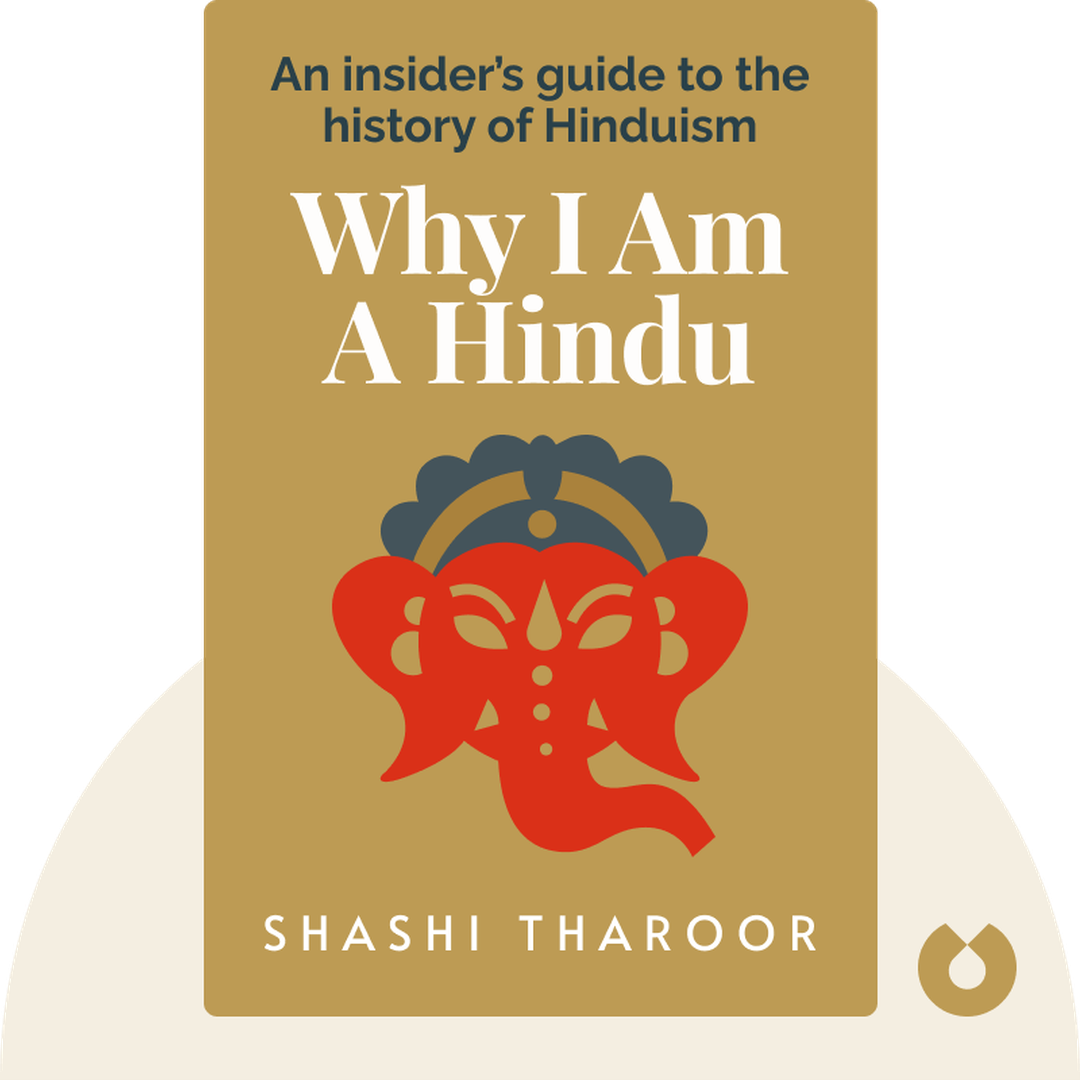
If You're Curious About These Questions...
You should listen to this audiobook
- Did you know that one of the world’s oldest faiths has thrived for 4,000 years without a single founding prophet or central religious authority?
- Have you ever wondered how the ancient principles of Hindu tolerance differ from the modern political movement known as Hindutva?
- Are you curious about how reclaiming a 4,000-year-old tradition of diversity could be the key to India’s future success?
Listen to Why I Am a Hindu — Free Audiobook
Loading player...
Key Takeaways from Why I Am a Hindu
- Understand how Hinduism's unique, dogma-free approach differs from monotheistic faiths by allowing every believer to choose their own personal path to spiritual self-realization.
- Discover why traditional Hinduism deeply respects all religions, even teaching followers to revere sacred texts like the Quran and Torah as valid paths to spiritual wisdom.
- Learn how ancient Hindus embraced and cross-pollinated with sibling faiths like Buddhism and Sikhism, viewing them as complementary traditions rather than religious enemies.
- Explore the exclusionary origins of Hindutva, the political ideology of India’s ruling BJP party, and see how it fundamentally contradicts Hinduism's rich history of pluralism.
- Grasp the true meaning of Indian secularism and realize why returning to Hinduism’s inherently tolerant roots is essential to overcoming today's divisive religious nationalism.
Learning Tools
Reinforce what you learned from Why I Am a Hindu
Mind Map
Why I Am a Hindu
Core Essence of Hinduism+
The Rise of Hindutva+
BJP's Destructive Impact+
The Path Forward+
Quiz — Test Your Understanding
Question 1 of 9
How does the traditional Indian concept of 'secularism' differ from its common definition in the West?
Question 2 of 9
According to the author, what is a defining characteristic of Hinduism that distinguishes it from Semitic religions?
Question 3 of 9
How did traditional Hinduism view other religions like Buddhism and Sikhism?
Question 4 of 9
What is the core argument of MS Golwalkar's 1939 book regarding Indian nationality?
Question 5 of 9
What paradox does Shashi Tharoor identify at the heart of the BJP's 'Hindutva' ideology?
Question 6 of 9
How has the current government's ideology affected the Taj Mahal, according to the text?
Question 7 of 9
How does the historical Hindu stance on sexual diversity contrast with the modern BJP's political actions?
Question 8 of 9
What is Shashi Tharoor's critique of Prime Minister Narendra Modi's claim that the deity Ganesh proves Indians invented plastic surgery?
Question 9 of 9
According to Tharoor, what is the best way for Hindus to secure a better future for their faith and country?
Why I Am a Hindu — Full Chapter Overview
- 1Recommendation
- 2Hinduism is a rich religion filled with diversity.
- 3Hinduism has long honored and welcomed all other religions.
- 4In 1989, the BJP embraced Hindutva as its core ideology.
- 5The current regime fuels intolerance toward non-Hindu minorities, especially Muslims.
- 6The BJP has twisted a naturally liberal culture against liberal values and blocked progress.
- 7To reclaim an inclusive Hinduism they can admire, Hindus must renounce Hindutva ideology.
Why I Am a Hindu Summary & Overview
Why I Am a Hindu (2018) is a meditation on religion and national identity from the perspective of one of India’s leading politicians, Shashi Tharoor. Written with an eye to the rise of Hindu fundamentalism, it unpacks the 4,000-year-old history of his faith and argues that today’s Hindutva movement is perverting an ancient tradition of tolerance and diversity. If Indians want to see their country flourish, Tharoor concludes, they’ll have to reject the ruling party’s chauvinism and embrace that great cultural legacy.
Who Should Listen to Why I Am a Hindu?
- Politics buffs and history students
- Anyone fascinated by one of the world’s largest religions
- Champions of multiculturalism and tolerance
Books Similar to Why I Am a Hindu
Readers who enjoyed this also liked these titles.