If You're Curious About These Questions...
You should listen to this audiobook
- Did you know that ancient Indian thinkers developed theories of consciousness thousands of years ago that still challenge our modern scientific understanding of the self?
- Have you ever wondered why the true philosophical roots of yoga and meditation go far deeper than just physical exercise and relaxation?
- Are you curious about how ancient debates on the nature of reality can provide a fresh perspective on what it means to be human in the modern world?
Listen to Indian Philosophy — Free Audiobook
Loading player...
Key Takeaways from Indian Philosophy
- Discover how Indian philosophy uniquely weaves together intellectual inquiry and spiritual fulfillment, offering practical tools to actively transform your destiny.
- Understand the true depth of karma beyond a simple cause-and-effect cliché, and learn how your underlying intentions ultimately shape your reality.
- Explore the revolutionary teachings of the Upanishads to realize how your deepest self connects directly to the universal essence, granting profound spiritual freedom.
- Learn how to overcome the fundamental human feeling of dissatisfaction, known as dukkha, by embracing the Buddha's insights on impermanence and interconnectedness.
- Find out how ancient Indian thinkers turned abstract theories into practical methods for exploring human consciousness, creating an accessible path to awakening for everyone.
Learning Tools
Reinforce what you learned from Indian Philosophy
Mind Map
Indian Philosophy
Core Characteristics+
Early Vedic Roots+
The Buddhist Revolution+
Brahminical Response+
Consciousness and Liberation+
Modern Legacy+
Quiz — Test Your Understanding
Question 1 of 7
How does Indian philosophy fundamentally differ from the approach typically taken by Western thinkers since Kant?
Question 2 of 7
How did the Buddha revolutionize the traditional understanding of karma?
Question 3 of 7
In contrast to the brahmins' view of an unchanging self, what did the Buddha teach about the nature of existence?
Question 4 of 7
What was the primary purpose of the Nyaya school's five-step path, such as the 'smoke on the hill' example?
Question 5 of 7
According to the Yoga and Samkhya traditions, what is the fundamental difference between 'purusha' and 'prakriti'?
Question 6 of 7
What does Shankara's 'rope and snake' analogy in Advaita Vedanta illustrate about reality?
Question 7 of 7
What key event in 1893 helped change the Western world's perception of Indian philosophy from an exotic curiosity to a sophisticated tradition?
Indian Philosophy — Full Chapter Overview
- 1Recommendation
- 2Mapping the cosmos
- 3The Buddha’s revolutionary path to awakening
- 4From philosophy to practical tools for spiritual transformation
- 5Connecting thought, awareness, and liberation
- 6The living spirit of Indian philosophy
- 7Final summary
Indian Philosophy Summary & Overview
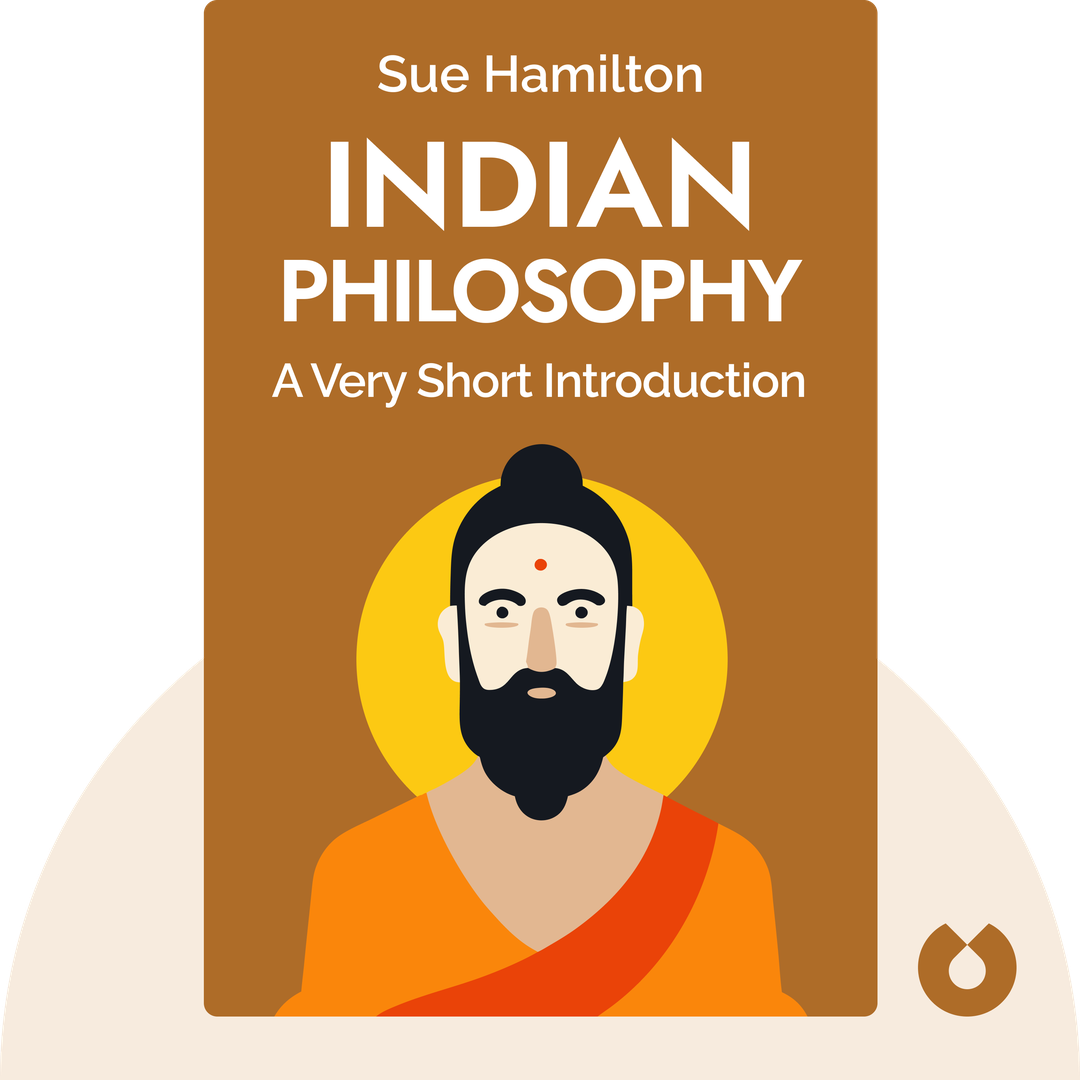
Indian Philosophy (2001) takes you on a journey through three thousand years of profound thinking about consciousness, reality, and what it means to be human. From ancient ritual practices to sophisticated theories of knowledge, you'll discover how Indian thinkers approached life's deepest questions in ways that still resonate today.
Who Should Listen to Indian Philosophy?
- Anyone fascinated by how ancient wisdom speaks to modern questions
- Seekers exploring the deeper roots of meditation and yoga
- Thinkers curious about different approaches to understanding consciousness
Books Similar to Indian Philosophy
Readers who enjoyed this also liked these titles.