If You're Curious About These Questions...
You should listen to this audiobook
- Have you ever wondered why we look to ancient holy books for moral guidance when so many of their historical claims don't actually hold up?
- Are you curious about how the breathtaking complexity of the natural world could have emerged from the 'bottom up' without any need for a grand designer?
- What if you could find a more logical and evidence-based way to understand our origins and the universe than the traditional stories we've been told?
Listen to Outgrowing God — Free Audiobook
Loading player...
Key Takeaways from Outgrowing God
- Discover how applying the principles of scientific inquiry can systematically dismantle common religious arguments and the belief in God.
- Understand why adopting a specific religious faith is often a mere accident of geography and birth time rather than an objective truth.
- Learn how the 'Telephone' effect of oral storytelling over centuries renders holy books highly unreliable as factual sources.
- Find out how glaring historical anachronisms and a total lack of archaeological evidence invalidate the claims made in religious scriptures.
- Recognize why looking to the God of the Bible for moral guidance is flawed, given the text's cruel and violent stories of divine tests.
Learning Tools
Reinforce what you learned from Outgrowing God
Mind Map
Outgrowing God
Origins of Faith+
Flaws of Biblical Morality+
The Science of Life+
Psychology of Belief+
Quiz — Test Your Understanding
Question 1 of 9
According to Dawkins, what is the primary factor that determines which god or religion a person believes in?
Question 2 of 9
Why does Dawkins compare the creation of holy books to the game of 'Telephone'?
Question 3 of 9
Which of the following does the text cite as an example of the Old Testament lacking historical or archaeological support?
Question 4 of 9
What is Dawkins's main argument regarding the God of the Bible serving as a moral compass?
Question 5 of 9
What does the shifting human perspective on slavery and women's rights illustrate about morality, according to Dawkins?
Question 6 of 9
How does Dawkins explain the creation of complex living organisms using the concept of 'bottom-up design'?
Question 7 of 9
What does the twisted skull of the flounder demonstrate about evolution?
Question 8 of 9
How does natural selection explain the highly improbable existence of a complex predator like a cheetah?
Question 9 of 9
According to the text, how did human superstition and religious rituals likely originate?
Outgrowing God — Full Chapter Overview
- 1Recommendation
- 2Faith is just an accident of where you’re born, not a valid reason to believe in God.
- 3The Bible and other holy books aren’t true, so there’s no reason to trust anything in them.
- 4The Bible’s God is a jealous, violent deity, so you shouldn’t turn to him for moral guidance.
- 5Holy books can’t show us how to be moral, because morality shifts over time.
- 6Living beings aren’t designed from above by God, but from below by DNA.
- 7Living beings adapt to their surroundings and develop through evolution.
- 8Natural selection, the engine of evolution, explains how improbable living things arise.
- 9Our instincts for superstition and religion are probably an evolutionary by-product.
Outgrowing God Summary & Overview
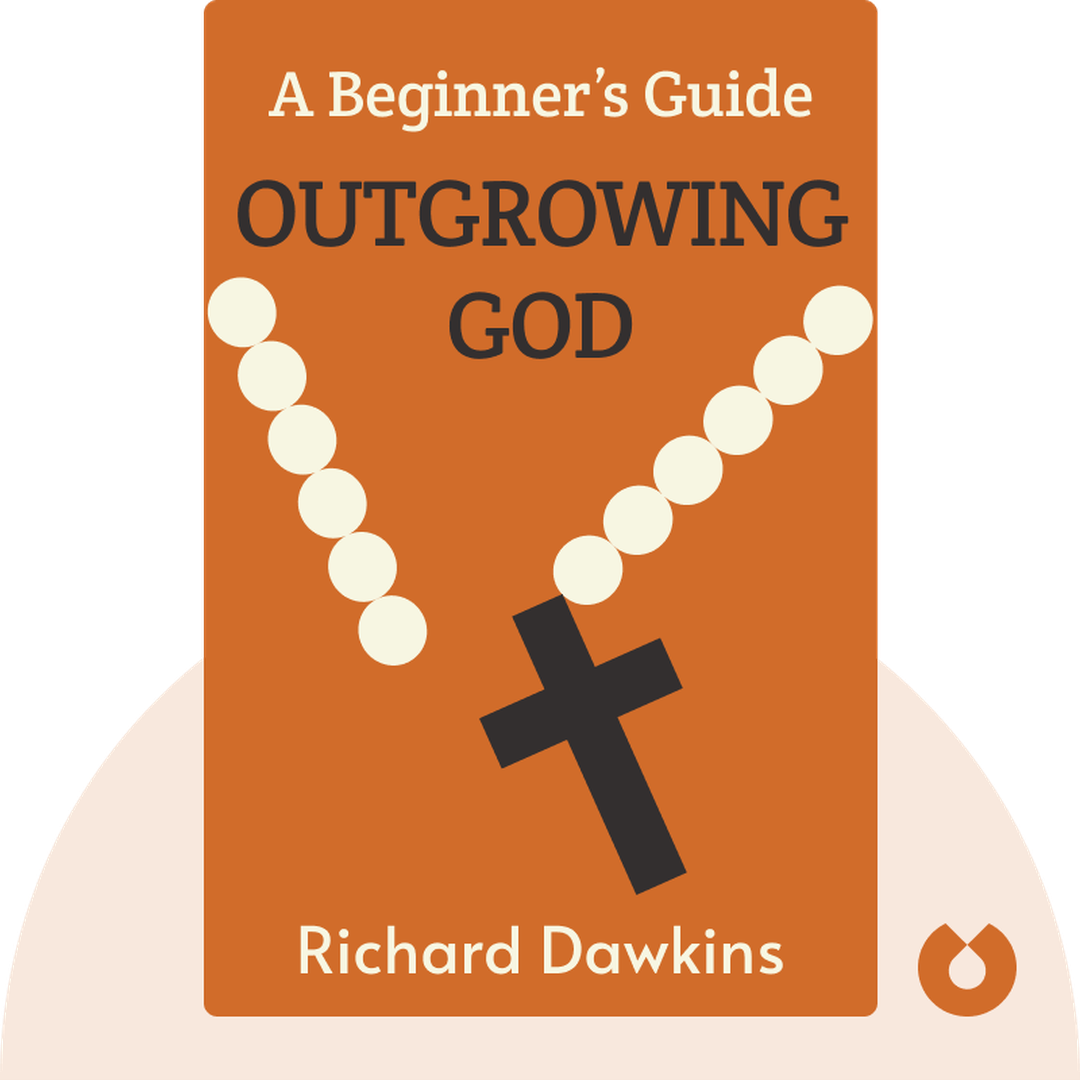
Outgrowing God (2019) shows us why we should all be atheists. Revealing how holy books such as the Bible are full of untruths and historical inaccuracies, Richard Dawkins argues that we can’t take these books seriously, nor should we rely on them for moral guidance. To explain all the awesome complexity and improbability of living things, we should look to science, and specifically to the process of evolution. It is evolution, by way of natural selection, that gave rise to us and other living creatures from the bottom up.
Who Should Listen to Outgrowing God?
- Agnostics who are uncertain whether to believe in God or not
- Religious people who want to understand atheism
- Atheists seeking a better grasp on arguments against believing in God
Books Similar to Outgrowing God
Readers who enjoyed this also liked these titles.