If You're Curious About These Questions...
You should listen to this audiobook
- Did you know that the root cause of abusive behavior isn't actually anger or a difficult past, but a specific set of entitlement-based beliefs?
- Have you ever wondered why an abuser can seem so perfectly in control of himself in public, yet claim he 'lost it' at home?
- Are you curious about the subtle early warning signs that reveal an abuser’s true nature before the first act of mistreatment even occurs?
Listen to Why Does He Do That? — Cinematic Audio Edition
Loading player...
Key Takeaways from Why Does He Do That?
- Understand why an abuser's actions are driven by a deliberate fixation with control rather than deep insecurity or childhood trauma.
- Discover how societal norms like patriarchy and institutionalized religion enable abuse by shifting blame onto victims and protecting the abuser.
- Recognize the lethal tactics of emotional abuse, such as manipulation and intimidation, and why psychological destruction often leaves deeper scars than physical violence.
- Uncover the dangerous truth about an abuser's mindset, revealing that his endless demands stem from a deep sense of entitlement rather than genuine emotional neediness.
- Learn why trying to change an abusive partner is a dangerous trap, as they purposefully drain your mental energy to ensure you never break free.
Learning Tools
Reinforce what you learned from Why Does He Do That?
Mind Map
Why Does He Do That?
Nature of Abuse+
The Abuser's Mindset+
Origins of Abusiveness+
Abuser's Tactics+
Early Warning Signs+
Leaving Safely+
The Reality of Change+
Quiz — Test Your Understanding
Question 1 of 8
According to the text, what are the two central traits of an abuser's mindset?
Question 2 of 8
Where does an abuser's behavior primarily stem from, according to the author?
Question 3 of 8
Why do abusive men often act charming and kind at the beginning of a relationship?
Question 4 of 8
Which of the following is identified as a subtle early warning sign of an abusive partner?
Question 5 of 8
What is described as the most common precursor to physical violence in an abusive relationship?
Question 6 of 8
What crucial advice does the author give regarding the act of breaking up with an abusive partner?
Question 7 of 8
Why do most abusive men fail to make deep and lasting changes, even in high-quality programs?
Question 8 of 8
How do abusers successfully maintain the 'moral high ground' and escape blame for their actions?
Why Does He Do That? — Full Chapter Overview
- 1Recommendation
- 2Men can show abusive behavior in many ways.
- 3Control and entitlement are at the core of an abuser’s mindset.
- 4Abusive behavior is learned early in life.
- 5Abusers may be charming at first, but it doesn’t last.
- 6Subtle signs of abuse can appear early in a relationship.
- 7If you think you’re being abused, consider leaving your partner.
- 8Before you leave your partner, create a safety plan.
- 9You can’t change an abusive man; he must change himself.
- 10Final summary
Why Does He Do That? Summary & Overview
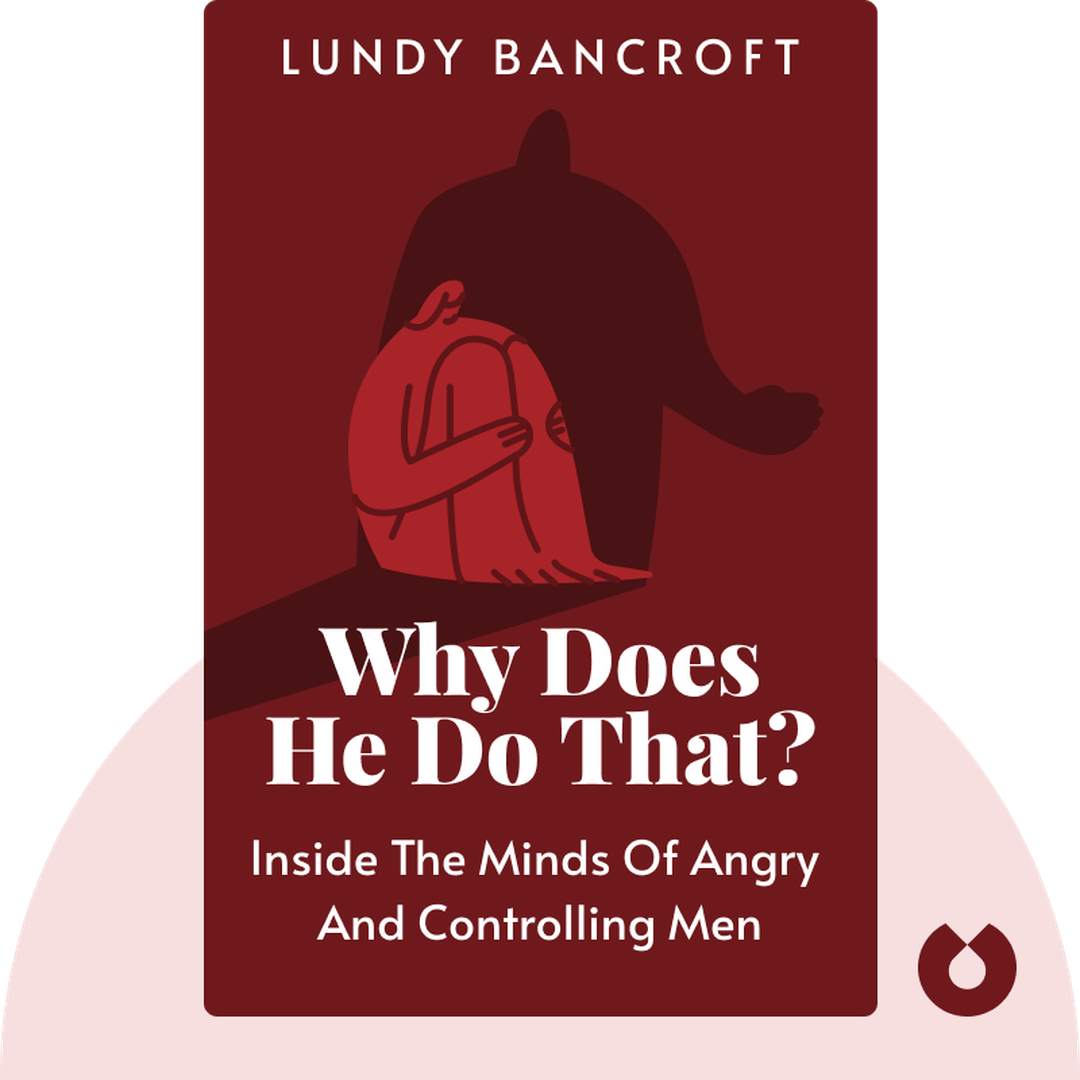
Why Does He Do That? (2003) reveals the psychology behind abusive men. Drawing on his experience as a counselor to male abusers, author Lundy Bancroft explains the nature of abusive thinking, the early warning signs of abuse, and the steps women can take to free themselves from an abusive relationship.
Who Should Listen to Why Does He Do That??
- Anyone who feels trapped in an abusive relationship
- Mothers considering leaving their abusive partner
- People who suspect a friend or family member is being abused
Books Similar to Why Does He Do That?
Readers who enjoyed this also liked these titles.