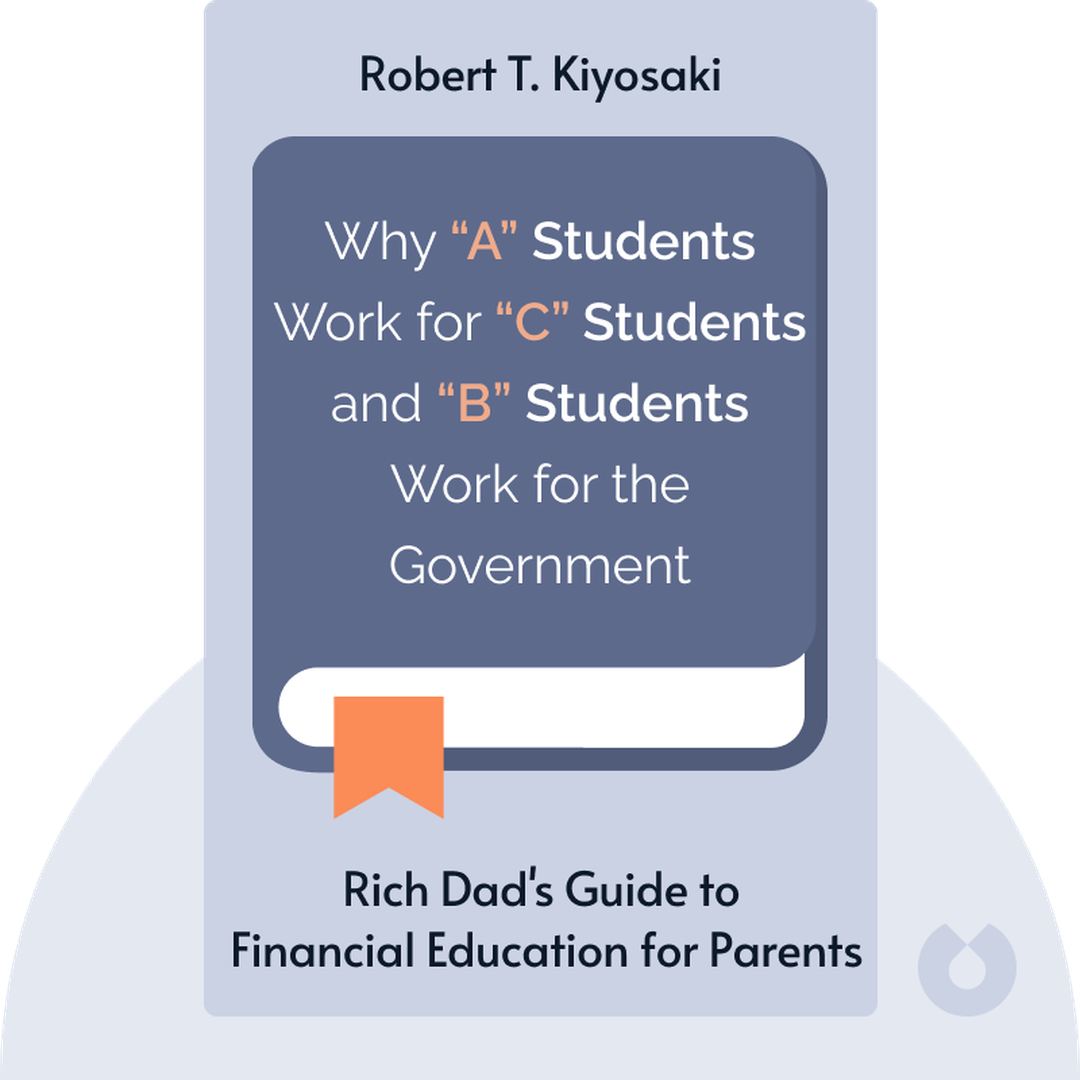
Why “A” Students Work for “C” Students and “B” Students Work for the Government
Start ListeningDownload Try free on iPhoneScan to start in 5 seconds
Categories:
If You're Curious About These Questions...
You should listen to this audiobook
- Have you ever wondered why the students who struggle most in school often become the most successful entrepreneurs and bosses in the real world?
- What if you could provide your children with the vital financial life skills that the traditional school system completely ignores?
- Did you know that the global financial crisis might actually be an education crisis in disguise—and do you know how to protect your family from it?
Listen to Why “A” Students Work for “C” Students and “B” Students Work for the Government — Free Audiobook
Loading player...
Key Takeaways from Why “A” Students Work for “C” Students and “B” Students Work for the Government
- Understand why traditional schools fail to teach practical financial skills, leaving it up to parents to prepare their children for real-world wealth building.
- Learn how to tailor financial lessons to your child's development by navigating the Quantum, Rebellious, and Professional learning stages using simple tools like Monopoly.
- Discover the Cashflow Quadrant and find out why choosing to be a big business owner or investor is far more critical to financial independence than picking a specific career.
- Find out why specialized 'A' students often end up working for generalist 'C' students who possess the broader, entrepreneurial skills needed to build large businesses.
- Master the differences between ordinary, portfolio, and passive income so you can teach your kids how to acquire cash-flowing assets and legally minimize their taxes.
Learning Tools
Reinforce what you learned from Why “A” Students Work for “C” Students and “B” Students Work for the Government
Mind Map
Why “A” Students Work for “C” Students and “B” Students Work for the Government
The Flaws of Traditional Schooling+
Stages of Financial Learning+
The Cashflow Quadrant+
Mastering Types of Income+
Financial Vocabulary & Mindset+
Preventing the Entitlement Mentality+
Advice vs. Education+
Actionable Steps for Parents+
Quiz — Test Your Understanding
Question 1 of 8
When is the ideal time to begin teaching a child about finance, according to the text?
Question 2 of 8
According to the Cashflow Quadrant, why do 'A' students typically end up working for 'C' students?
Question 3 of 8
Which type of income is taxed at the highest possible rate and is the primary focus of the traditional school system?
Question 4 of 8
How does the book classify a personal residence (a house) in financial terms?
Question 5 of 8
Based on Abraham Maslow's Hierarchy of Needs, what does the author claim is the real root cause of greed?
Question 6 of 8
What is the author's primary recommendation for avoiding an entitlement mentality in children?
Question 7 of 8
What is the primary difference between financial advice and financial education, according to the text?
Question 8 of 8
Under what circumstance does the author consider debt to be an asset rather than a liability?
Why “A” Students Work for “C” Students and “B” Students Work for the Government — Full Chapter Overview
- 1Recommendation
- 2A strong financial education adapts over time to each learner’s unique needs and real-world experiences.
- 3Choosing your spot within the Cashflow Quadrant matters more than picking a particular profession today.
- 4Teach your kids the difference between ordinary, portfolio, and passive income types.
- 5Financial education helps young people feel a sense of control and security over their future ahead.
- 6Never give your kids money.
- 7Show your kids how to distinguish clearly between financial advice and financial education.
Why “A” Students Work for “C” Students and “B” Students Work for the Government Summary & Overview
Why “A” Students Work For “C” Students And “B” Students Work For The Government (2013) explains how the global financial crisis we face today is really a crisis of education. Schools are failing to provide students with even the most fundamental financial education. It’s up to parents to teach their children about real-world financial responsibility.
Who Should Listen to Why “A” Students Work for “C” Students and “B” Students Work for the Government?
- Parents who want to give their children the basis for a sound financial education
- Anyone who has wondered why schools don’t teach students about money
- Fans of Rich Dad Poor Dad
Books Similar to Why “A” Students Work for “C” Students and “B” Students Work for the Government
Readers who enjoyed this also liked these titles.