If You're Curious About These Questions...
You should listen to this audiobook
- Did you know that the traditional advice of getting good grades and a secure job might actually be the exact formula keeping you from building real wealth?
- Have you ever wondered why so many high earners still feel broke, and how two everyday emotions are secretly keeping people trapped in the 'rat race'?
- What if you could adopt the exact financial 'operating system' that allowed a man with limited schooling to build an empire, while a highly educated expert constantly struggled with money?
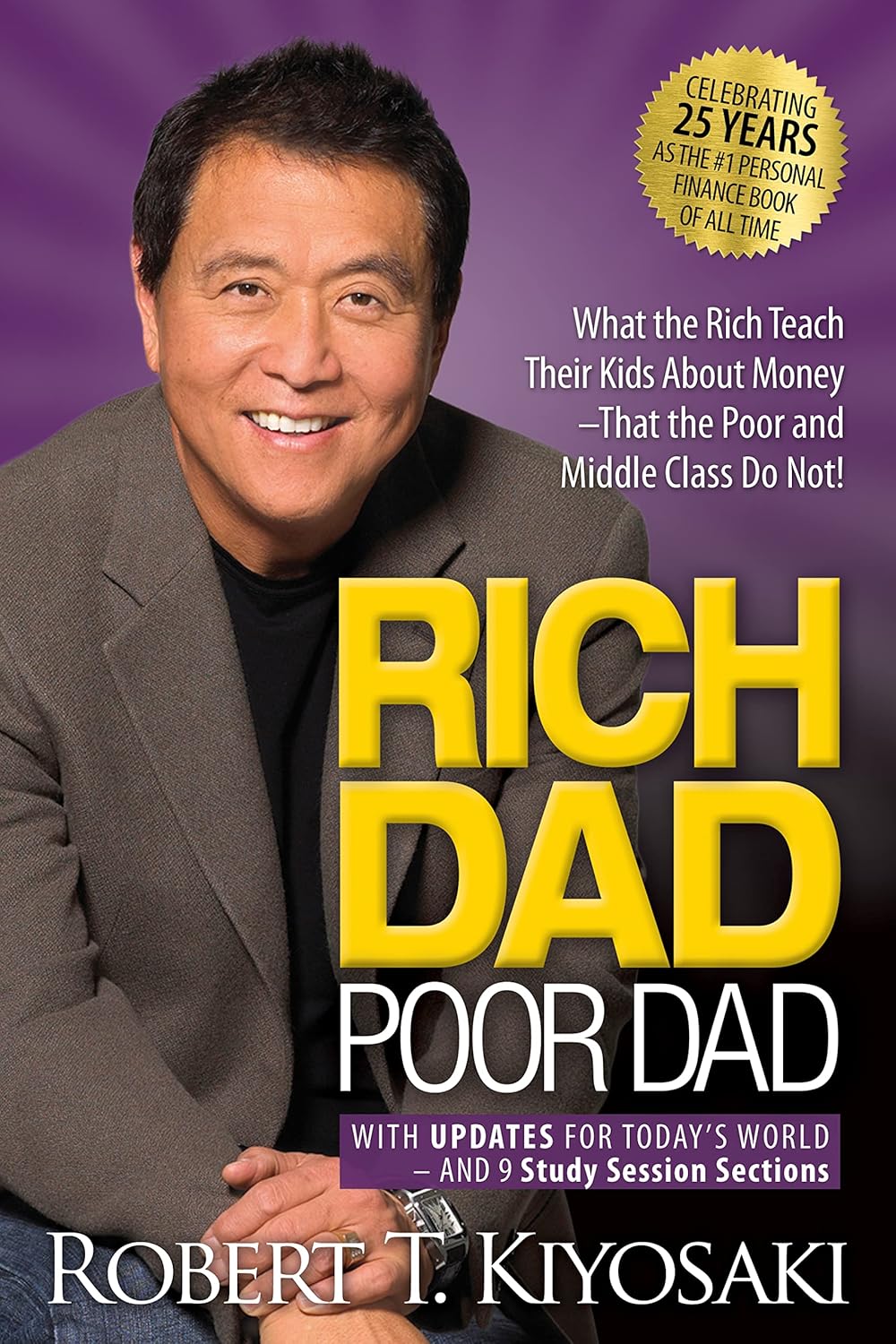
Listen to Rich Dad, Poor Dad — Cinematic Audio Edition
Key Takeaways from Rich Dad, Poor Dad
- Understand why traditional advice like going to school and getting a safe job traps you in the rat race instead of building wealth.
- Discover why the wealthy don't work for money, but instead focus on making their money work for them through smart investments.
- Learn the critical difference between true assets that put money in your pocket and liabilities that constantly drain your finances.
- Find out why a house with a long-term mortgage is actually one of the biggest liabilities you can own, despite what society teaches.
- Master the concept of 'minding your own business' by dedicating time to growing a personal portfolio of assets while keeping your day job.
Learning Tools
Reinforce what you learned from Rich Dad, Poor Dad
Mind Map
Quiz — Test Your Understanding
Rich Dad, Poor Dad — Full Chapter Overview
- 1Recommendation
- 2The rich don’t work for money
- 3Learn about finances, recognize real assets, and invest in them
- 4Mind your own business: earn money for yourself, not your employer
- 5By understanding taxes and the legal system, the rich stay ahead of the rules meant to limit them
- 6Most of us never receive a financial education
- 7Build your financial education in three steps: assess where you are, set financial goals, and develop the intelligence to reach them
- 8Financial intelligence and courage let the rich “create” money in any situation
- 9Instead of always playing it safe, consider investing in stocks, bonds, or tax lien certificates
- 10Don’t work only to earn — working to learn matters far more
- 11Final summary
Rich Dad, Poor Dad Summary & Overview
Rich Dad, Poor Dad uses a personal origin story—growing up with two influential “dads,” one educated but financially struggling and the other self-made and wealthy—to argue that schools teach people to work for money, not to understand it. Through vivid childhood lessons, Kiyosaki introduces the core idea that wealth comes from building assets that generate cash flow, not from chasing raises or accumulating consumer “stuff.”
The book breaks down financial literacy into simple frameworks: the difference between assets and liabilities, the role of cash flow, why many people stay trapped in debt despite good incomes, and how the rich use tools like corporations and tax rules to protect and multiply wealth. It also tackles the mindset barriers—fear, cynicism, laziness, habits, and arrogance—that keep people financially stuck, and ends with practical steps for getting started through education, action, and disciplined investing.
Who Should Listen to Rich Dad, Poor Dad?
- Listeners who feel stuck in the paycheck-to-paycheck “rat race” and want a clearer mental model of cash flow, assets, and liabilities.
- Parents who want language and frameworks to teach kids financial literacy beyond school grades and job security.
- Beginners who want motivation to learn investing, taxes, and basic financial statements—even if they’ve avoided “numbers” before.
Books Similar to Rich Dad, Poor Dad
Readers who enjoyed this also liked these titles.