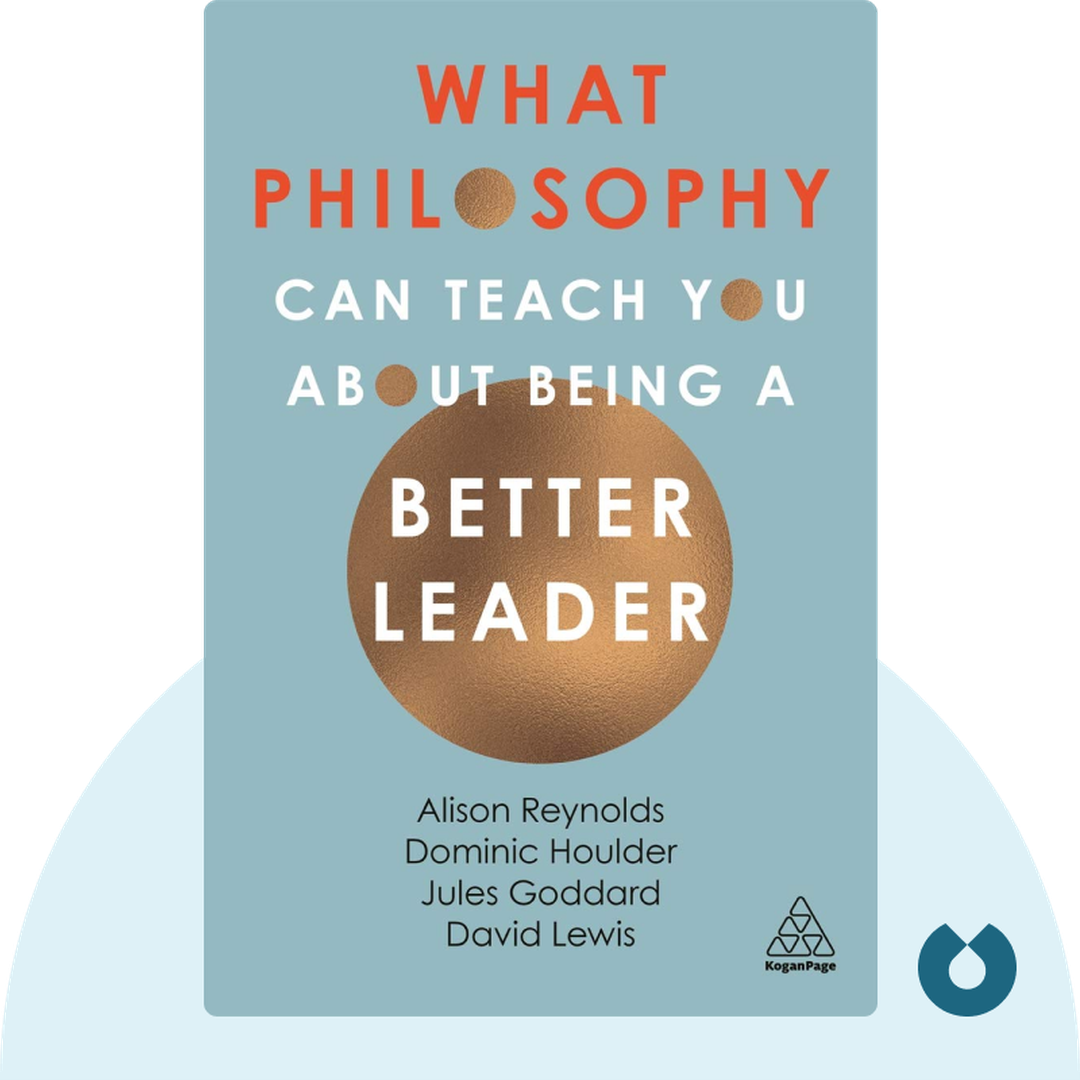
What Philosophy Can Teach You About Being a Better Leader
Start ListeningDownload Try free on iPhoneScan to start in 5 seconds
Categories:
If You're Curious About These Questions...
You should listen to this audiobook
- Have you ever wondered why traditional management hacks often fall short, and how ancient philosophical 'thought experiments' could be the key to unlocking your team's true potential?
- What if the secret to better leadership isn't about learning more psychology, but about fundamentally rethinking how you approach strategy and communication?
- Are you curious about how the ancient concept of 'flourishing' can help you thrive at work and in your personal life, regardless of your job title?
Listen to What Philosophy Can Teach You About Being a Better Leader — Free Audiobook
Loading player...
Key Takeaways from What Philosophy Can Teach You About Being a Better Leader
- Discover why relying solely on employee feelings and personal feedback is an unreliable strategy for assessing true workplace satisfaction.
- Learn how to apply Aristotle's concept of the 'middle way' to make rational, balanced decisions that drive genuine self-actualization.
- Understand how Nietzsche's practice of deep self-examination can help you uncover hidden motivations and lead with authentic values.
- Find out how adopting a Buddhist mindset of interconnectedness and cooperation builds a stronger, more profitable long-term business strategy than cutthroat competition.
- Master the use of philosophical thinking to reframe your leadership approach, shifting your focus from superficial psychological fixes to sustainable, constructive action.
Learning Tools
Reinforce what you learned from What Philosophy Can Teach You About Being a Better Leader
Mind Map
What Philosophy Can Teach You About Being a Better Leader
Self-Actualization & Reason+
Strategy & Cooperation+
Leadership & Authority+
Communication & Engagement+
Ethics & Freedom+
Quiz — Test Your Understanding
Question 1 of 10
Why does the book argue that relying solely on employee feelings to measure workplace satisfaction is flawed?
Question 2 of 10
According to the philosophies of Aristotle and Nietzsche, what two tools are essential for achieving true self-actualization?
Question 3 of 10
How does Buddhist philosophy suggest leaders should reframe their business strategy?
Question 4 of 10
What key concept does investor George Soros use to demonstrate the importance of experimentation in strategy?
Question 5 of 10
How can leaders use John Rawls's 'veil of ignorance' to foster a sense of fairness in the workplace?
Question 6 of 10
Based on Thomas Hobbes's philosophy, how should leaders view authority and empowerment?
Question 7 of 10
When trying to communicate effectively, what does Stoic philosophy advise leaders to do?
Question 8 of 10
According to Martin Buber's theory, how can leaders foster genuine employee engagement?
Question 9 of 10
What does Isaiah Berlin's concept of 'moral plurality' teach leaders about ethical decision-making?
Question 10 of 10
How do existentialist philosophers view the concept of freedom in the workplace?
What Philosophy Can Teach You About Being a Better Leader — Full Chapter Overview
- 1Recommendation
- 2When attempting to improve workplace satisfaction, feelings can be unreliable guides indeed.
- 3Philosophy says reason and self-examination are crucial tools for self-actualization today.
- 4Buddhist philosophy can help you craft a stronger long-term business strategy.
- 5Effective strategy prioritizes experimentation and learning.
- 6Leadership isn’t about wielding influence and control. It’s about trust, fairness, leading by example.
- 7Genuine authority fosters empowerment at every level of an organization.
- 8To communicate well, stop trying to control the conversation.
- 9To foster engagement, we must learn to treat one another not as objects, but as real people.
- 10Workplace ethics require understanding and embracing the concept of moral plurality fully.
- 11We all desire to be free, but we also must grasp the responsibility that accompanies our freedom fully.
What Philosophy Can Teach You About Being a Better Leader Summary & Overview
What Philosophy Can Teach You About Being a Better Leader (2019) explains how we've lost sight of some of the most important aspects of leadership, and it presents helpful philosophical perspectives to get us back on track. Drawing from both ancient and modern philosophy, the authors outline simple yet powerful approaches to rethinking strategy, management, and communication. And what’s even better is that these philosophical “hacks” aren’t just for CEOs. By using these thought experiments and insights, we can all flourish at work and outside of it.
Who Should Listen to What Philosophy Can Teach You About Being a Better Leader?
- Business leaders wanting to take their leadership skills to the next level
- Managers who have already tried all the psychology hacks and need something more
- Anyone interested in philosophy
Books Similar to What Philosophy Can Teach You About Being a Better Leader
Readers who enjoyed this also liked these titles.