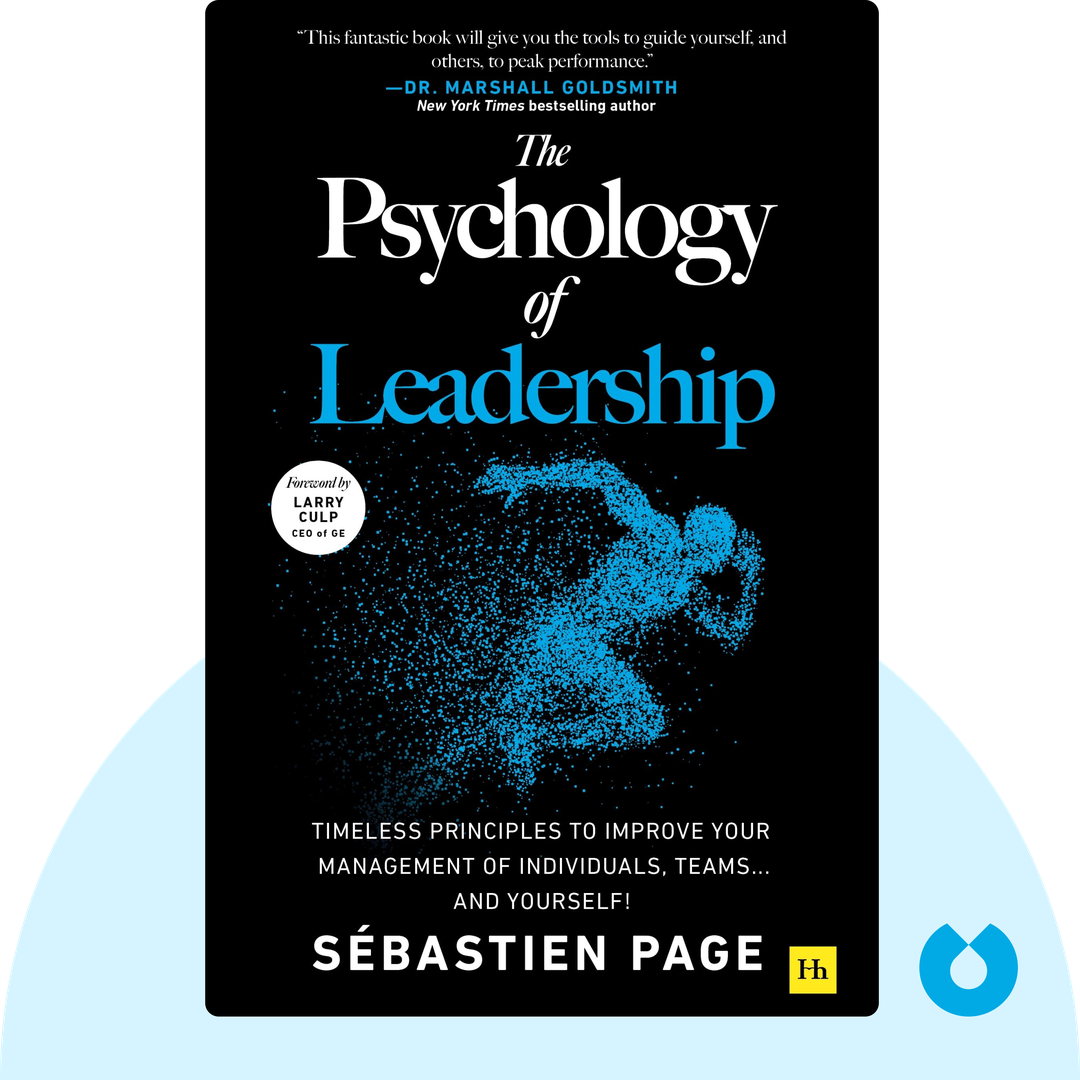
The Psychology of Leadership
Start ListeningDownload Try free on iPhoneScan to start in 5 seconds
Categories:
If You're Curious About These Questions...
You should listen to this audiobook
- What if the secret to achieving your most ambitious professional goals wasn't working harder, but prioritizing a specific scientific framework for happiness instead?
- Have you ever wondered why some leaders thrive under intense pressure while others burn out, and how you can use psychological research to stay resilient?
- Did you know that the key to turning around a toxic workplace culture lies in specific psychological insights that most managers completely overlook?
Listen to The Psychology of Leadership — Cinematic Audio Edition
Loading player...
Key Takeaways from The Psychology of Leadership
- Discover why happiness actually drives success, rather than the other way around, and learn how to leverage the PERMA framework to cultivate long-term team achievement.
- Understand how to transform mundane tasks into meaningful work by reframing your daily purpose, unlocking the secret to sustained engagement and team productivity.
- Master the art of setting ambitious, measurable goals with clear timelines, while recognizing early warning signs to avoid the destructive pitfalls of goal hyperfixation.
- Learn why the most successful leaders always build exit strategies into their goals, helping them overcome the sunk cost fallacy and safely abandon failing initiatives.
- Find out how to redefine what it means to win by adopting a sports psychology mindset, where embracing inevitable losses is recognized as a necessary part of the champion's journey.
Learning Tools
Reinforce what you learned from The Psychology of Leadership
Mind Map
The Psychology of Leadership
Psychology & Leadership Connection+
The PERMA Framework+
The Power of Goals+
Redefining Winning+
Relationships & Feedback+
Finding & Sharing Meaning+
Quiz — Test Your Understanding
Question 1 of 6
According to the text, what does psychological research indicate about the relationship between happiness and success?
Question 2 of 6
Which of the following is NOT one of the five dimensions of happiness in Martin Seligman’s PERMA framework?
Question 3 of 6
What psychological pitfall of goal-setting is illustrated by the examples of Wells Fargo and Volkswagen?
Question 4 of 6
How does the author suggest leaders redefine what it means to 'win' to avoid a toxic, ego-driven mindset?
Question 5 of 6
What is the recommended approach for leaders when tough feedback is necessary?
Question 6 of 6
According to the text, what must accompany a leader's core values to prevent them from fading quickly?
The Psychology of Leadership — Full Chapter Overview
- 1Recommendation
- 2Redefining success
- 3The power of goal-setting
- 4The hidden costs of winning
- 5Happiness and relationships
- 6You better mean it
The Psychology of Leadership Summary & Overview
The Psychology of Leadership (2025) draws on research into several subdisciplines of psychology to offer a framework for successful leadership based on scientific research into happiness. Weaving together real-world examples, personal anecdotes, and research, it presents a framework for harnessing psychological insights in leadership.
Who Should Listen to The Psychology of Leadership?
- Stressed out leaders at any stage of their careers looking for more satisfaction or meaning in their work.
- Coaches, consultants, and HR professionals looking to turn around toxic workplace cultures
- Anyone interested in being happier and healthier at work, while cultivating more success
Books Similar to The Psychology of Leadership
Readers who enjoyed this also liked these titles.