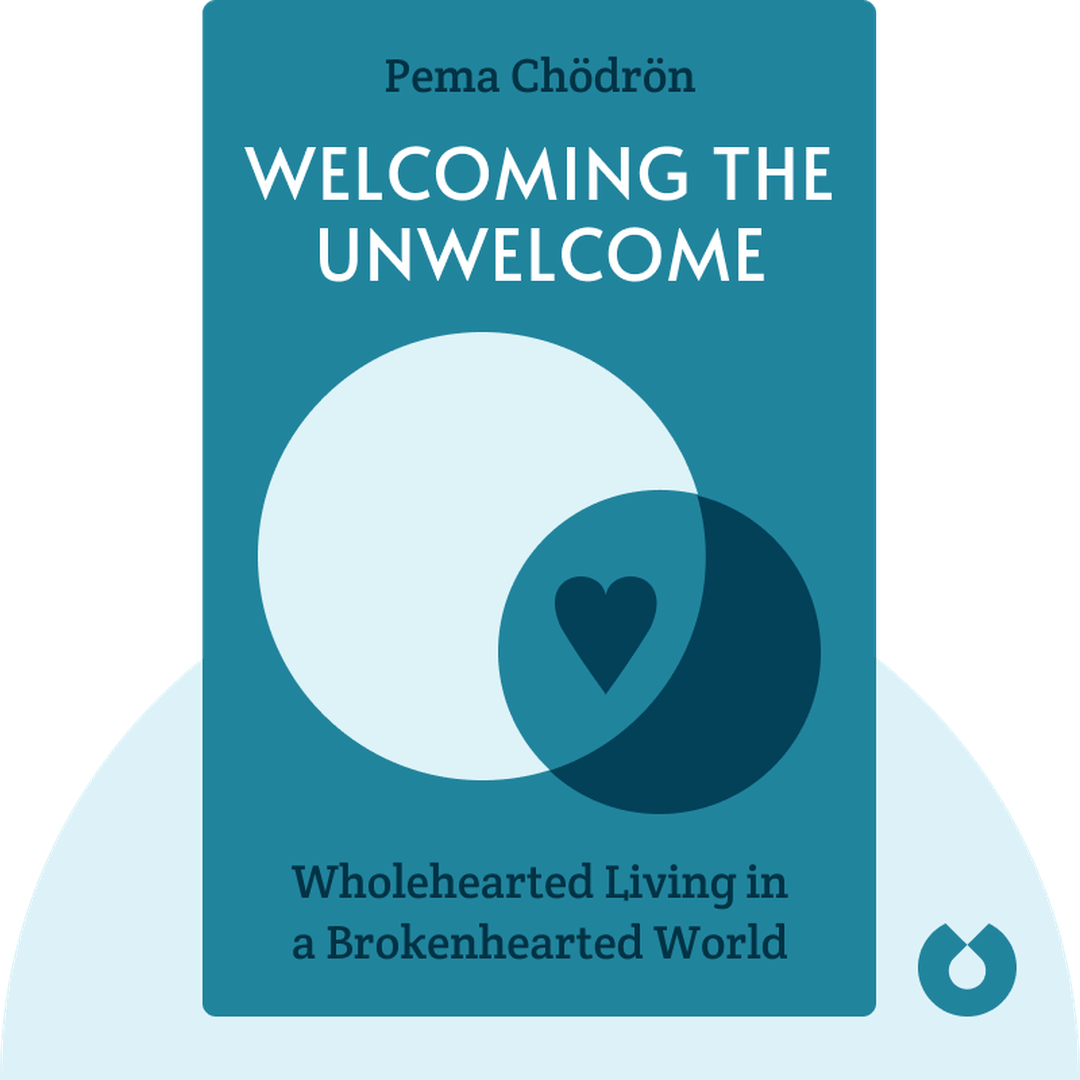
Welcoming the Unwelcome
Start ListeningDownload Try free on iPhoneScan to start in 5 seconds
Categories:
If You're Curious About These Questions...
You should listen to this audiobook
- Have you ever wondered why the very things we try to push away—like fear and failure—might actually be the key to finding lasting peace?
- What if you could stop fighting against life's difficulties and instead learn a simple technique to turn every challenge into a source of wisdom?
- Are you curious about the ancient Buddhist practice that allows you to transform your own suffering into a powerful tool for inner strength?
Listen to Welcoming the Unwelcome — Free Audiobook
Loading player...
Key Takeaways from Welcoming the Unwelcome
- Learn how to embark on the path of bodhicitta by bravely facing uncomfortable feelings like loneliness and heartache rather than retreating to your comfort zone.
- Discover why leaning into a broken heart is actually the first step toward awakening your mind and unlocking your fundamental desire to help others.
- Understand the danger of polarizing labels and learn to shift feelings of aversion into empathy by recognizing that all people experience the same pain and fear.
- Realize how your ego's desire for permanence conflicts with reality, and discover why accepting life's inevitable changes can prevent vulnerability from turning into anger.
- Master the practice of sitting with raw vulnerability to unlock true bravery, allowing you to find profound gratitude and beauty in ordinary, everyday moments.
Learning Tools
Reinforce what you learned from Welcoming the Unwelcome
Mind Map
Welcoming the Unwelcome
Bodhicitta (Awakening Heart & Mind)+
Overcoming Polarization+
Taming the Ego & Embracing Vulnerability+
Groundlessness (Shunyata)+
Expanding the Comfort Zone+
Tools for the Journey+
Quiz — Test Your Understanding
Question 1 of 9
What is the primary focus of the Buddhist path of bodhicitta as described in the text?
Question 2 of 9
According to the teachings of Chogyam Trungpa Rinpoche, what is the starting point for arousing bodhicitta?
Question 3 of 9
What danger does the book associate with using labels (like 'bad' or 'unworthy') to describe people or situations?
Question 4 of 9
How do Buddhist teachings define the 'ego' in the context of this book?
Question 5 of 9
How should feelings of groundlessness or emptiness (shunyata) be viewed, according to the text?
Question 6 of 9
What paradox does the author highlight regarding our 'comfort zones'?
Question 7 of 9
What is the core practice of the mental exercise known as 'tonglen'?
Question 8 of 9
During basic sitting meditation, how should you handle distracting thoughts?
Question 9 of 9
In the LESR tool for welcoming unpleasant feelings, what does the 'S' stand for?
Welcoming the Unwelcome — Full Chapter Overview
- 1Recommendation
- 2Beginning the path to enlightenment requires committing to awaken heart and mind.
- 3Central to Buddhism is transcending polarizing thoughts and cultivating deep compassionate understanding.
- 4Our egos often obstruct enlightenment; thus, embrace imperfections and learn to value everyday simplicity in your life.
- 5As life keeps changing, experiences of emptiness can open paths to meaningful growth.
- 6To live more comfortably, broaden your comfort zone.
- 7A sense of humor, wise mentors, and simple sitting meditation are essential, supportive tools for growth.
Welcoming the Unwelcome Summary & Overview
Welcoming the Unwelcome (2019) offers a practical introduction to some of the principles of Buddhism that can help people better cope with the challenges of everyday life. Author Pema Chödrön provides useful insight into Buddhist teachings as well as practices and techniques that anyone can use.
Who Should Listen to Welcoming the Unwelcome?
- People interested in Buddhist teachings
- Depressed or anxious people looking for advice
- People coping with life’s difficulties
Books Similar to Welcoming the Unwelcome
Readers who enjoyed this also liked these titles.