If You're Curious About These Questions...
You should listen to this audiobook
- Have you ever wondered why we often feel 'not good enough' even when we're succeeding, and how you can finally break free from that cycle?
- What if you could stop fighting your most difficult emotions and discover that embracing them is the key to lasting peace?
- Are you curious about the ancient Buddhist secret that allows you to transform self-criticism into radical self-compassion?
Listen to Radical Acceptance — Free Audiobook
Loading player...
Key Takeaways from Radical Acceptance
- Discover how Western culture's focus on original sin keeps us trapped in a 'trance of inadequacy,' and embrace the Buddhist belief that you are naturally wise and compassionate.
- Learn to break free from the cage of self-judgment by practicing radical acceptance, which allows you to observe your thoughts and feelings with an open heart instead of trying to control them.
- Understand why trying to escape or manage painful experiences actually feeds your feelings of inadequacy by forcing you to reject a vital part of yourself.
- Master the art of taking a mindful pause when faced with uncontrollable situations to clearly recognize your emotions and make conscious, healthy choices.
- Find out how to become a constant, kind friend to your own painful experiences by openly acknowledging feelings of fear or confusion instead of panicking.
Learning Tools
Reinforce what you learned from Radical Acceptance
Mind Map
Radical Acceptance
The Trance of Inadequacy+
The Buddhist Perspective+
Core Philosophy+
Actionable Techniques+
Self-Compassion & Healing+
Quiz — Test Your Understanding
Question 1 of 7
According to the text, how does the Western cultural myth of Adam and Eve contribute to our feelings of inadequacy?
Question 2 of 7
What does the story of Mohini the white tiger illustrate about human behavior?
Question 3 of 7
When faced with an uncontrollable or troubling situation, what does the text recommend as the best immediate response?
Question 4 of 7
Why did the meditation students consider Jacob's class, where he became confused due to Alzheimer's, to be one of their best lessons?
Question 5 of 7
How did focusing on her physical sensations help the author deal with her anger toward her son?
Question 6 of 7
According to the text, why do many people use harsh self-judgment when dealing with emotional or physical pain?
Question 7 of 7
What is the danger of constantly 'keeping busy' when dealing with the loss of a loved one or other emotional pain?
Radical Acceptance — Full Chapter Overview
- 1Recommendation
- 2We exist in a fog of not-enoughness, with Western culture largely at fault.
- 3Self-judgment holds us captive, yet radical acceptance can truly liberate us.
- 4Rather than managing the uncontrollable, choose to take a pause.
- 5Be a kind, steady friend to yourself and to your painful experiences.
- 6Instead of being disconnected from your body, focus attentively on your physical sensations in the moment.
- 7Self-judgment might shield you from pain, but suffering can help reveal your deepest self within.
Radical Acceptance Summary & Overview
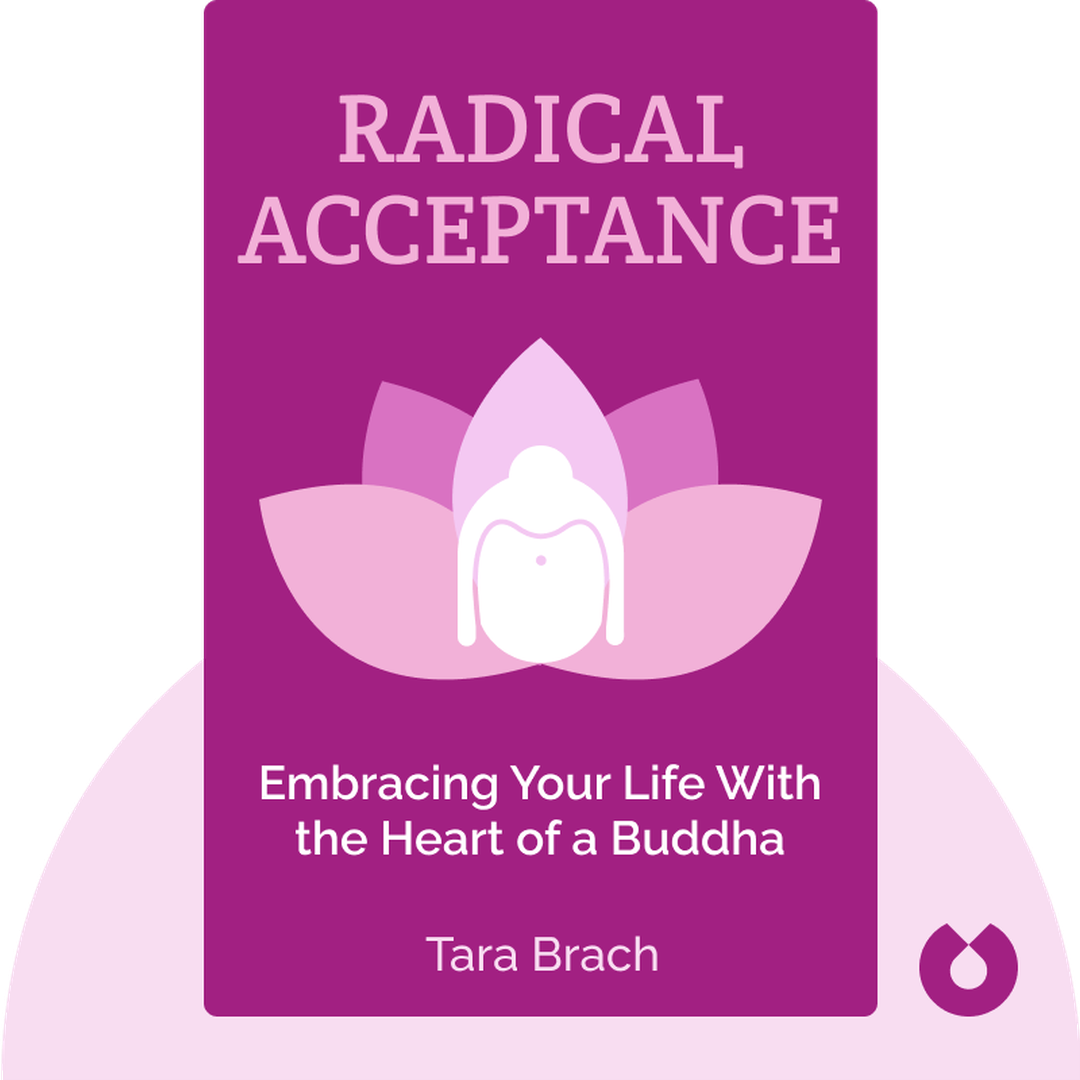
Radical Acceptance (2003) explains how Buddhism and meditation can bring you greater contentment and happiness. Chock-full of easy mental exercises that reduce stress and self-criticism, it’ll give you the tools you need to lead a gentler, happier existence.
Who Should Listen to Radical Acceptance?
- Stressed-out people seeking calm
- Meditators and mindful individuals
- Those interested in Buddhism
Books Similar to Radical Acceptance
Readers who enjoyed this also liked these titles.