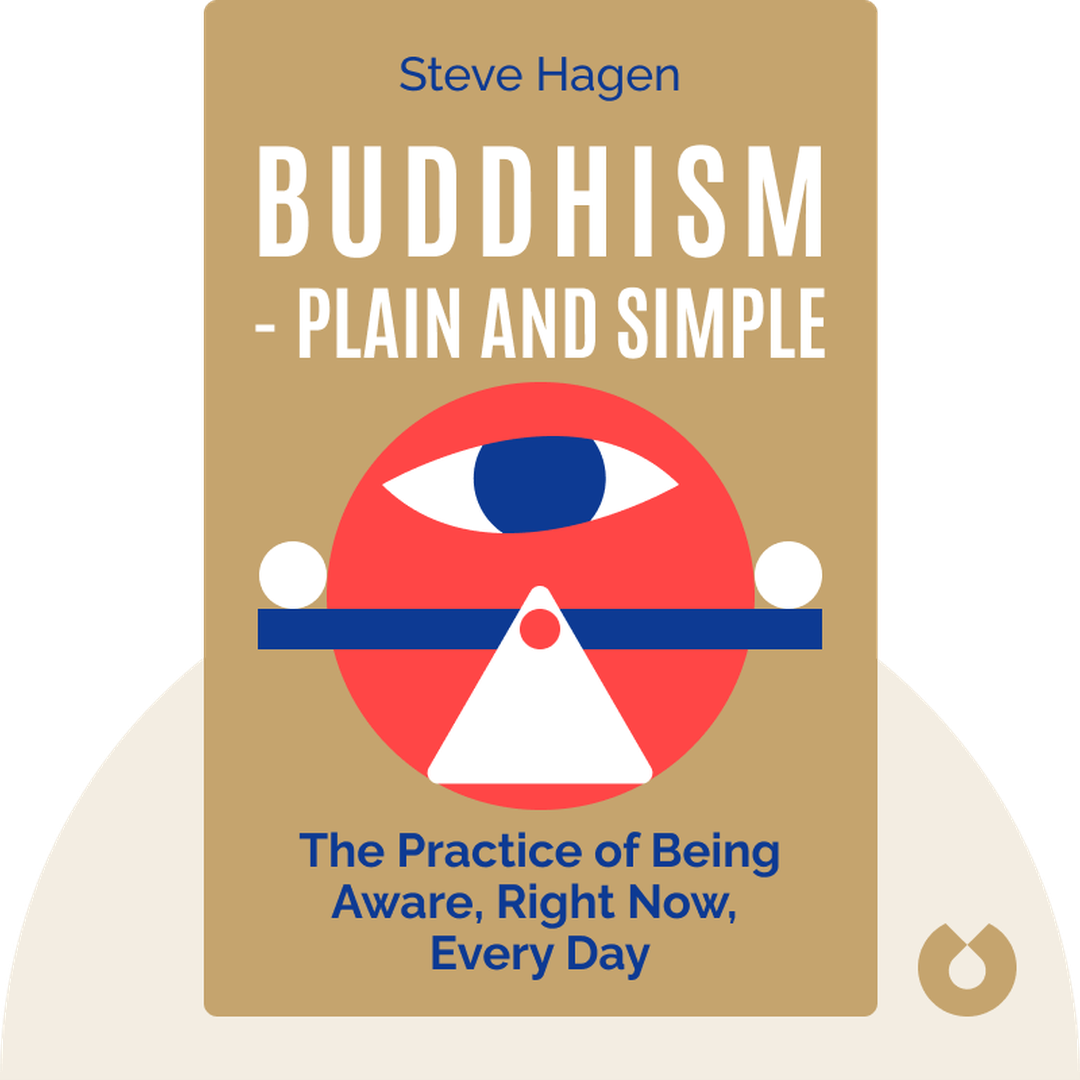
Buddhism – Plain and Simple
Start ListeningDownload Try free on iPhoneScan to start in 5 seconds
Categories:
If You're Curious About These Questions...
You should listen to this audiobook
- Have you ever wondered why we spend most of our lives distracted from the only moment that actually exists—and what that's costing us?
- Did you know that much of our daily suffering stems from a specific type of 'blindness' that has nothing to do with our eyesight?
- What if you could find profound peace right in the middle of your busiest day by simply changing how you perceive the present?
Listen to Buddhism – Plain and Simple — Free Audiobook
Loading player...
Key Takeaways from Buddhism – Plain and Simple
- Discover why our everyday suffering stems from fighting the inevitable reality of change and comparing the present moment to our expectations.
- Learn how adopting the 'right view' helps you eliminate conflict by stopping the habit of freezing a constantly changing world into fixed, arbitrary concepts.
- Understand the principle of 'right effort,' which teaches you to navigate life naturally without straining or trying to control what is ultimately out of your hands.
- Master the practice of 'right mindfulness' by observing your internal, bodily reactions to annoyances without judgment in order to naturally calm your mind.
- Explore the Buddhist perspective on the self and find out why traditional beliefs in either an immortal soul or pure materialism fail to define our true individuality.
Learning Tools
Reinforce what you learned from Buddhism – Plain and Simple
Mind Map
Buddhism – Plain and Simple
The Root of Suffering+
The Illusion of Self+
The Nature of Truth+
Key Buddhist Practices+
Actionable Advice+
Quiz — Test Your Understanding
Question 1 of 6
According to the text, what is the primary reason human beings experience misery and dissatisfaction?
Question 2 of 6
How does the book illustrate the Buddhist concept of the 'right view' using the example of a boy and a rat?
Question 3 of 6
What does the Buddha mean by practicing the 'right effort'?
Question 4 of 6
When faced with an irritating situation, such as a dripping tap, what does 'right mindfulness' instruct you to do?
Question 5 of 6
How does Buddhism view the concept of human individuality and the 'self'?
Question 6 of 6
According to the text, what is the difference between relative truths and Absolute Truth?
Buddhism – Plain and Simple — Full Chapter Overview
- 1Recommendation
- 2Our suffering comes from failing to see and accept things as they truly are.
- 3Buddhism offers eight practices for peace of mind, including two focused on how we think.
- 4Two other key practices are right mindfulness and right effort.
- 5The idea of the self does not define our individuality.
- 6The truth is that everything belongs to a larger whole.
- 7Final summary
Buddhism – Plain and Simple Summary & Overview
Buddhism Plain and Simple (2013) is your no-nonsense guide to essential Buddhist practices. From building awareness to living in the present moment, Buddhism’s most important teachings are explained in a clear and accessible way, and are linked to aspects of everyday life where we need them the most.
Who Should Listen to Buddhism – Plain and Simple?
- Spirituality enthusiasts seeking a deeper understanding of human existence
- Professionals who feel too busy to live in the moment
- Anyone who wants to stop living in ignorance of basic Buddhist truths
Books Similar to Buddhism – Plain and Simple
Readers who enjoyed this also liked these titles.