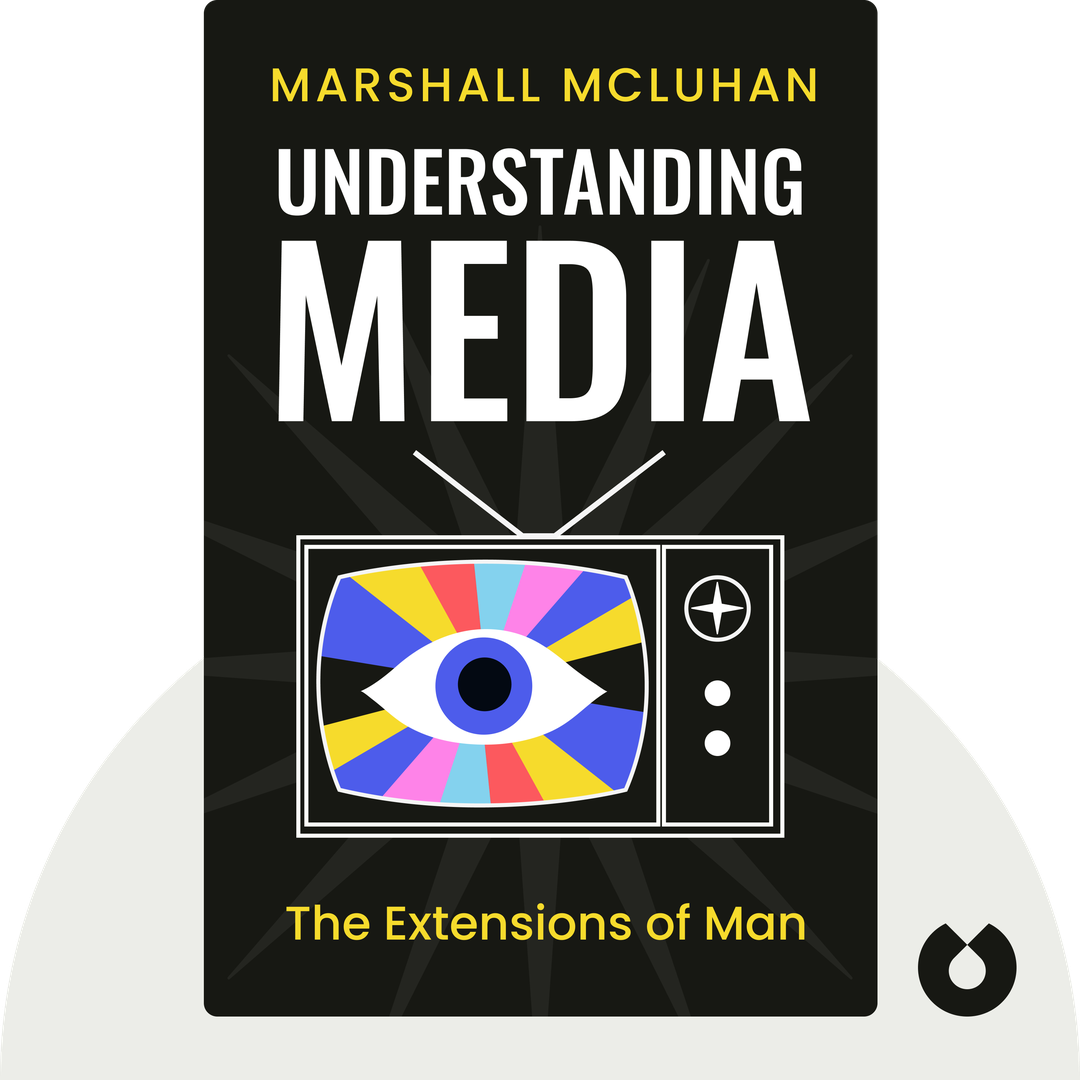
If You're Curious About These Questions...
You should listen to this audiobook
- Have you ever wondered why the way you receive information—whether through a screen, a book, or a radio—might actually be more influential than the message itself?
- Did you know that decades before the internet existed, a visionary thinker predicted our world would shrink into a "global village" where everyone is instantly connected?
- Are you curious about how the technology you use every day is silently reshaping your senses and the very structure of our society?
Listen to Understanding Media — Free Audiobook
Loading player...
Key Takeaways from Understanding Media
- Understand why 'the medium is the message' means the delivery system itself—rather than the content it carries—holds the true power to reshape our perceptions and daily interactions.
- Discover how the immediacy of modern electronic communication has collapsed time and space to create a 'global village,' making active societal participation a necessity rather than an option.
- Learn the critical difference between high-definition 'hot' media that demand little audience participation and low-definition 'cool' media that require active engagement to fill in the gaps.
- Explore how our devices act as physical extensions of ourselves that buffer us from environmental stress, risking a psychological numbness and isolation akin to the myth of Narcissus.
- Master the ability to critically evaluate evolving technologies so you can harness their connecting power without losing your human essence to the reflective surfaces of your screens.
Learning Tools
Reinforce what you learned from Understanding Media
Mind Map
Understanding Media
The Medium is the Message+
Hot and Cool Media+
Extensions of Man+
Communication Technologies+
Specific Media Dynamics+
Automation & The Future+
Quiz — Test Your Understanding
Question 1 of 7
What is the core meaning of Marshall McLuhan's famous phrase, 'the medium is the message'?
Question 2 of 7
According to McLuhan's framework, which of the following best describes 'cool' media?
Question 3 of 7
How does the text use the Greek myth of Narcissus to explain our relationship with technology?
Question 4 of 7
What cultural shift occurs when a society moves from a strong oral tradition to a literate, written culture, according to the text?
Question 5 of 7
How did early television differ from movies and radio in its impact on the audience?
Question 6 of 7
What profound impact does automation have on the traditional realms of education and work?
Question 7 of 7
Which of the following best defines McLuhan's concept of the 'global village'?
Understanding Media — Full Chapter Overview
- 1Recommendation
- 2The medium forms the message
- 3Hot versus cool media
- 4The extensions of humans
- 5Communications technology
- 6Radio, cinema, and television
- 7The risks and rewards of automation
Understanding Media Summary & Overview
Understanding Media (1964) is a prescient analysis of the profound impact media would have on society, envisioned decades before the digital age actually unfolded. Introducing groundbreaking concepts like the “global village” and “the medium is the message,” it offers a fascinating lens through which to view our interconnected modern existence.
Who Should Listen to Understanding Media?
- Students of media theory, communications, or related fields
- Technology professionals interested in the history of digital communication
- Cultural theorists curious about how media shapes social norms and structures
Books Similar to Understanding Media
Readers who enjoyed this also liked these titles.