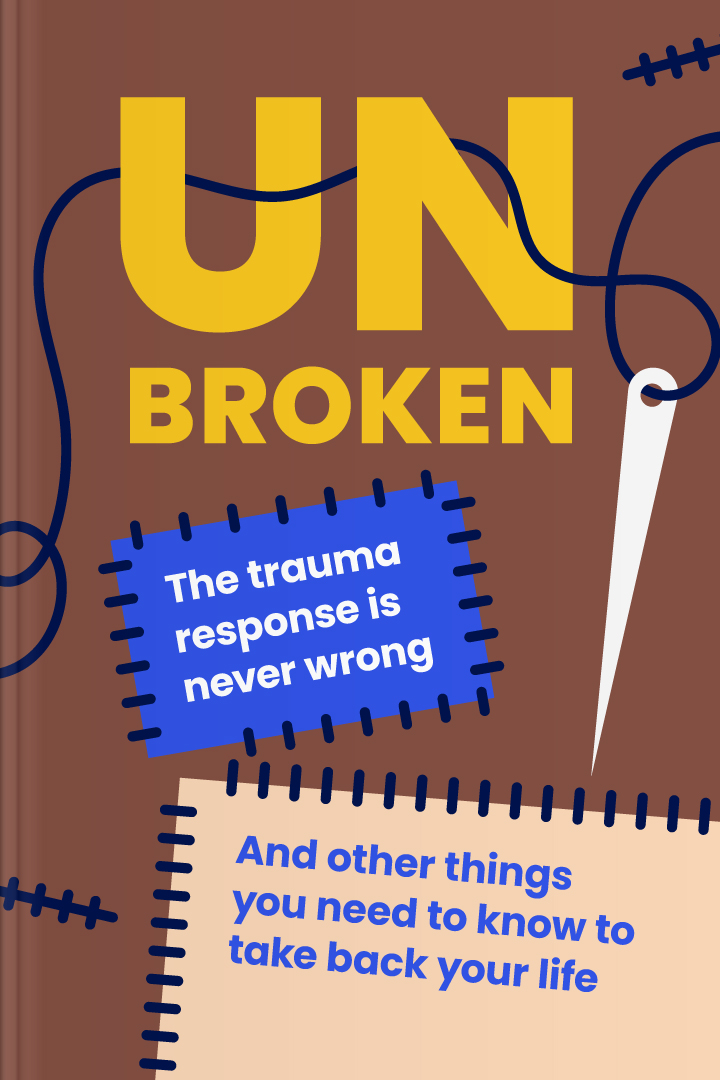
If You're Curious About These Questions...
You should listen to this audiobook
- Have you ever wondered why your body’s most frustrating reactions—like sudden fear or numbness—might actually be its most brilliant survival strategies?
- Did you know that the way your brain stores overwhelming memories is fundamentally different from normal recall, and that this 'clumsy' process is actually meant to protect you?
- What if you could stop comparing your pain to others and finally discover how small shifts in your personal narrative can unlock the path to true reconnection?
Listen to Unbroken — Free Audiobook
Key Takeaways from Unbroken
- Discover why trauma responses like freezing, withdrawing, or going numb are not signs of weakness, but rather instinctual survival strategies designed to protect the body.
- Understand how seemingly unusual coping mechanisms—such as lying on the floor or isolating—are actually the nervous system's subconscious attempt to reduce overwhelming sensations and regain safety.
- Learn how to reframe your perspective on emotional distress, recognizing that enduring trauma does not diminish a person's worth or indicate a character flaw.
- Explore the history of psychology to see how trauma was historically misunderstood and unfairly stigmatized as a gender-specific issue or personal weakness.
- Find out how modern technologies and brain scans prove that trauma is not just 'in your head,' but deeply rooted in observable biological patterns within the brain and nervous system.
Learning Tools
Reinforce what you learned from Unbroken
Mind Map
Quiz — Test Your Understanding
Unbroken — Full Chapter Overview
- 1Recommendation
- 2Rethinking Trauma
- 3Moral Injury and Trauma
- 4Breaking repetitive patterns
- 5Resilience in the Midst of Adversity
Unbroken Summary & Overview
This narration explores trauma with warmth and respect, inviting a kinder view of the mind and body’s protective responses. Instead of treating trauma reactions as personal failures, it explains them as survival strategies—sometimes clumsy, sometimes costly, but rooted in the body’s drive to keep a person alive.
Across seven chapters, the script traces how trauma has been misunderstood through history, how the brain stores overwhelming experiences, why comparison minimizes real pain, and how moral injury and toxic relationship dynamics can shape a person’s inner world. Along the way, it offers gentle practices—like narrative retelling, perspective-writing, and small doses of hope—to support healing and reconnection.
Who Should Listen to Unbroken?
- Anyone trying to make sense of their own trauma responses—flashbacks, numbness, avoidance, shame, or sudden fear—and wanting an explanation that feels compassionate rather than clinical.
- Friends, partners, caregivers, and helpers who want to support someone in pain without minimizing, judging, or rushing the process.
- Listeners interested in the psychology of trauma, including how history, culture, and brain biology shaped what we now understand about stress and recovery.
Books Similar to Unbroken
Readers who enjoyed this also liked these titles.