If You're Curious About These Questions...
You should listen to this audiobook
- Did you know that the exhaustion you feel from helping others might not be simple burnout, but a specific 'trauma exposure response' that shifts your entire worldview?
- Have you ever wondered why some caregivers can witness immense suffering for years while staying grounded, while others feel completely overwhelmed by the weight of their work?
- What if you could transform your relationship with your work so that you can remain deeply present to the pain of others without losing your own sense of joy and well-being?
Listen to Trauma Stewardship — Free Audiobook
Loading player...
Key Takeaways from Trauma Stewardship
- Understand why feeling numb, irritable, or cynical are normal human reactions to witnessing trauma, rather than signs of personal weakness.
- Discover how your personal history and past hardships uniquely shape your capacity to process others' pain and support them through crises.
- Learn to navigate the middle path between intense emotional over-investment and complete detachment to maintain healthy, sustainable boundaries.
- Recognize how collective trauma exposure ripples outward, transforming workplace cultures and entire societal systems of care.
- Master practical awareness techniques like regular body scans and mindful check-ins to identify your body's protective trauma patterns before they lead to burnout.
Learning Tools
Reinforce what you learned from Trauma Stewardship
Mind Map
Trauma Stewardship
The Core Premise+
Personal Impact+
Organizational Impact+
Societal Impact+
Sustaining Presence+
Quiz — Test Your Understanding
Question 1 of 6
What is the primary goal of navigating trauma exposure, according to the text?
Question 2 of 6
How does the brain often create protective patterns when a person is exposed to overwhelming trauma at work?
Question 3 of 6
Which of the following is described as a sign of an organization struggling with collective trauma exposure?
Question 4 of 6
In the example of Mark, the child protection worker, how did his unmanaged trauma response manifest before he found a middle path?
Question 5 of 6
What often happens when large systems and institutions, such as international aid organizations, become overwhelmed by collective trauma?
Question 6 of 6
What is a key strategy mentioned for sustaining presence and avoiding burnout over the long term?
Trauma Stewardship — Full Chapter Overview
- 1Recommendation
- 2The witness’s path
- 3Understanding responses to trauma
- 4It starts with you
- 5When organizations carry trauma
- 6The ripple effects of change
- 7Maintaining presence
- 8Final summary
Trauma Stewardship Summary & Overview
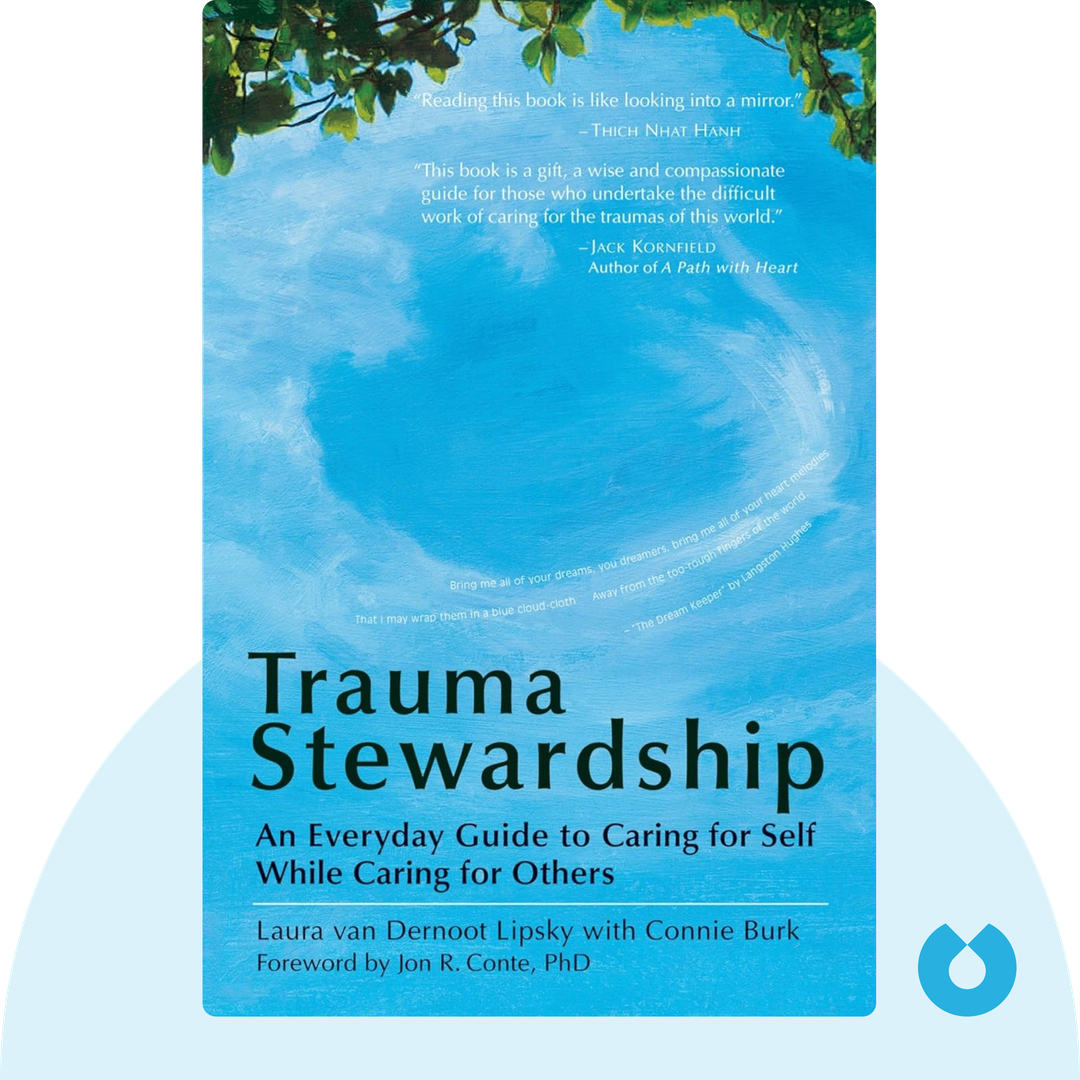
Trauma Stewardship (2009) explores how witnessing trauma affects caregivers, and offers a framework for maintaining well-being while doing challenging work. It provides practical ways to process trauma exposure at personal, organizational, and societal levels while remaining present to the suffering of others.
Who Should Listen to Trauma Stewardship?
- Mental health professionals and social workers wanting to stay engaged
- Nonprofit organizers and community leaders on the front lines of trauma
- Anyone looking for ways to engage with trauma without feeling overwhelmed
Books Similar to Trauma Stewardship
Readers who enjoyed this also liked these titles.