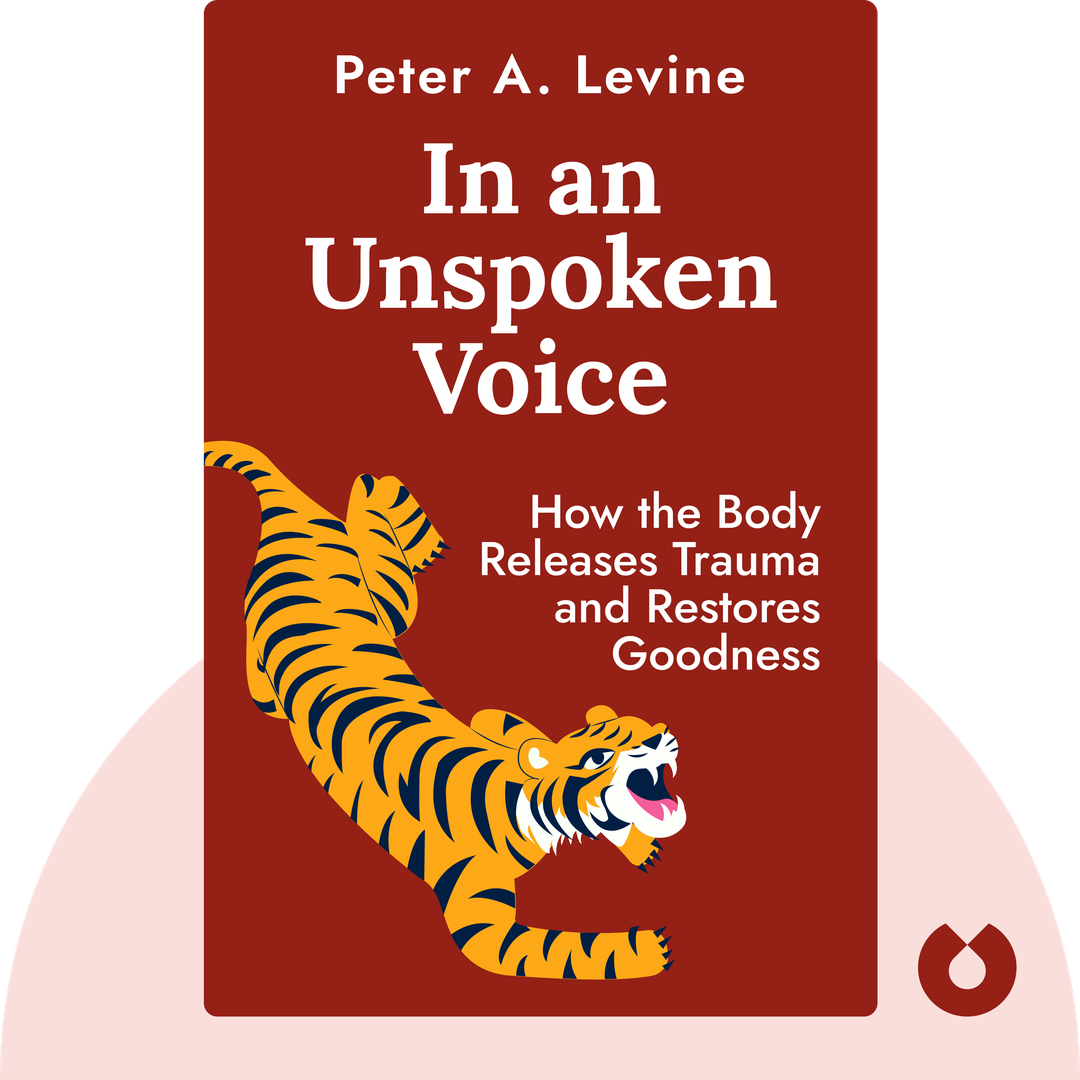
If You're Curious About These Questions...
You should listen to this audiobook
- Have you ever wondered why your body remains on high alert long after a stressful event is over, even when your mind knows you’re safe?
- What if the key to healing from past trauma isn't found in reliving your memories, but in tapping into the hidden wisdom of your physical sensations?
- Did you know that your body has an innate, organic process for 'resetting' your nervous system that most of us have simply forgotten how to use?
Listen to In an Unspoken Voice — Cinematic Audio Edition
Loading player...
Key Takeaways from In an Unspoken Voice
- Understand why trauma is a physical condition where your nervous system gets stuck on high alert, rather than just an emotional or mental hurdle.
- Discover how the groundbreaking Somatic Experiencing method uses the body's untapped wisdom to physically discharge frozen traumatic energy, just as wild animals naturally shake off threats.
- Learn how to practice pendulation by gently oscillating between physical sensations of comfort and discomfort, allowing you to safely release trauma without being overwhelmed.
- Master the technique of titration to carefully modulate your body's stress response like a dimmer switch, using simple tools like breathing and humming to find relief without retraumatization.
- Find out how mindful movements, such as swaying, blinking, and shaking, can provide a safe outlet for immobilized traumatic energy and naturally restore your nervous system to a state of peace.
Learning Tools
Reinforce what you learned from In an Unspoken Voice
Mind Map
In an Unspoken Voice
Understanding Trauma+
The Body's Role+
Core Techniques+
Physical Practices+
The Healing Journey+
Quiz — Test Your Understanding
Question 1 of 6
According to the text, when does a survival response actually become 'trauma'?
Question 2 of 6
What key observation of prey animals inspired Peter Levine's approach to treating trauma?
Question 3 of 6
Which of the following best describes the somatic technique of 'pendulation'?
Question 4 of 6
How does the text describe the practice of 'titration' in trauma recovery?
Question 5 of 6
Why is conscious, deep abdominal breathing recommended when a person feels unsafe?
Question 6 of 6
What advice does the text give regarding the pace and support needed for somatic trauma healing?
In an Unspoken Voice — Full Chapter Overview
- 1Recommendation
- 2Trauma in the body
- 3Tuning into the body
- 4Moving through trauma
- 5A journey, not a finish line
- 6Final summary
In an Unspoken Voice Summary & Overview
In an Unspoken Voice (2010) examines how you can release trauma’s grip and restore well-being and vitality to your body, through gentle awareness of sensation and movement. The Somatic Experiencing approach provides proven techniques to process unresolved experiences and return to flow.
Who Should Listen to In an Unspoken Voice?
- Anyone struggling with anxiety, depression, or unexplained somatic issues that may have roots in past trauma
- Those fascinated by the mind-body connection and the wisdom inherent in our organic processes
- Individuals looking to enhance their resilience and capacity for self-regulation in stressful times
Books Similar to In an Unspoken Voice
Readers who enjoyed this also liked these titles.