If You're Curious About These Questions...
You should listen to this audiobook
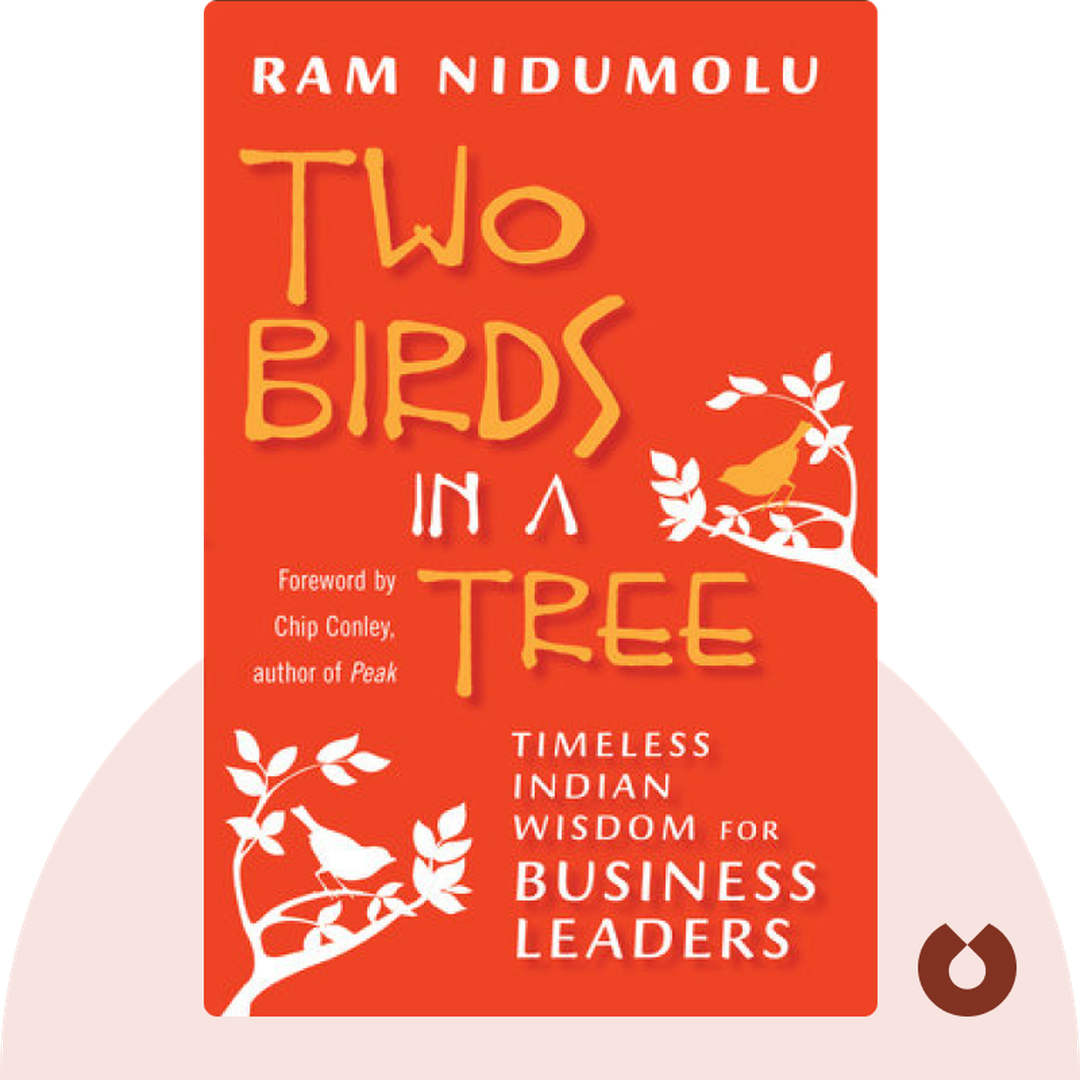
- Did you know that the secret to building a high-performing modern company could be hidden in a 3,000-year-old spiritual text?
- What if you could stop viewing profit and purpose as a trade-off and instead use ancient wisdom to achieve record success?
- Have you ever wondered how the simple metaphor of two birds in a tree can transform the way you lead your team and impact the planet?
Listen to Two Birds in a Tree — Free Audiobook
Loading player...
Key Takeaways from Two Birds in a Tree
- Discover how ancient Indian wisdom from the Upanishads can transform aggressive, short-term business practices into a holistic, long-term approach that heals the world.
- Understand the metaphor of the two birds to shift your leadership from an anxious, ego-driven state of 'doing' to a serene, connected state of 'being'.
- Master the REAL road-map to become a Being-Centered leader by recognizing your higher purpose, anchoring your vision, and leading others by example.
- Learn why business is fundamentally a dependent subsystem of nature and humanity, and how applying the Dharma principle maintains vital balance across all forms of capital.
- Overcome crippling business insecurities and the trap of excessive planning by actively reconnecting with the original, higher purpose behind your work.
Learning Tools
Reinforce what you learned from Two Birds in a Tree
Mind Map
Two Birds in a Tree
The Core Metaphor+
The REAL Roadmap to Leadership+
Business as a Subsystem (Dharma)+
Work as a Path to Higher Reality+
Stakeholder Well-being & Ethics+
Environmental Stewardship+
Sages in Business (Real Examples)+
Quiz — Test Your Understanding
Question 1 of 8
What do the two birds in the tree represent in the context of the book's business metaphor?
Question 2 of 8
According to the author's REAL road-map, what is the proper relationship between 'being' and 'doing' in business?
Question 3 of 8
How does the book describe the hierarchical relationship of the systems in which business operates?
Question 4 of 8
How did the author overcome his crippling fear of failure and excessive planning during his startup, Gandiva?
Question 5 of 8
What business lesson is drawn from Costco's approach to employee compensation?
Question 6 of 8
What was the ultimate result of Johnson & Johnson CEO James Burke's decision to pull 32 million bottles of Tylenol off the shelves during the 1982 crisis?
Question 7 of 8
According to the text, what is a major flaw in how modern business interacts with the environment?
Question 8 of 8
What radical step did Unilever CEO Paul Polman take to shift the company toward long-term growth and sustainability?
Two Birds in a Tree — Full Chapter Overview
- 1Recommendation
- 2Stronger business comes from connection to the world.
- 3Being is a higher state of existence that you can ultimately reach yourself.
- 4Business is a part of, and reliant upon, a larger system.
- 5Business and work can help you connect with your higher reality.
- 6Businesses grounded in employee and broader societal well-being are more successful overall.
- 7Ethical business practices produce successful companies.
- 8Caring for the environment is vital to long-term business success.
- 9Leaders can drive change by setting examples.
Two Birds in a Tree Summary & Overview
Two Birds in a Tree (2013) is a guide to holistic business practices, inspired by the ancient Indian text, the Upanishads. These blinks will teach you how to build a business that is good to its employees, customers and the environment while posting record numbers and garnering huge success.
Who Should Listen to Two Birds in a Tree?
- Business leaders seeking the inspiration to create a better world.
- Managers who want to excel at leadership.
- Start-up entrepreneurs who want to build their companies right.
Books Similar to Two Birds in a Tree
Readers who enjoyed this also liked these titles.