Theme Song
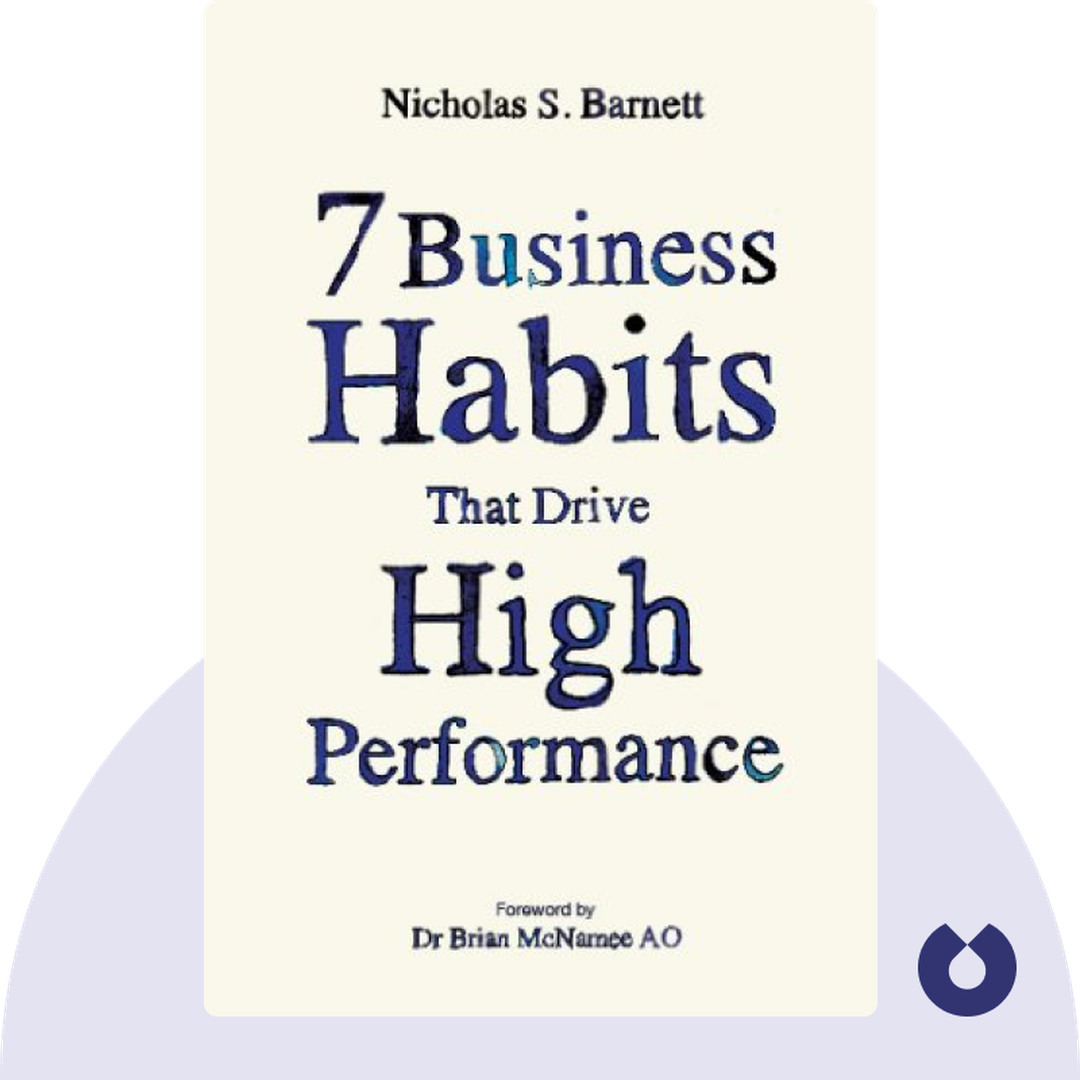
7 Business Habits That Drive High Performance
Start ListeningDownload Try free on iPhoneScan to start in 5 seconds
Categories:
If You're Curious About These Questions...
You should listen to this audiobook
- What’s the secret to why some organizations consistently outpace their competitors, even when they have access to the same resources?
- Have you ever wondered which specific daily habits can transform a disengaged workforce into a high-performance team that boosts your bottom line?
- What if you could bridge the gap between your company’s current results and its true potential by mastering just seven key behaviors?
Listen to 7 Business Habits That Drive High Performance — Free Audiobook
Loading player...
Key Takeaways from 7 Business Habits That Drive High Performance
- Discover why a powerful organizational vision must act as a magnet rather than just a compass to energize employees toward the future.
- Learn how to craft a specific, achievable company vision by collaborating with your employees instead of dictating goals from the top down.
- Understand the importance of condensing your business strategy onto a single sheet of paper so every team member can easily absorb and execute it.
- Find out why investing in robust internal communications is essential to ensuring your entire workforce understands and pulls toward the same strategic goals.
- Master the art of developing human capital by upskilling current staff, realizing that the biggest risk isn't training employees who leave, but failing to train those who stay.
Learning Tools
Reinforce what you learned from 7 Business Habits That Drive High Performance
Mind Map
7 Business Habits That Drive High Performance
1. Create a Magnetic Vision+
2. Define a Crystal Clear Strategy+
3. Develop Human Capital+
4. Celebrate the Workforce+
5. Care for Employee Well-being+
6. Cultivate Customer Loyalty+
7. Optimize IT Systems+
8. Continuous Improvement+
Quiz — Test Your Understanding
Question 1 of 9
How do high-performing business leaders view their company's long-term vision?
Question 2 of 9
What is the author's recommended approach for crafting a compelling company vision?
Question 3 of 9
To ensure employees understand and remember the company's strategic goals, the author suggests that the entire strategy should be:
Question 4 of 9
How do high-performing companies view the risk of investing in employee training, only to have the employee leave?
Question 5 of 9
According to the text, what is a highly effective way to show gratitude and recognize staff achievements?
Question 6 of 9
What does the term 'psychological contract' refer to in the context of the workplace?
Question 7 of 9
Why is retaining loyal customers more economically valuable than constantly acquiring new ones?
Question 8 of 9
When a company upgrades its IT systems, what common mistake does the author warn against?
Question 9 of 9
What actionable advice does the author provide for engaging staff and satisfying their thirst for knowledge?
7 Business Habits That Drive High Performance — Full Chapter Overview
- 1Recommendation
- 2High-performing companies create a compelling vision of the future.
- 3Your organization needs a crystal-clear strategy.
- 4Most businesses don’t tap into their employees’ full potential.
- 5High-performing businesses recognize and celebrate their workforce.
- 6High-performing organizations take care of their employees.
- 7Your core customers are also your loyal customers.
- 8Improving and fine-tuning your IT systems drives high performance.
- 9Final summary
7 Business Habits That Drive High Performance Summary & Overview
7 Business Habits That Drive High Performance (2014) outlines the organizational values and behaviors that drive success. These blinks explore how high-performing businesses race ahead of their competitors and explain how every company can transform their everyday activities to boost their bottom line.
Who Should Listen to 7 Business Habits That Drive High Performance?
- Entrepreneurs looking for fresh insights
- Business leaders seeking to boost employee engagement
- Managers wanting to drive productivity
Books Similar to 7 Business Habits That Drive High Performance
Readers who enjoyed this also liked these titles.