If You're Curious About These Questions...
You should listen to this audiobook
- Have you ever wondered why the thrill of achieving a major goal disappears almost the moment you reach it?
- Did you know that there’s a specific psychological reason we are hardwired to raise our expectations the second we taste success?
- What’s the secret to balancing an unstoppable drive for more with the need for lasting fulfillment in your life and career?
Listen to Ambition — Free Audiobook
Loading player...
Key Takeaways from Ambition
- Discover how to find continuous personal fulfillment by adapting and scaling down your ambitions to match your evolving capabilities, even as you age.
- Master the concept of 'just manageable difficulties' to maintain motivation and happiness by seeking challenges perfectly balanced with your true abilities.
- Understand how innate human optimism fuels persistence, allowing you to reframe ambiguous failures and maintain self-esteem while pursuing your goals.
- Learn how to continually redefine yourself at any stage of life, breaking free from rigid developmental phases to fluidly reshape your personal story.
- Find out how early experiences of external approval and societal expectations shape your deepest ambitions, helping you better understand your own drive for success.
Learning Tools
Reinforce what you learned from Ambition
Mind Map
Ambition
The Nature of Ambition+
Understanding Success and Failure+
Constraints and Influences+
Managing Goals Over Time+
Evolution of Life's Ambition+
Quiz — Test Your Understanding
Question 1 of 6
What key lesson is illustrated by the story of Gilbert Brim’s father transitioning from farming large fields to tending window boxes?
Question 2 of 6
According to the book, what is the ideal level of challenge required to maintain motivation and personal growth?
Question 3 of 6
How do people typically attribute their successes and failures in order to protect their self-esteem?
Question 4 of 6
Why do individuals often seek out specific environments and groups to validate their efforts?
Question 5 of 6
According to the text, how do people typically adjust their goals immediately following a significant success?
Question 6 of 6
How does the author view the concept of a 'midlife crisis'?
Ambition — Full Chapter Overview
- 1Recommendation
- 2The essence of ambition
- 3Making sense of success and failure
- 4Limits and influences on ambition
- 5Handling success, failure, and ongoing challenges
- 6How goals and life ambitions evolve
- 7Final summary
Ambition Summary & Overview
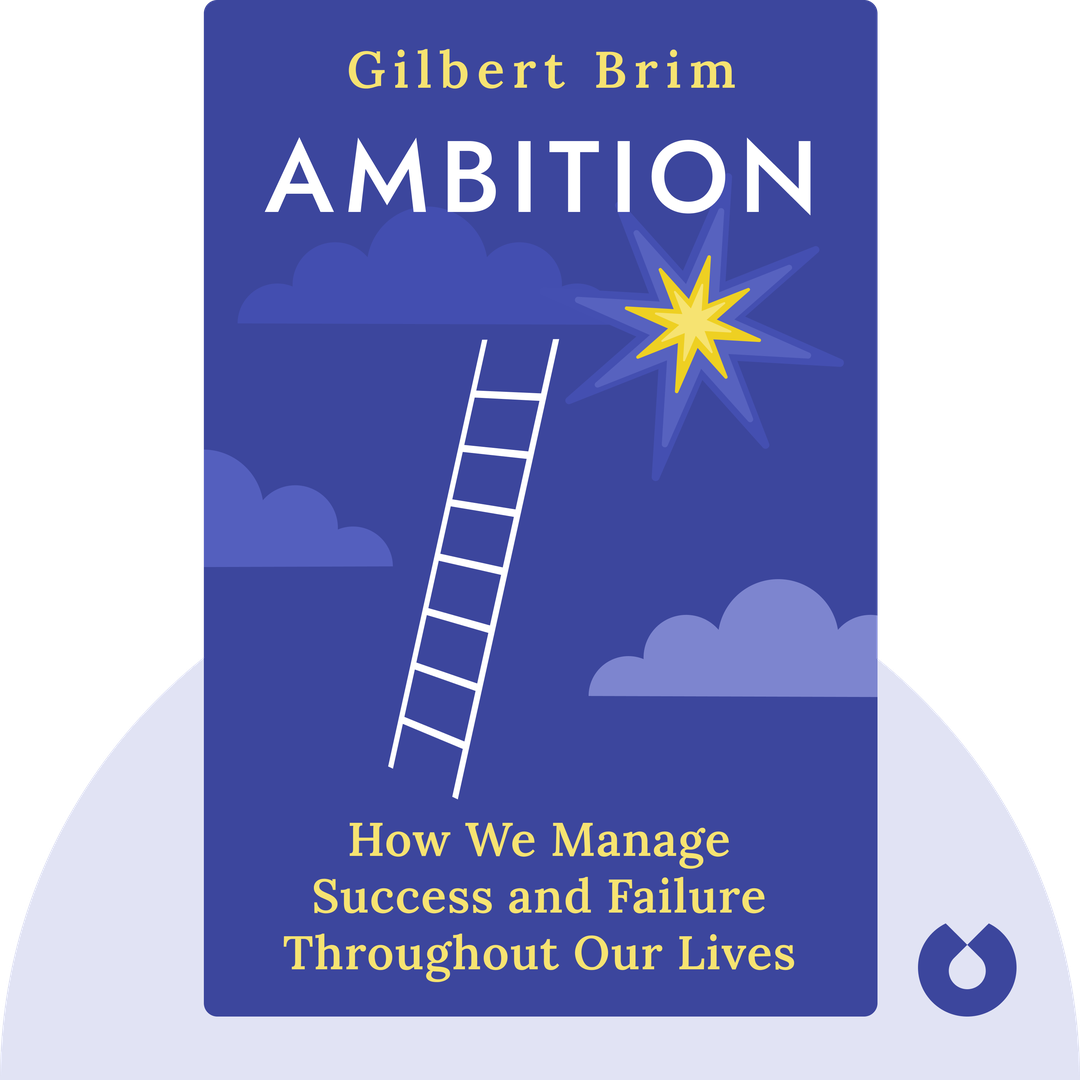
Ambition (1992) explores the psychology of striving, drawing on both research and real-life examples. It reveals how we constantly adjust our expectations after achieving success, quickly moving on to new goals without lingering on our accomplishments.
Who Should Listen to Ambition?
- Personal and professional growth seekers
- People struggling to balance their goals and fulfillment
- Curious minds interested in motivational psychology
Books Similar to Ambition
Readers who enjoyed this also liked these titles.