If You're Curious About These Questions...
You should listen to this audiobook
- Why do external rewards like money and competition often backfire and drain our natural curiosity instead of boosting our performance?
- What is the psychological difference between 'introjection' and 'integration,' and how does it explain why doing things out of guilt or obligation usually leads to failure?
- How does the pursuit of the 'American Dream' act as an internal controller that can sacrifice true autonomy in favor of a fragile, validation-seeking 'false self'?
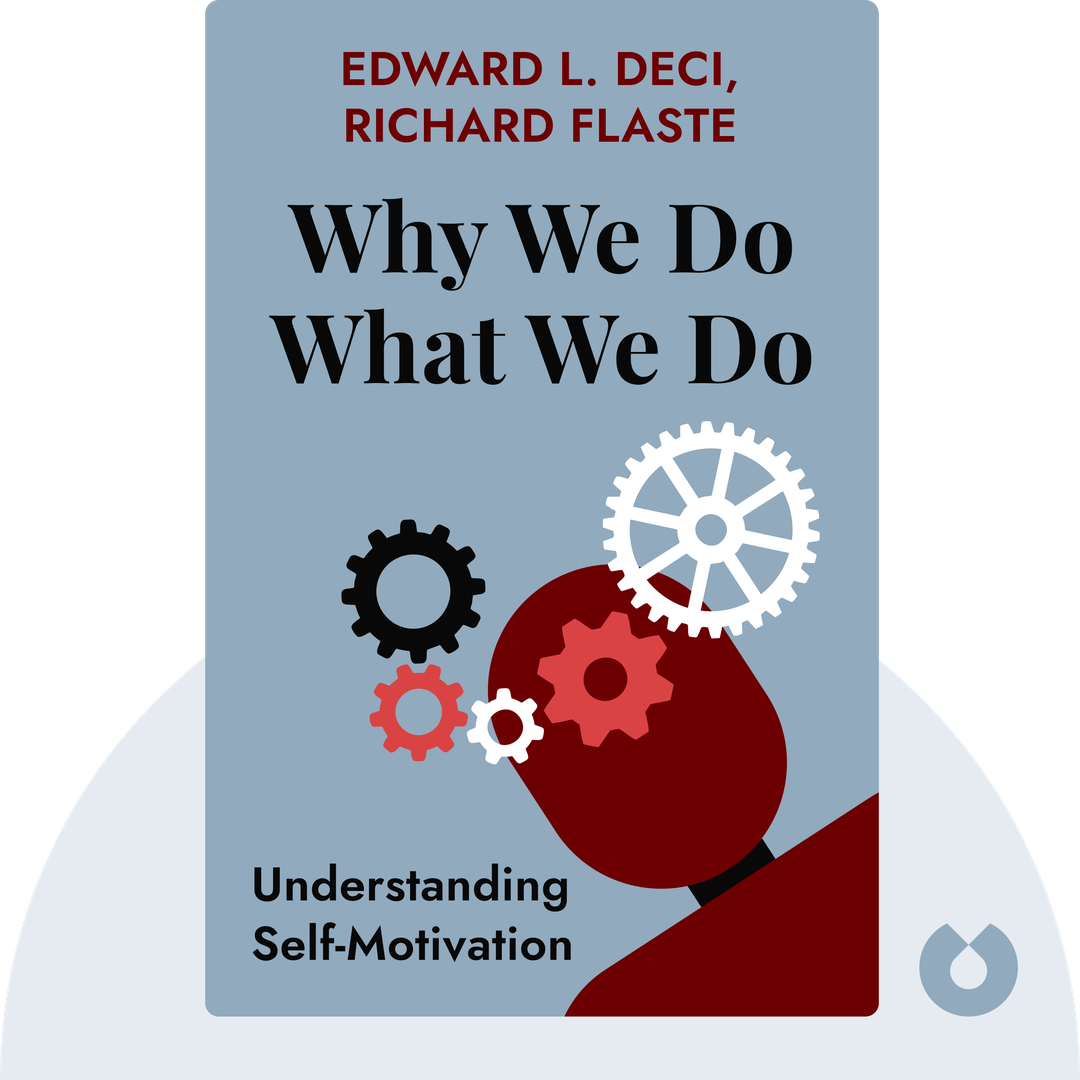
Listen to Why We Do What We Do — Free Audiobook
Loading player...
Key Takeaways from Why We Do What We Do
- Introducing external rewards to an inherently enjoyable activity shifts the focus from joy to obligation, ultimately draining your intrinsic motivation.
- Controlling environments that rely on strict rules and punishments only produce temporary compliance or outright defiance, rather than meaningful, lasting change.
- Fostering a sense of competence and autonomy allows individuals to enter a state of flow, where work feels deeply meaningful and produces richer, more creative results.
- To motivate people for tedious tasks, leaders must offer autonomy support by providing clear rationales and acknowledging feelings, helping individuals internalize the value of the task.
- True autonomy requires building authentic self-esteem that is not contingent on meeting external societal expectations like wealth, fame, or rigid individualism.
Learning Tools
Reinforce what you learned from Why We Do What We Do
Mind Map
Why We Do What We Do
Core Types of Motivation+
Control vs. Autonomy+
Competence and Feedback+
Psychology of Internalization+
Navigating Societal Pressures+
Applying Autonomy Support+
Quiz — Test Your Understanding
Question 1 of 7
According to the book, what are the two most common responses when individuals are subjected to controlling environments?
Question 2 of 7
What did Edward L. Deci's research reveal about introducing external rewards to activities people already find enjoyable?
Question 3 of 7
What is a major drawback of relying heavily on extrinsic rewards for motivation, as highlighted in the text?
Question 4 of 7
In the context of doing uninteresting but necessary tasks, what is the difference between 'introjection' and 'integration'?
Question 5 of 7
How does the book distinguish between 'individualism' and 'autonomy'?
Question 6 of 7
What does it mean for a manager or teacher to create an 'autonomy-supportive' environment?
Question 7 of 7
According to the text, how can typically positive motivators like praise or bonuses actually backfire?
Why We Do What We Do — Full Chapter Overview
- 1Recommendation
- 2Control and autonomy
- 3What drives motivation
- 4Competence as its own reward
- 5The psychology behind motivation
- 6Pressures from society
- 7How to support autonomy
- 8Final summary
Why We Do What We Do Summary & Overview
Why We Do What We Do (1995) explores the science of human motivation, focusing on what drives people to act and how external influences shape their behavior. Whether you’re a parent, teacher, manager, or simply curious about human behavior, it offers transformative insights into fostering growth, collaboration, and authentic success in every area of life.
Who Should Listen to Why We Do What We Do?
- Parents, teachers and managers
- Self-development enthusiasts
- Psychology buffs
Books Similar to Why We Do What We Do
Readers who enjoyed this also liked these titles.