If You're Curious About These Questions...
You should listen to this audiobook
- What if you could shift your child’s mindset from a reactive, shut-down 'No Brain' to an open, curious 'Yes Brain' that embraces challenges?
- Have you ever wondered why some children naturally bounce back from setbacks while others struggle to recover, and how you can actually teach the skill of resilience?
- What’s the secret to moving beyond daily power struggles and helping your child develop the internal tools for empathy, balance, and lifelong self-control?
Listen to The Yes Brain — Free Audiobook
Loading player...
Key Takeaways from The Yes Brain
- Discover how cultivating a 'Yes Brain' mindset fosters an open, flexible, and receptive outlook in both you and your children, countering the defensive reactions of a 'No Brain'.
- Understand the science of neuroplasticity and how engaging your child's prefrontal cortex through thoughtful questions physically strengthens their brain's wiring.
- Learn to effectively handle meltdowns without shaming by using empathy to expand your child's 'window of tolerance' and teaching practical calming techniques.
- Explore the principles of interpersonal neurobiology to see how integrating different parts of the developing brain leads to greater adaptability, empathy, and emotional regulation.
- Master the art of managing childhood tantrums by acknowledging your child's raw emotions instead of punishing them, which paves the way for collaborative and lasting coping strategies.
Learning Tools
Reinforce what you learned from The Yes Brain
Mind Map
The Yes Brain
Core Concepts+
Four Key Traits+
Actionable Advice+
Quiz — Test Your Understanding
Question 1 of 7
How is the 'No Brain' state described in contrast to the 'Yes Brain'?
Question 2 of 7
Which specific part of the brain is identified as the driver of 'Yes Brain' traits like emotional regulation, personal insight, and empathy?
Question 3 of 7
How do the authors suggest parents help children visualize and understand their emotional states without labeling emotions as 'bad'?
Question 4 of 7
What strategy is recommended for parents to gain 'insight' when they feel themselves losing patience and slipping into their own 'red zone'?
Question 5 of 7
Which of the following is a recommended technique for cultivating resilience in a child who suffers from anxiety when things go wrong?
Question 6 of 7
According to the text, why is it natural for young children to sometimes exhibit selfish behavior?
Question 7 of 7
What is the authors' stance on unstructured, open-ended play for children?
The Yes Brain — Full Chapter Overview
- 1Recommendation
- 2The Yes Brain is a mindset that helps you and your children grow more open, creative and resilient.
- 3The Yes Brain is more than a mindset – it also supports brain integration and healthy development.
- 4Recognizing your children’s feelings and giving them time to play nurtures emotional balance.
- 5Build resilience in your children by explaining it clearly and supporting brave risk-taking.
- 6Practice insight yourself and begin teaching it to your children from an early age.
- 7You can use several different strategies to help your children develop deeper empathy.
The Yes Brain Summary & Overview
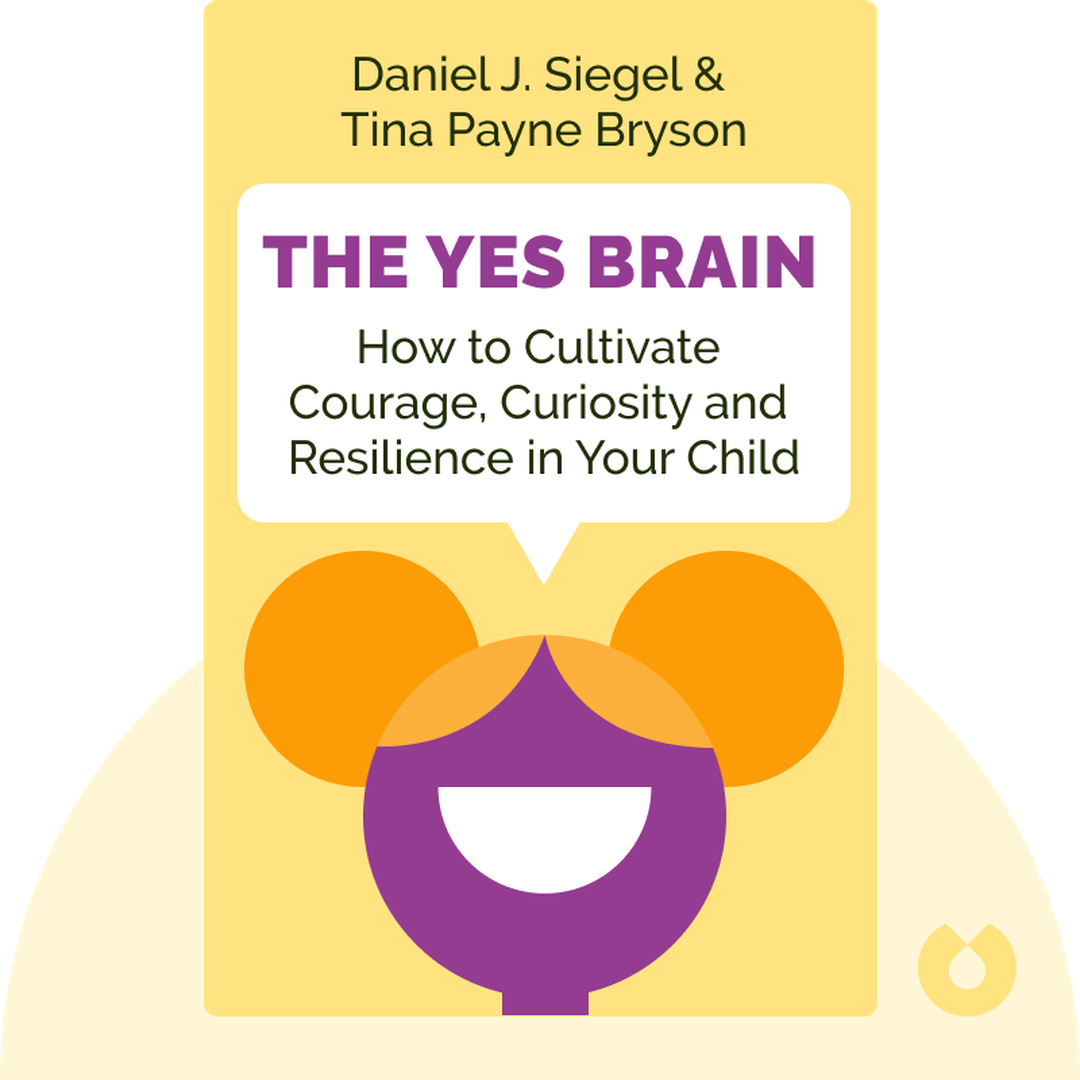
The Yes Brain (2018) is a hands-on guide to teaching yourself and your kids to approach the world with openness, creativity and boundless curiosity. Packed full of useful tips, examples and ideas, this book shows parents how to model and cultivate the traits that let you say “yes” to the world: balance, resilience, insight and empathy. And that doesn’t just give children better self-control and awareness; it also puts them on the path to meaningful and successful lives.
Who Should Listen to The Yes Brain?
- Parents worried about their child’s selfishness
- Anyone who works with children
- Anyone looking for a mindful solution to everyday problems
Books Similar to The Yes Brain
Readers who enjoyed this also liked these titles.