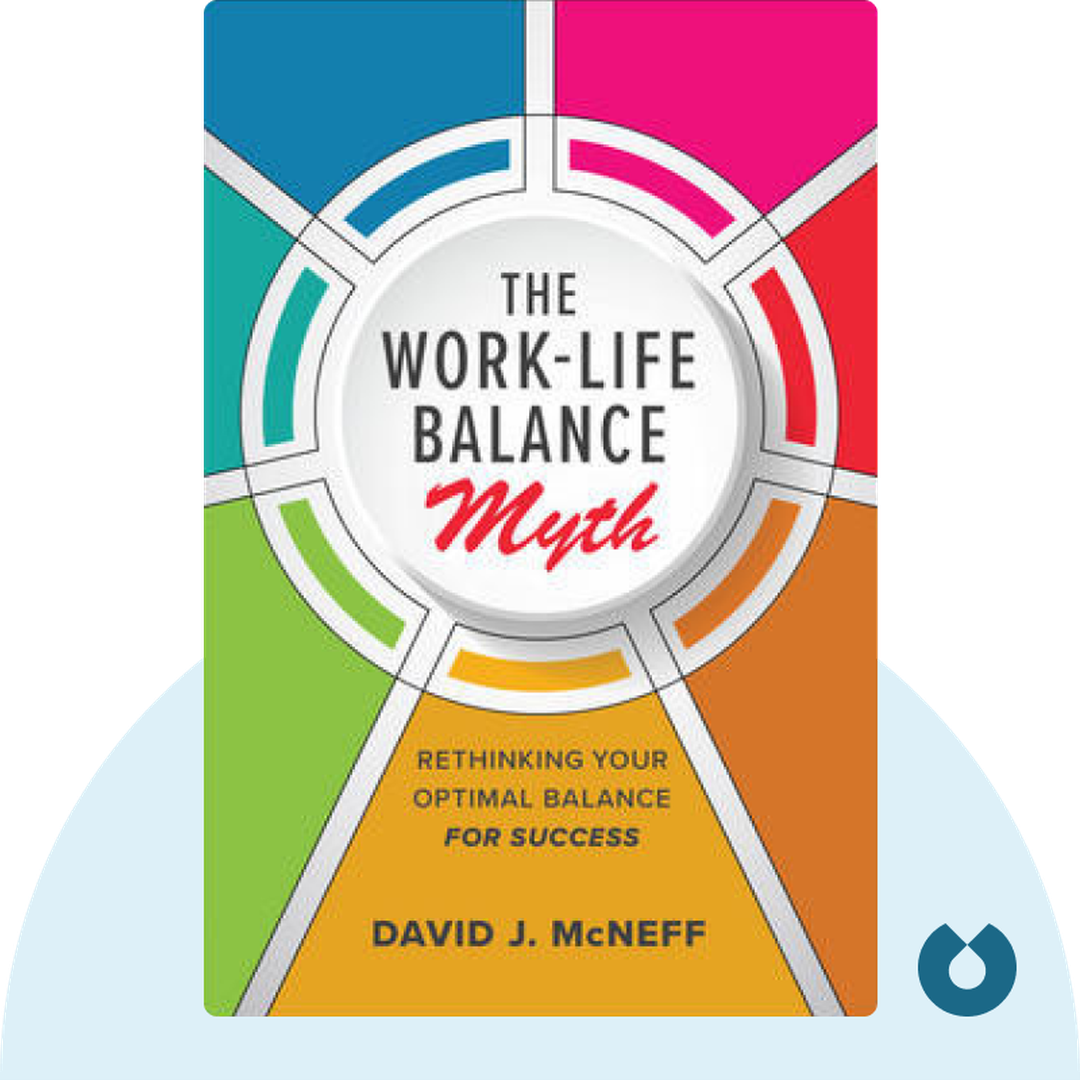
The Work-Life Balance Myth
Start ListeningDownload Try free on iPhoneScan to start in 5 seconds
Categories:
If You're Curious About These Questions...
You should listen to this audiobook
- Did you know that the traditional pursuit of 'work-life balance' might actually be a myth that's contributing to your daily stress?
- What if the secret to lasting harmony isn't about dividing your time equally, but about nurturing seven specific 'slices' of your life every single day?
- Have you ever wondered how some people manage to stay calm under intense pressure while still finding time for their personal passions and family?
Listen to The Work-Life Balance Myth — Free Audiobook
Loading player...
Key Takeaways from The Work-Life Balance Myth
- Discover why striving for a traditional work-life balance is a futile pursuit, and learn to aim for sustainable harmony instead.
- Learn how accumulating stress and burnout are caused by over-focusing on your professional and family lives while neglecting your other core needs.
- Understand the 'Seven Slices' of life—Family, Professional, Personal, Physical, Intellectual, Emotional, and Spiritual—that require your mindful daily attention.
- Master a practical assessment method to calculate the exact percentage of time you dedicate to each slice, helping you identify your neglected areas.
- Find out how integrating all seven slices into your daily routine builds resilience against stress and fosters a deeper connection with yourself.
Learning Tools
Reinforce what you learned from The Work-Life Balance Myth
Mind Map
The Work-Life Balance Myth
The Core Premise+
The Seven Slices of Life+
Phase 1: Assessment+
Phase 2: Reflection+
Phase 3: Action & Harmony+
Quiz — Test Your Understanding
Question 1 of 8
According to the author, why is striving for 'work-life balance' ultimately a futile endeavor?
Question 2 of 8
What does the author identify as the primary reason successful professionals reach a crisis point of accumulated stress?
Question 3 of 8
Which of the following correctly identifies the five 'neglected' slices of life mentioned in the Seven-Slice Method?
Question 4 of 8
What is the recommended first step for applying the Seven-Slice Method?
Question 5 of 8
When trying to reconnect with dormant slices of your life despite a packed schedule, what approach does the author recommend?
Question 6 of 8
Why does the author suggest considering your 'personal motivation style' when determining a plan of action?
Question 7 of 8
What metaphor does the author use to describe how a person should manage the seven areas of their life?
Question 8 of 8
How can you determine if a leisure activity, like watching TV, is serving your Personal Slice or merely acting as a distraction?
The Work-Life Balance Myth — Full Chapter Overview
- 1Recommendation
- 2The goal isn’t work-life balance, but harmony across every area of your life.
- 3The Seven-Slice Method breaks down the life areas that need daily attention.
- 4Assess the seven areas of your life to see where your attention is needed.
- 5Identify the smallest steps you can take to spend time on each life slice every day.
- 6Factor in your personal motivation style when choosing your plan of action.
- 7What matters isn’t how much time you spend in each life area, but the quality of that time.
- 8Final summary
The Work-Life Balance Myth Summary & Overview
The Work-Life Balance Myth (2021) is a guide to managing stress and creating harmony across the key areas in your life using the Seven-Slice Method. Rather than divide your waking hours between work and life, the Seven-Slice Method recontextualizes life into seven key areas and demonstrates how spending time in each of them every day can help you overcome pressure and find peace.
Who Should Listen to The Work-Life Balance Myth?
- Professionals seeking ways to manage stress
- Parents struggling to juggle family and work life
- Those who want more harmony in their lives
Books Similar to The Work-Life Balance Myth
Readers who enjoyed this also liked these titles.