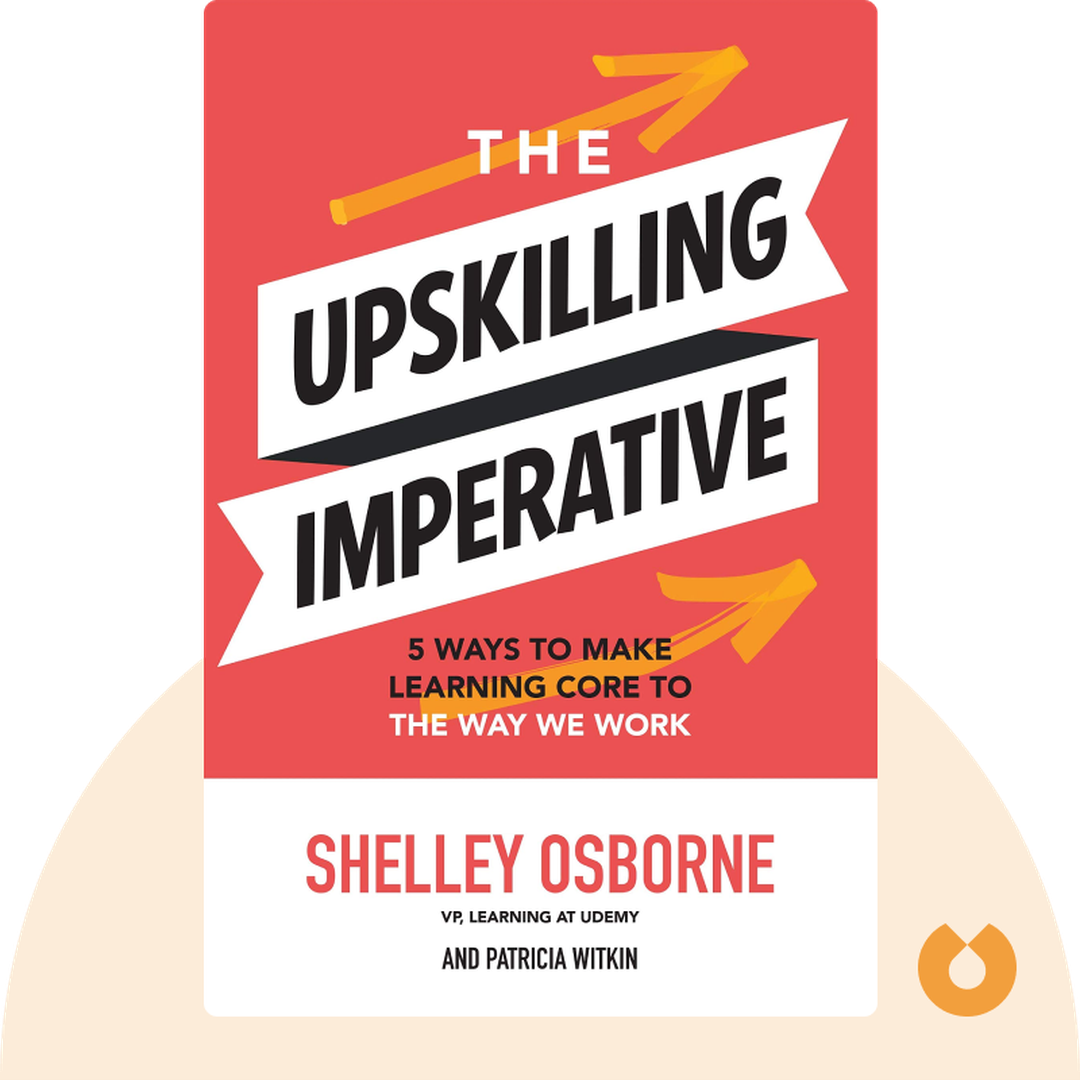
The Upskilling Imperative
Start ListeningDownload Try free on iPhoneScan to start in 5 seconds
Categories:
If You're Curious About These Questions...
You should listen to this audiobook
- What’s the secret to building a corporate culture where learning isn’t just a requirement, but a powerful competitive advantage?
- Have you ever wondered why some organizations effortlessly adapt to technological shifts while others are left behind by their own skill gaps?
- What if you could turn your workplace into a continuous learning machine that prepares every employee for the challenges of tomorrow?
Listen to The Upskilling Imperative — Free Audiobook
Loading player...
Key Takeaways from The Upskilling Imperative
- Understand why modern careers demand continuous upskilling, as technological advancements mean most professional skills now stay relevant for only five years.
- Discover how to foster an agile learning culture by baking skills development into the annual budget and making it equally accessible across all company levels.
- Learn to shift your corporate training from a traditional instructivist model to a constructivist approach where employees take ownership of their learning and immediately apply new skills.
- Master effective workplace learning by prioritizing proven teaching tactics and optimal physical environments, like natural lighting and adequate breaks, over flashy new technology.
- Find out how treating continuous learning as an invitation to explore rather than an HR requirement can dramatically improve staff retention and lifelong engagement.
Learning Tools
Reinforce what you learned from The Upskilling Imperative
Mind Map
The Upskilling Imperative
The Need for Upskilling+
Effective Learning Design+
Fostering Agile Learners+
Building a Feedback Culture+
Marketing L&D to Employees+
Integrating Learning into Work+
Leadership & Business Value+
Actionable Advice+
Quiz — Test Your Understanding
Question 1 of 9
Why does the author argue that continuous upskilling is more critical today than for previous generations?
Question 2 of 9
When designing corporate training, the author recommends moving away from an 'instructivist' model toward a 'constructivist' approach. What does this mean?
Question 3 of 9
According to the book, what is a necessary first step for management to foster an agile learning environment?
Question 4 of 9
How does the author suggest managers deliver feedback to help cultivate a growth mindset?
Question 5 of 9
Why does the author suggest using 'market segmentation' when promoting internal learning programs?
Question 6 of 9
The author compares building a learning culture to keeping New Year's resolutions. What is the key takeaway from this comparison?
Question 7 of 9
What is meant by 'trickle-down motivation' in the context of workplace learning?
Question 8 of 9
What statistic is provided in the text to prove that investing in a Learning and Development (L&D) culture makes good financial sense?
Question 9 of 9
What does the acronym 'DEAL hour' stand for in the book's actionable advice?
The Upskilling Imperative — Full Chapter Overview
- 1Recommendation
- 2A strong learning culture helps firms retain staff and stay current with the latest technologies.
- 3Use educators’ strategies and you’ll be equipped to create better workplace learning practices for all.
- 4Embrace change and flexibility to develop agile learners across your organization.
- 5Building a feedback culture is crucial for reaching learning goals.
- 6Apply marketing tactics to spark employee enthusiasm about learning.
- 7Learning is easiest when it’s seamlessly woven into your everyday work routine.
- 8Managers must showcase and champion learning’s value to the broader business overall.
- 9Leverage the data to build a compelling business case for Learning and Development investments.
The Upskilling Imperative Summary & Overview
What’s it about?
The Upskilling Imperative (2020) introduces practical tips for companies to ensure their staff have ample opportunity to learn skills for the future. With industries and technologies changing all the time, it shows business leaders the steps they can take to stay ahead of the curve and establish robust, accessible learning environments.
Who Should Listen to The Upskilling Imperative?
Who’s it for?
- Managers or C-Level executives looking to upskill their teams
- People interested in Learning and Development or HR
Employees who want to change the way their company views training
Books Similar to The Upskilling Imperative
Readers who enjoyed this also liked these titles.