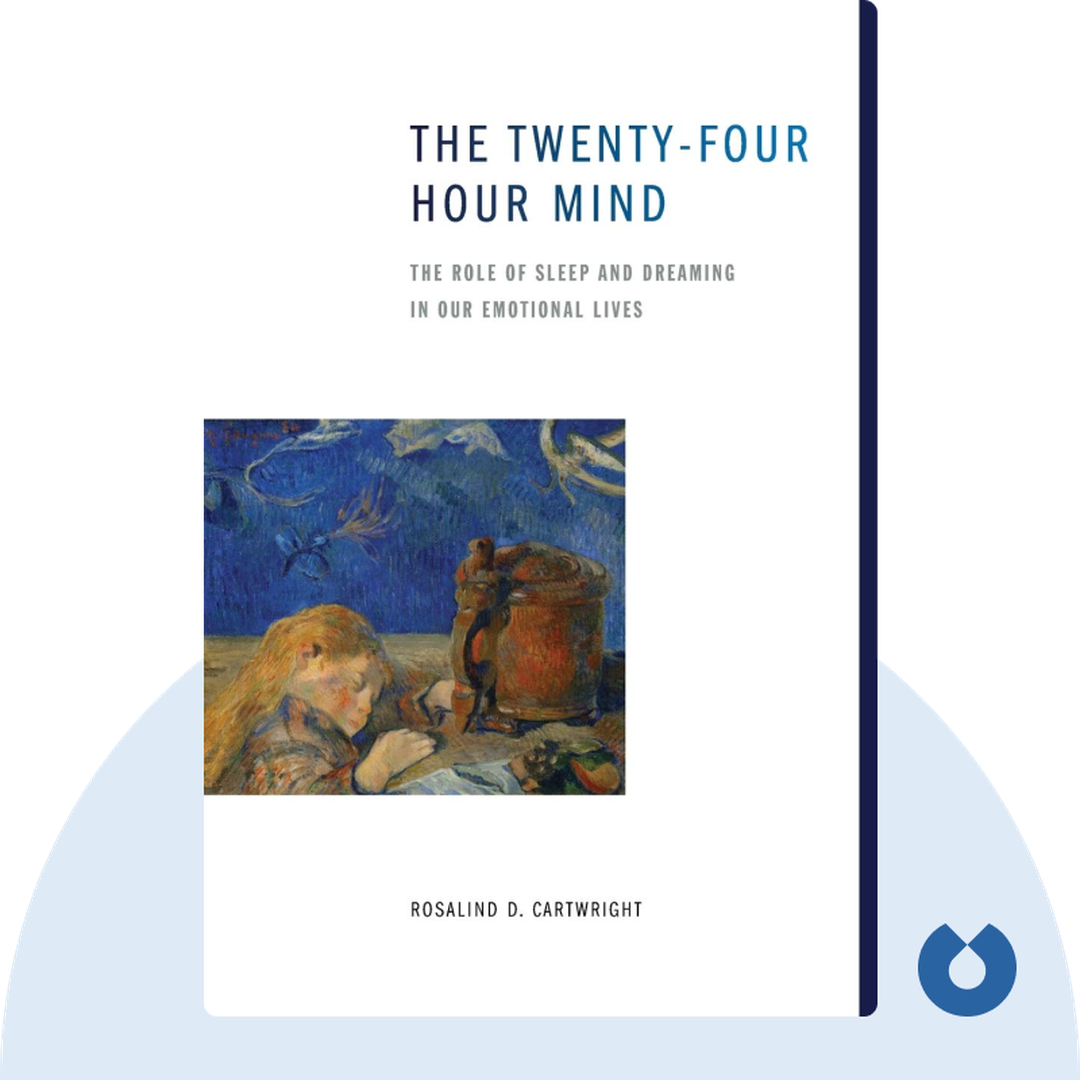
The Twenty-four Hour Mind
Start ListeningDownload Try free on iPhoneScan to start in 5 seconds
Categories:
If You're Curious About These Questions...
You should listen to this audiobook
- Have you ever wondered why your brain stays so busy while you sleep, and how your dreams are actually working to heal your emotional wounds?
- Did you know that your dreams aren't just random images, but a sophisticated internal system designed to link your newest experiences with your oldest memories?
- What if the secret to overcoming negative emotions and improving your mental health lay in understanding how your mind functions during the hours you’re fast asleep?
Listen to The Twenty-four Hour Mind — Free Audiobook
Loading player...
Key Takeaways from The Twenty-four Hour Mind
- Discover how completing a full seven to nine hours of sleep reduces emotional tension and regulates your endocrine system to prevent weight gain.
- Learn how your dreams act as an emotional processing tool, matching new daily experiences with past memories to help you resolve negative feelings.
- Understand how your sleeping mind constantly updates your personal identity by modifying the internal 'software' your waking mind uses to cope with the world.
- Find out why your waking mind relies heavily on unconscious autopilot, freeing up your sleeping mind to focus exclusively on managing your daily emotional troubles.
- Discover why depression often begins with a malfunctioning sleep cycle, and how adjusting your REM sleep can help combat severe emotional disorders.
Learning Tools
Reinforce what you learned from The Twenty-four Hour Mind
Mind Map
The Twenty-four Hour Mind
Physical and Mental Balance+
The Purpose of Dreams+
Waking vs. Sleeping Mind+
Malfunctioning Sleep Cycles+
Severe Health Consequences+
Quiz — Test Your Understanding
Question 1 of 6
According to the text, how does sleep help individuals deal with strong, unresolved negative emotions?
Question 2 of 6
What is the primary reason that sleeping fewer than six hours a night significantly increases a person's risk of obesity?
Question 3 of 6
How do dreams influence a person's personal identity?
Question 4 of 6
What is a fundamental difference between how the waking mind and the sleeping mind process information?
Question 5 of 6
According to the author, what is a key characteristic of individuals suffering from depression in relation to their sleep cycle?
Question 6 of 6
Based on the animal studies mentioned in the text, why can extreme sleep deprivation ultimately lead to death?
The Twenty-four Hour Mind — Full Chapter Overview
- 1Recommendation
- 2Sleep helps keep us physically and mentally balanced.
- 3Dreams store our experiences and help us work through emotional problems.
- 4Our waking and sleeping minds process different information, interacting to guide our behavior and keep it flexible.
- 5A malfunctioning wake–sleep cycle can lead to serious emotional disorders.
- 6Too little sleep isn’t a minor problem: it leads to many of our world’s most widespread health problems.
The Twenty-four Hour Mind Summary & Overview
The Twenty-four Hour Mind illuminates the mysteries of sleep, dreams and sleep disorders. The author posits that the main purpose of sleep and dreaming is to help us cope with the negative emotions caused by new experiences by linking them to older memories.
Who Should Listen to The Twenty-four Hour Mind?
- Anyone who’s ever wondered what their dreams mean
- Anyone who suffers from poor sleep
- Anyone interested in the human mind
Books Similar to The Twenty-four Hour Mind
Readers who enjoyed this also liked these titles.