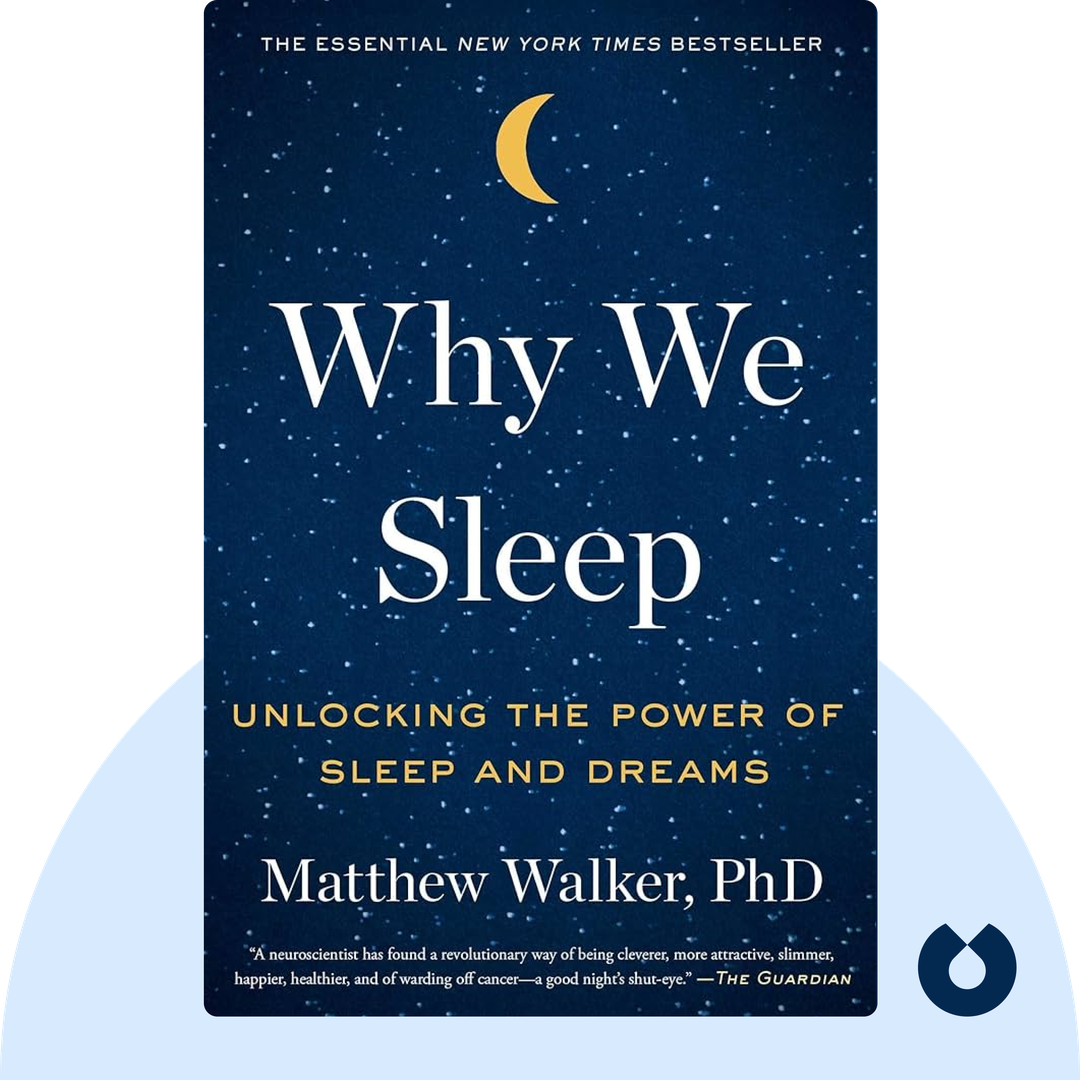
If You're Curious About These Questions...
You should listen to this audiobook
- Did you know that there is a specific stage of sleep that acts like overnight therapy, helping you process difficult emotions and boost your creativity?
- Have you ever wondered why pulling an all-nighter actually makes it harder for your brain to store new information, no matter how much you study?
- What if the secret to living a longer, healthier life wasn't found in a pill or a diet, but in how you spend your time after the lights go out?
Listen to Why We Sleep — Cinematic Audio Edition
Loading player...
Key Takeaways from Why We Sleep
- Discover why sleep is not a passive state, but a dynamic process that revitalizes every organ and protects your body against chronic diseases like Alzheimer's and diabetes.
- Understand the two crucial biological mechanisms—circadian rhythms and adenosine buildup—that dictate your need for rest, and how everyday habits like consuming caffeine disrupt them.
- Learn how your brain cycles through NREM and REM stages every 90 minutes to consolidate memories, repair neural pathways, and forge creative emotional connections.
- Find out how 'sleep spindles' act as neural messengers during rest, transferring new information from short-term to long-term storage to improve both cognitive learning and physical muscle memory.
- Recognize the severe physical and mental costs of getting less than seven hours of sleep, from weakened immunity and metabolic dysfunction to heightened anxiety and cognitive impairment.
Learning Tools
Reinforce what you learned from Why We Sleep
Mind Map
Why We Sleep
Biology & Mechanics+
Brain & Cognitive Benefits+
Physical Health Impacts+
The Dreaming Brain+
Disorders & Disruptors+
Solutions & Interventions+
Quiz — Test Your Understanding
Question 1 of 6
According to the book, what are the two primary biological mechanisms that regulate our sleep-wake cycle?
Question 2 of 6
What distinct functions are primarily associated with NREM and REM sleep, respectively?
Question 3 of 6
What specific brain activity during Stage 2 NREM sleep is crucial for transferring memories from short-term to long-term storage?
Question 4 of 6
The book suggests that dreams serve a therapeutic purpose. How is this function described?
Question 5 of 6
Contrary to a common association with dreaming, during which stage of sleep does somnambulism (e.g., sleepwalking) typically occur?
Question 6 of 6
How does the use of alcohol as a sleep aid negatively impact sleep quality?
Why We Sleep — Full Chapter Overview
- 1Recommendation
- 2Sleep’s role in productivity
- 3The many benefits of a good night’s sleep
- 4Within the dreaming brain
- 5Disorders and remedies
Why We Sleep Summary & Overview
Why We Sleep (2017) examines the essential role sleep plays in nearly every facet of our physical and mental well-being. Drawing on decades of scientific research, it reveals how sleep strengthens memory, supports learning, bolsters the immune system, and regulates emotions. Building on these insights, it offers thoughtful solutions that challenge modern attitudes toward rest, paving the way for a healthier and more productive future.
Who Should Listen to Why We Sleep?
- Anyone skeptical about the importance of sleep
- People with insomnia
- Dreamers curious about what happens in slumberland
Books Similar to Why We Sleep
Readers who enjoyed this also liked these titles.